
Ravens in Alaska
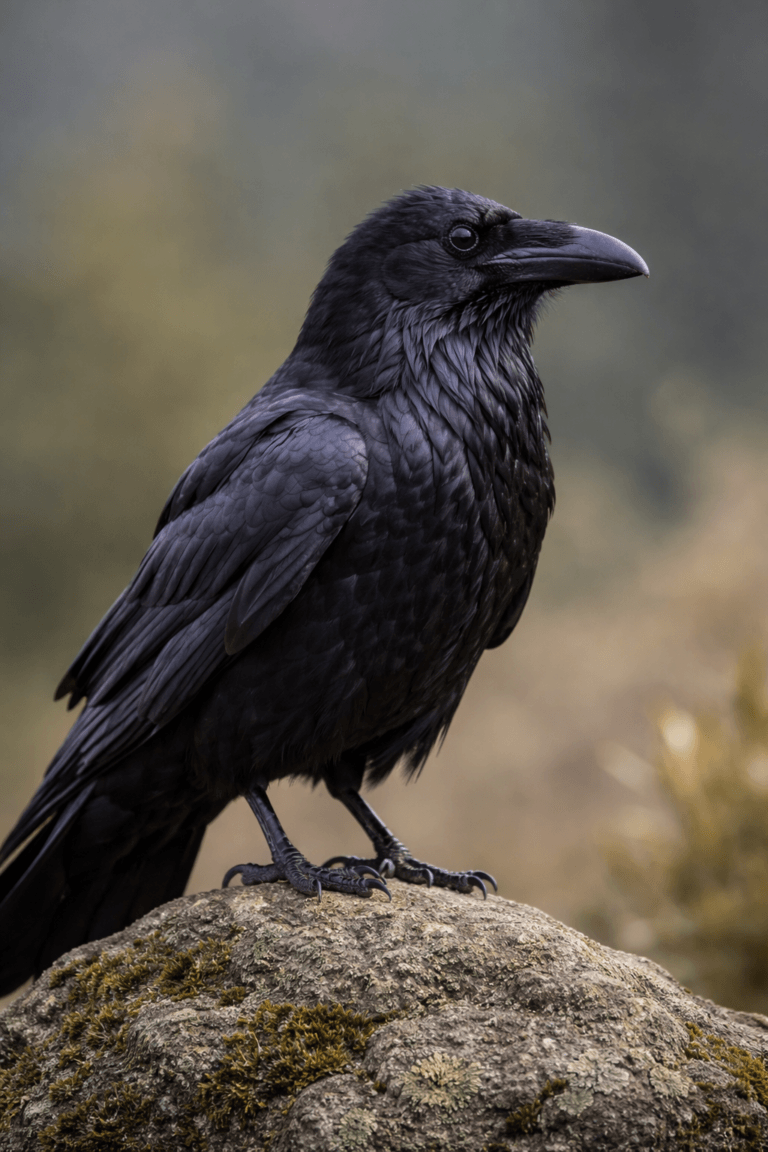
If there’s one bird that truly feels woven into Alaska, it’s the raven. You’ll see them in Arctic villages, perched along mountain passes, circling coastal cliffs, or watching highway pullouts like they’re studying traffic patterns. They aren’t just present here — they’re everywhere.
Ravens stay year-round. While many birds migrate south, ravens ride out the dark winters, the deep cold, and the long stretches of snow. They’re adaptable in a way that feels almost intentional.
Identification
Ravens are large, powerful black birds with a presence that’s hard to mistake.
Color: Glossy black with subtle blue or purple sheen
Beak: Thick and heavy
Tail: Wedge-shaped in flight
Call: Deep, croaking “gronk” rather than a sharp caw
They’re often confused with crows, but ravens are noticeably larger with longer wings and a heavier profile.
Where You’ll See Them in Alaska
Ravens thrive across nearly every region:
Arctic tundra
Interior forests
Coastal cliffs
High mountain passes
Small towns and highway corridors
They adapt easily to both wild landscapes and human presence.
Behavior & Seasonal Patterns
Ravens are intelligent problem-solvers. They cache food, work cooperatively at times, and seem to understand patterns in both animal and human behavior. In winter, they’re often seen near roads or communities where food sources are more reliable. In summer, they disperse across open country, sometimes nesting on cliff faces or tall trees.
Ravens hold deep cultural meaning in Alaska Native traditions, appearing in stories that explain landforms, animals, and the origins of the world. They aren’t just wildlife here — they’re part of the storytelling landscape.
If you’re watching ravens in winter conditions, insulated gloves and steady footing make observation more comfortable than you’d expect. Cold wind across open ground can cut through quickly when you’re standing still.