
Puffins in Alaska
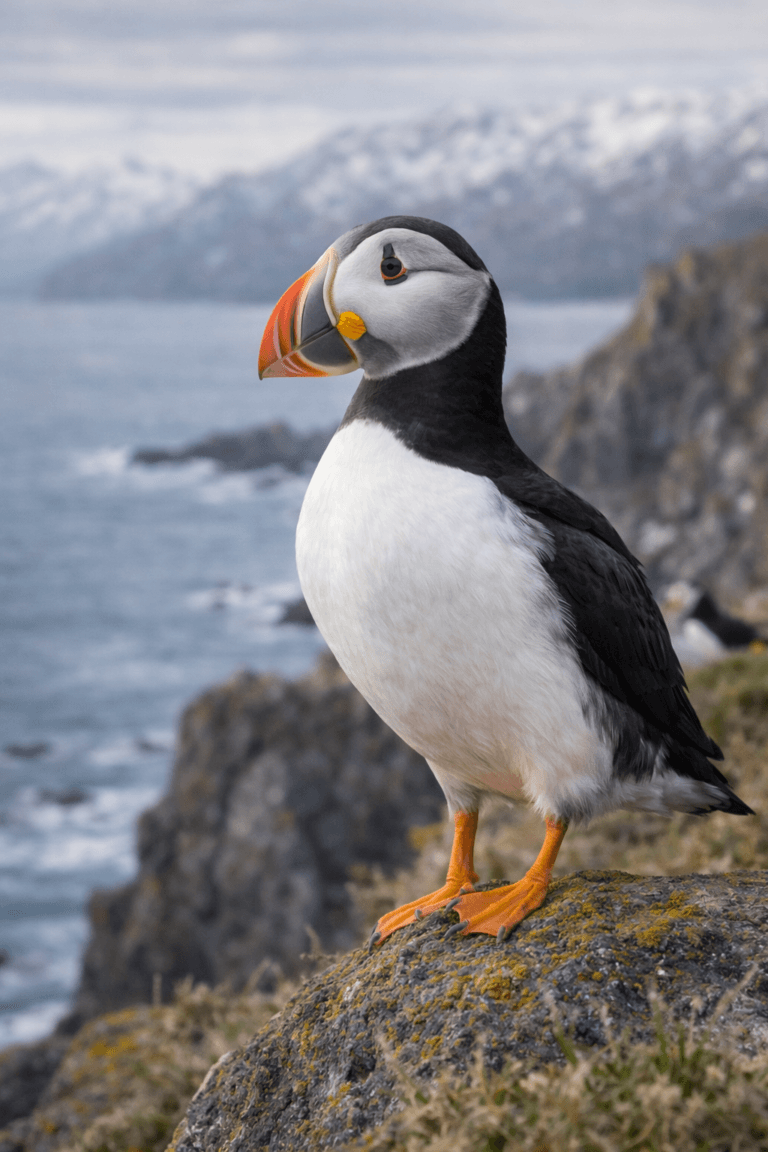
(Tufted Puffin & Horned Puffin)
Puffins don’t look like they belong in the North Pacific. With bright beaks and sharp facial markings, they almost seem tropical — until you see them standing on a wind-cut cliff with cold gray water crashing below.
In Alaska, puffins are seasonal. They arrive in late spring, crowding offshore islands and coastal cliffs to nest, filling the air with constant motion. For a few short months, the rocks feel alive.
Identification
Alaska has two primary puffin species: Tufted Puffins and Horned Puffins.
Tufted Puffin
Larger overall
Bright orange beak
Golden facial plumes (visible in breeding season)
Dark body with pale face
Horned Puffin
Slightly smaller
Thicker, triangular beak
Small dark “horn” above the eye during breeding season
Strong black-and-white facial contrast
Both species have compact bodies, short wings, and a fast, buzzing flight pattern when heading back to cliff nests.
Where You’ll See Them in Alaska
Puffins are found along Alaska’s rugged coastlines:
Kenai Fjords
Southeast Alaska
Gulf of Alaska islands
Bering Sea coastline
Offshore rock outcrops and sea stacks
They nest on steep, grassy slopes or in rocky cliff faces where predators have difficulty reaching them.
Boat-based wildlife tours offer the best viewing. Land access is often limited to remote islands.
Seasonal Patterns
Arrival: Late April to May
Breeding: Early summer
Chicks: Raised in burrows or cliff crevices
Departure: Late summer to early fall
For most of the year, puffins live entirely at sea. The dramatic coastal colonies are a short seasonal window.
Because they spend so much time offshore, calm conditions and layered waterproof gear make wildlife viewing trips far more comfortable. Coastal weather can shift quickly even in midsummer. Puffins may look playful, but they’re built for harsh ocean life — diving deep to catch fish and riding swells that would challenge most seabirds.