
Long-Tailed Jaeger in Alaska
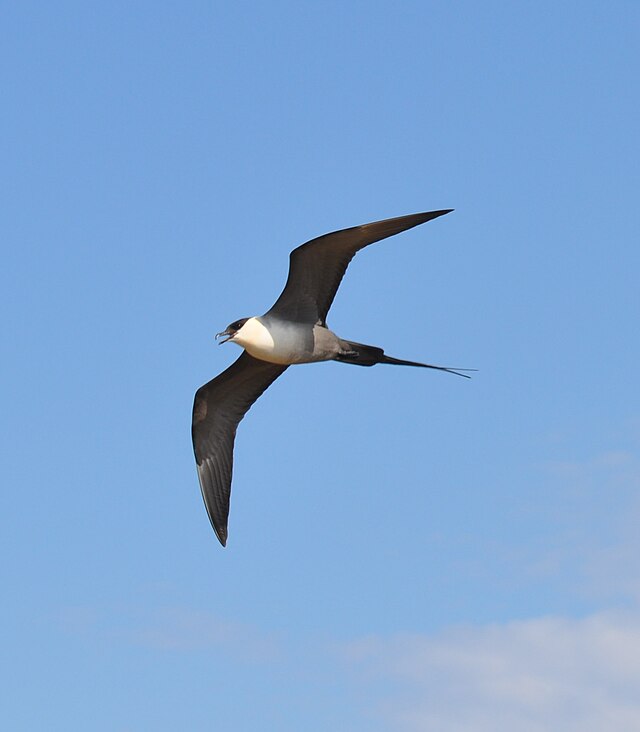
The Long-tailed Jaeger feels like a bird made of wind. Slim, agile, and constantly in motion, it flies low over tundra flats and coastal edges during Alaska’s short Arctic summer. You rarely see it perched for long. It patrols open ground, shifting direction sharply and effortlessly.
Among Arctic seabirds, the Long-tailed Jaeger is one of the most graceful.
Identification
Long-tailed Jaegers are slender seabirds with distinctive flight silhouettes.
-
Breeding adults: Gray body, black cap, pale chest
-
Tail: Long, elegant central tail streamers
-
Size: Smaller and slimmer than other jaegers
-
Flight: Quick, buoyant, and highly maneuverable
The elongated tail feathers during breeding season are the clearest identifying feature.
Outside breeding season, plumage becomes more subdued.
Where You’ll See Them in Alaska
Long-tailed Jaegers are found in:
-
Northern Alaska tundra
-
Arctic coastal plains
-
Open tundra breeding grounds
-
Occasionally near coastal waters
They nest on dry tundra during summer but spend much of the year at sea.
Most Alaska sightings occur during the breeding season in far northern regions.
Seasonal Patterns
-
Spring: Migration north into Arctic Alaska
-
Summer: Nesting on tundra
-
Fall: Begin migration south
-
Winter: Spend season at sea far from Alaska
They feed on insects and small mammals, often targeting lemmings during peak population years.
When lemming populations rise, jaeger nesting success increases — another example of how tightly Arctic species are connected.
Because they breed in exposed tundra, viewing often means wind exposure and open terrain. Stable footing and layered wind protection are important in these regions even during summer. Long-tailed Jaegers don’t feel heavy against the sky. They cut through it.