
Eagles in Alaska
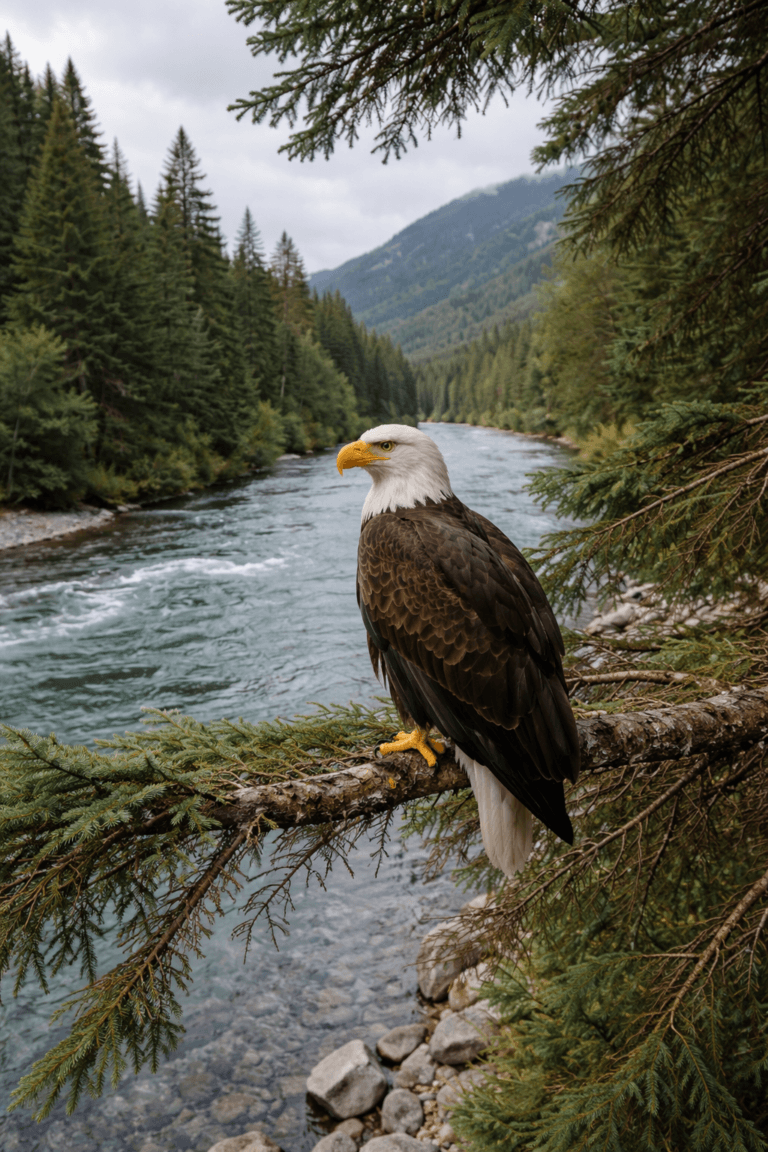
Eagles of Alaska
If you spend any time near rivers or the coast in Alaska, you will see eagles.
They perch high in spruce trees, circle above salmon streams, and gather in numbers during heavy fish runs. Alaska holds one of the largest populations of bald eagles in the world, and in many areas they’re simply part of the landscape.
Seeing one never really gets old.
Bald Eagles vs. Golden Eagles in Alaska
Alaska is home to two types of eagles: bald eagles and golden eagles. While they’re both powerful birds of prey, they live very different lives and are usually found in different environments.
Bald Eagles
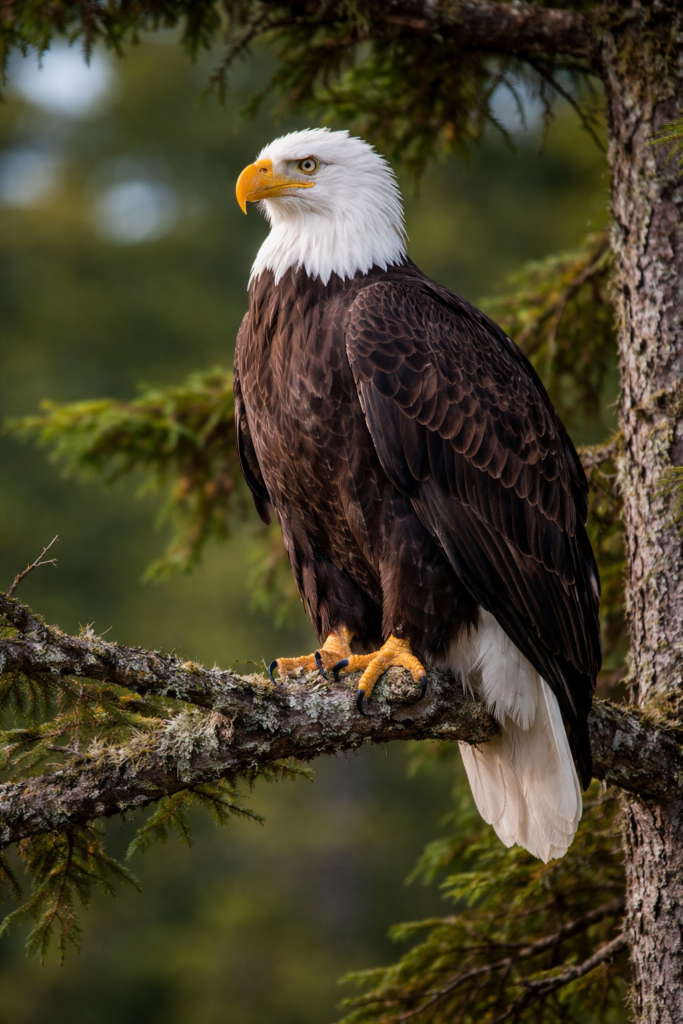
Bald eagles are the ones most people recognize. They have the white head and tail with a dark brown body and are commonly found along Alaska’s coastlines, rivers, and lakes.
They rely heavily on water for food, especially salmon, which makes places like Southeast Alaska and coastal regions some of the best areas in the world to see them. During salmon runs, it’s not unusual to see dozens gathered in one area.
Alaska holds one of the largest populations of bald eagles in the world.
Golden Eagles
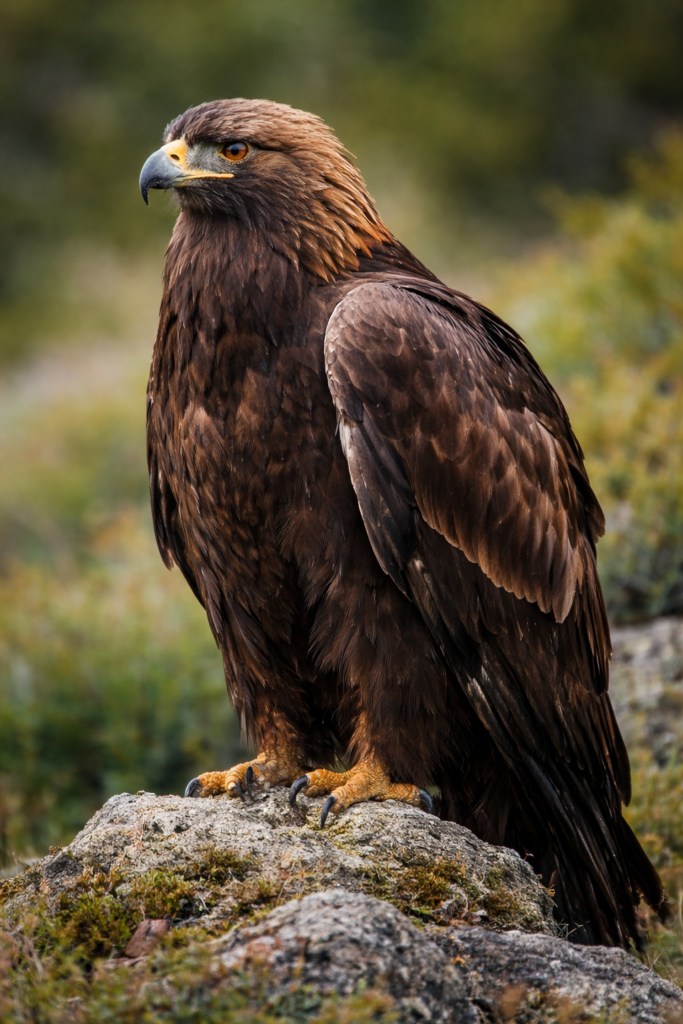
Golden eagles look very different. They are fully dark brown with a slightly golden sheen on the back of their head and neck. Instead of coastal areas, they prefer open country like tundra, mountains, and interior regions.
They are more solitary and less commonly seen than bald eagles. Rather than fishing, golden eagles hunt small mammals like hares, squirrels, and even foxes.
You’re much more likely to see a golden eagle in remote or inland areas than near the coast.
Where can I find Eagles?
Eagles are especially common:
- Along salmon rivers
- In Southeast Alaska
- Near coastal communities
- Around large Interior lakes
During peak salmon season, you may see multiple eagles along a single stretch of river. In some areas, winter concentrations form where open water remains accessible. Their presence almost always signals fish.
Why Eagles Thrive Here
Alaska’s salmon runs provide a reliable food source. Eagles feed primarily on fish, but they also scavenge carrion and take advantage of seasonal abundance. Healthy eagle populations are often a sign of healthy waterways. They play a role in nutrient cycling, moving marine nutrients inland as they feed and discard remains along riverbanks.
Viewing Eagles in Alaska
The best time to see eagles is during salmon spawning season or early morning along rivers and coastlines.
If you plan to watch wildlife regularly, a good pair of binoculars makes a noticeable difference. You don’t need anything extreme — just something clear and durable enough to handle Alaska weather. It allows you to observe from a respectful distance without disturbing nesting or feeding birds.
When viewing:
- Keep your distance
- Avoid nesting areas
- Use zoom instead of approaching
- Respect local wildlife guidelines
Eagles are powerful birds. Watching them in their natural environment is far better than trying to get too close.
Seasonal Behavior
In late summer and fall, eagle activity increases near salmon streams. In winter, some areas see large congregations near open rivers where fish remain accessible. In spring, nesting behavior becomes more noticeable. No matter the season, if there’s fish, there are likely eagles nearby.