
Arctic Terns in Alaska
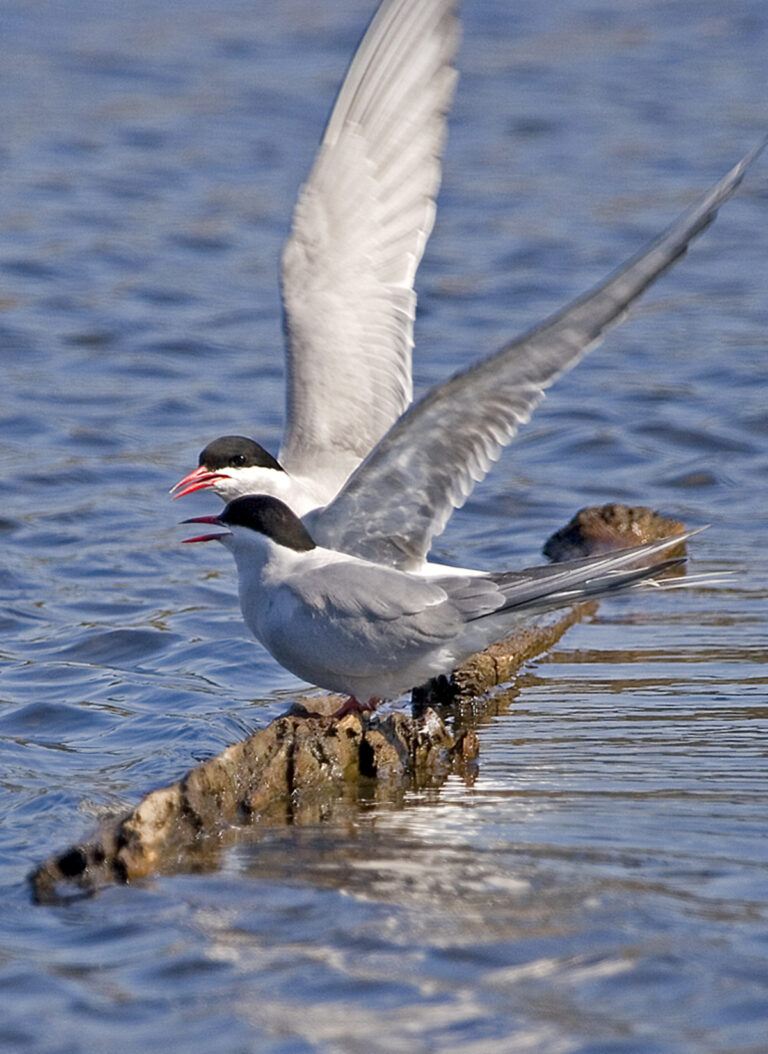
The Arctic Tern may be small, but it lives one of the biggest lives of any bird on earth. In summer, they fill Alaska’s coastal flats and tundra shorelines with sharp, piercing calls. By fall, they’re gone — headed toward Antarctica in one of the longest migrations in the animal world.
They are restless birds, constantly in motion, rarely still for long. If you’re near a nesting colony, you’ll know it quickly.
Identification
Arctic Terns are slender, streamlined seabirds built for distance.
Color: Pale gray body, white underside
Head: Black cap during breeding season
Beak: Bright red
Tail: Deeply forked, elegant in flight
Their flight is buoyant and agile, often hovering briefly before diving for fish.
Where You’ll See Them in Alaska
Arctic Terns are common in:
Coastal tundra
River deltas
Marshy shorelines
Gravel bars along large rivers
Northern and western Alaska coastlines
They prefer open areas near water, especially where small fish are abundant.
Seasonal Patterns
Arrival: Late May
Nesting: Open ground near water, often in colonies
Defense: Highly protective of nests — will dive at intruders
Departure: Late summer migration south
During nesting season, Arctic Terns are bold. If you walk too close to a nest site, they will dive repeatedly at your head. It’s not aggression — it’s protection. Light-colored hats can help deflect occasional contact during colony encounters, and giving wide berth to nesting areas is the best approach. Respecting space keeps both birds and visitors safer. Their migration is staggering — traveling from Arctic summer to Antarctic summer and back again each year. Few creatures connect the poles the way Arctic Terns do.