
Arctic Hare in Alaska
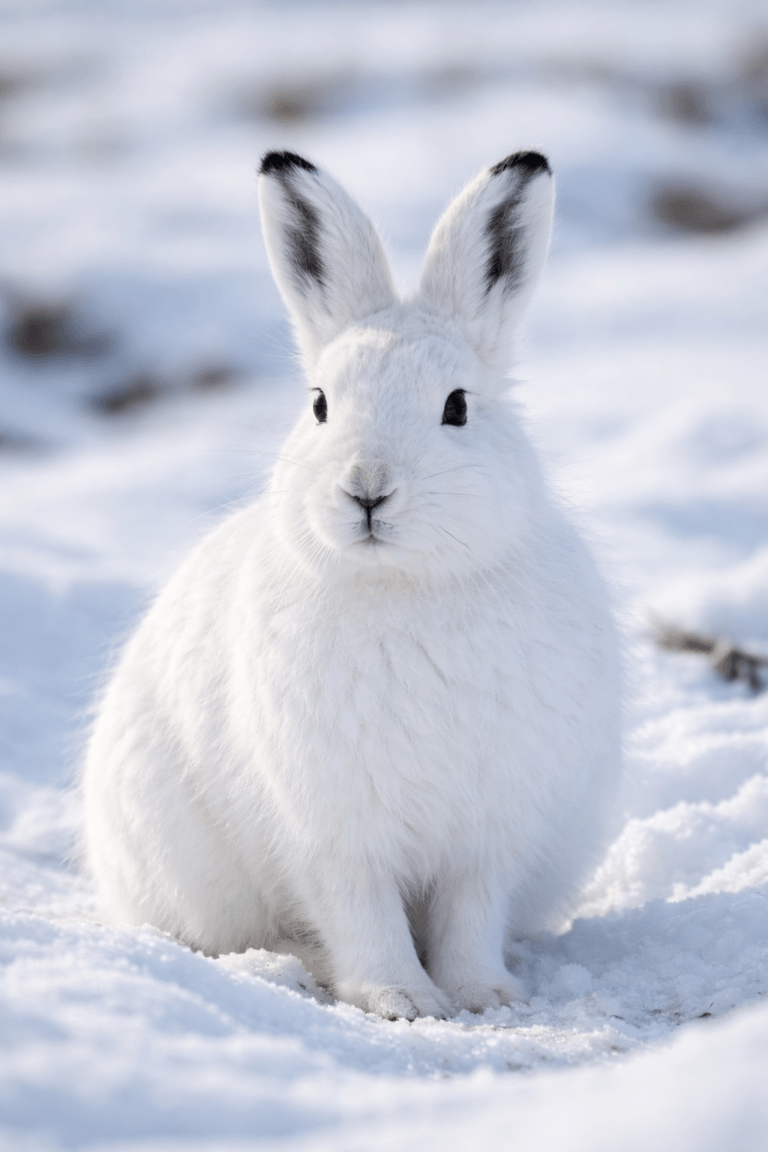
The Arctic hare is built for open country. Unlike snowshoe hares that stay tied to forest edges and brush, Arctic hares belong to wind, rock, and exposed tundra. In winter, they are nearly pure white against snowfields. In summer, their coat shifts to gray-brown to match gravel, moss, and dry tundra slopes.
They survive in places where shelter is minimal and visibility stretches for miles.
Identification
Arctic hares are larger and more compact than snowshoe hares.
-
Winter coat: White
-
Summer coat: Gray-brown
-
Size: Larger than snowshoe hare
-
Ears: Shorter and more rounded
-
Build: Thick-bodied with strong hind legs
Their compact shape helps conserve heat in extreme cold.
Unlike forest hares, they rely on open sightlines and speed across tundra rather than dense vegetation cover.
Where You’ll See Them in Alaska
Arctic hares are found primarily in:
-
Northern Alaska tundra
-
Arctic coastal plains
-
Western tundra regions
-
Rocky alpine slopes above treeline
They prefer treeless landscapes and rocky ground.
Most sightings occur in far northern regions rather than Interior forests.
Seasonal Patterns
-
Winter: White camouflage against snow
-
Spring: Breeding season begins
-
Summer: Coat darkens to match exposed terrain
-
Fall: Feeding intensifies before winter
Arctic hares may be seen alone or in small groups. In open tundra, they rely on early predator detection and powerful sprinting ability.
They feed on tundra plants, grasses, shrubs, and bark when available.
Because they inhabit exposed areas, wind is often a greater factor than temperature. If traveling tundra landscapes, windproof outer layers are critical even in summer months. Arctic hares don’t hide in forest shadows. They survive in open light and constant exposure.