
Arctic Ground Squirrels in Alaska
Check out this video of Alaska ground squirrels on our TikTok:
```@alaskastandard1 ```One thing people don’t talk about enough in Alaska? Ground squirrels. These little guys are fast, loud, curious, and everywhere once you start paying attention.
♬ original sound - Alaska Standard
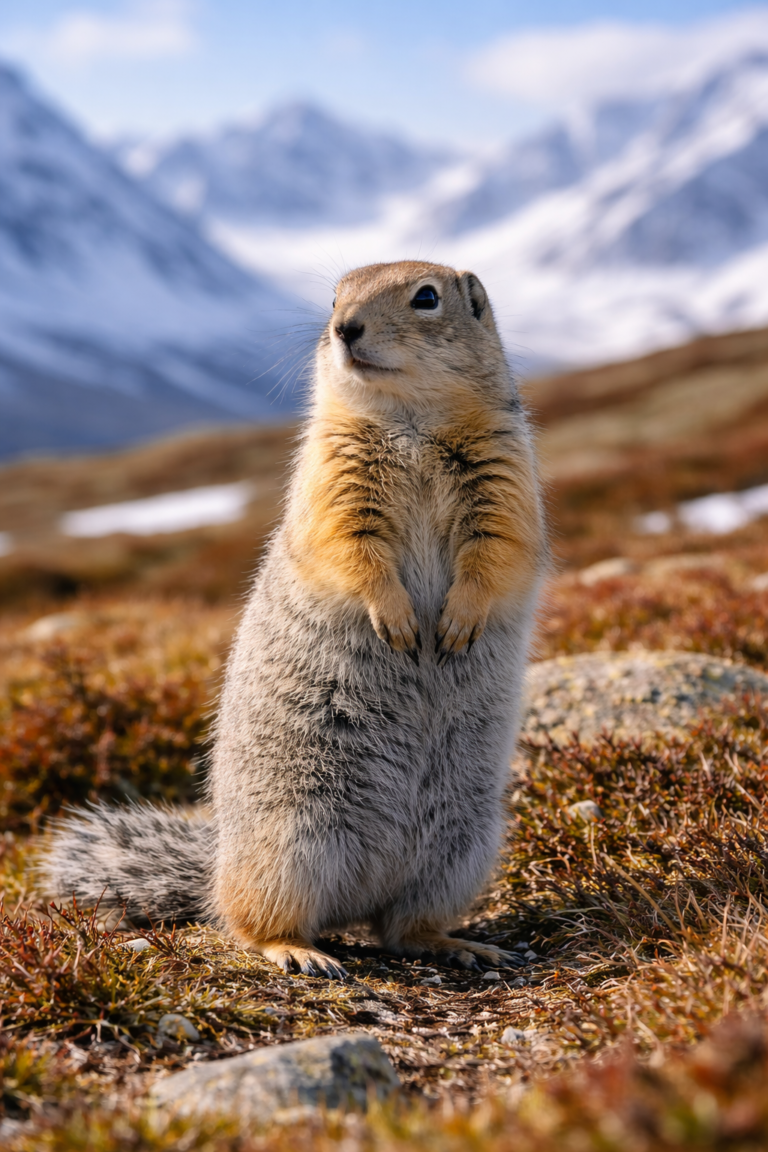
Arctic ground squirrels look small and harmless standing upright in tundra grass, but they survive something few mammals on earth can — true Arctic hibernation. They live in open country where trees don’t grow, digging extensive burrow systems beneath tundra soil. For much of the year, they are underground. Above ground, they are alert and vocal. Below ground, they endure extreme cold.
Identification
Arctic ground squirrels are medium-sized rodents with strong digging ability.
-
Color: Brown to gray with speckled patterning
-
Size: 14–17 inches long including tail
-
Build: Slim body, short ears
-
Posture: Frequently stand upright to scan surroundings
They are larger than typical squirrels and lack the bushy tail of tree-dwelling species.
Their fur blends well with dry tundra and alpine grass.
Where You’ll See Them in Alaska
Arctic ground squirrels are common in:
-
Northern Alaska tundra
-
Alpine slopes above treeline
-
Western open country
-
Dry, open Interior hillsides
They prefer open terrain where visibility is wide and predators are easier to detect.
You’ll often hear them before you see them — sharp alarm calls echoing across tundra flats.
Seasonal Patterns
-
Late Summer to Early Fall: Enter hibernation
-
Winter: Body temperature drops below freezing during deep hibernation
-
Spring: Emerge as snow recedes
-
Summer: Active above ground, feeding and raising young
Arctic ground squirrels are one of the only mammals known to allow their body temperature to drop below freezing during hibernation — a remarkable adaptation to long northern winters. During active months, they feed heavily on grasses, flowers, seeds, and tundra vegetation.
They are prey for foxes, raptors, and other Arctic predators, making them an important part of tundra food systems.
If hiking alpine terrain in summer, expect uneven ground around burrow entrances. Tundra soil can be soft and pocked with holes, so steady footing and ankle support matter more than distance traveled. Arctic ground squirrels may seem small, but their physiological resilience is one of the most extreme in Alaska’s wildlife.