
Arctic Foxes in Alaska
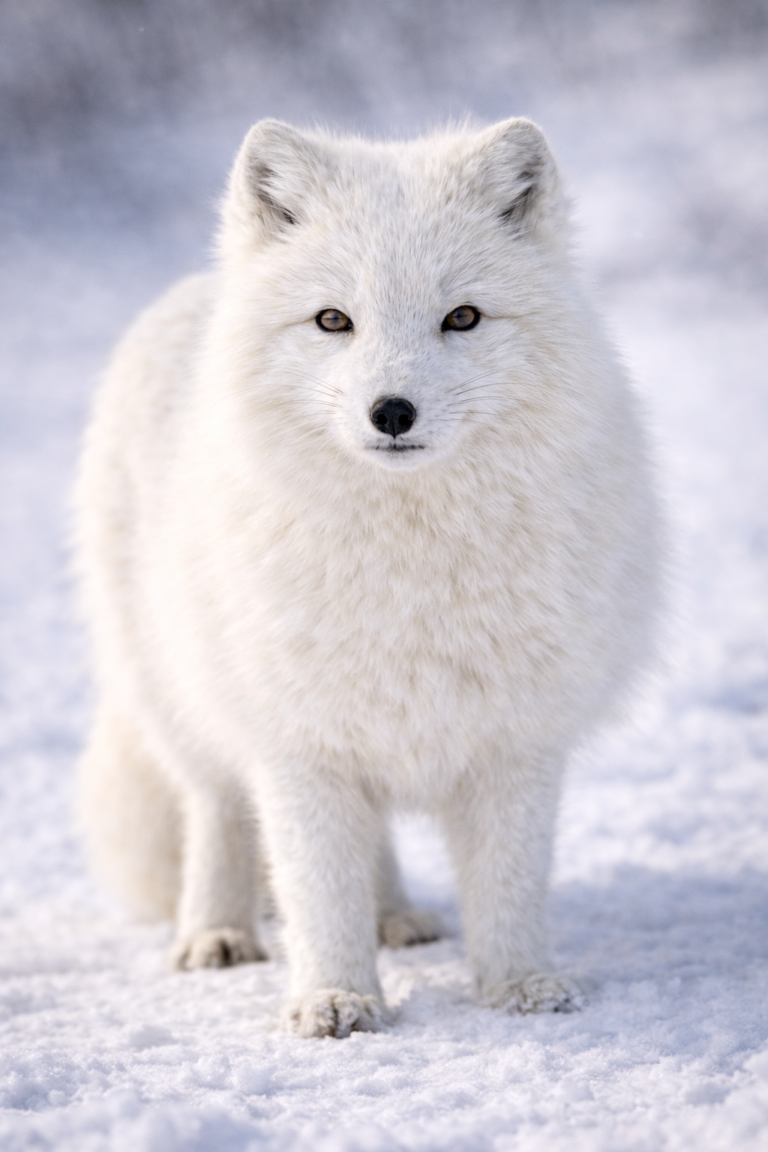
The Arctic fox looks small against the tundra, but it survives in some of the harshest conditions on the continent. In winter, it nearly disappears into snowfields — a white shape moving low across open ground, tail held just above the surface.
Unlike forest foxes, Arctic foxes belong to open country. Wind, ice, and distance shape their world.
They are built for cold in a way few animals are.
Identification
Arctic foxes are compact and thick-furred, with shorter legs and ears than red foxes.
-
Winter coat: Pure white
-
Summer coat: Brown or gray
-
Size: Smaller and stockier than red fox
-
Tail: Thick and full, used for insulation
Their smaller ears reduce heat loss, and dense fur even covers the bottoms of their paws.
In winter, they are often mistaken for drifting snow until they move.
Where You’ll See Them in Alaska
Arctic foxes are most common in:
-
Northern Alaska tundra
-
Arctic coastal plains
-
Western Alaska
-
Offshore islands
They prefer treeless terrain and open visibility.
Unlike red foxes, they rarely occupy dense forest systems.
Seasonal Patterns
-
Winter: White camouflage blends into snow
-
Spring: Denning season begins
-
Summer: Coat shifts darker for tundra ground
-
Fall: Juveniles disperse
Arctic fox populations often fluctuate based on prey cycles, especially lemmings.
In coastal Arctic regions, they may follow polar bears or scavenge marine remains near sea ice.
For many northern Alaska Native communities, Arctic foxes have long been part of subsistence traditions, particularly during the historic fur trade era.
Arctic wind exposure is intense. If observing foxes on tundra or coastal flats, wind-resistant layers and insulated boots matter more than temperature alone suggests. Conditions shift quickly in open country. Arctic foxes don’t move dramatically. They travel steadily, nose low to the ground, reading scent trails across snow.