
Snowy Owls In Alaska
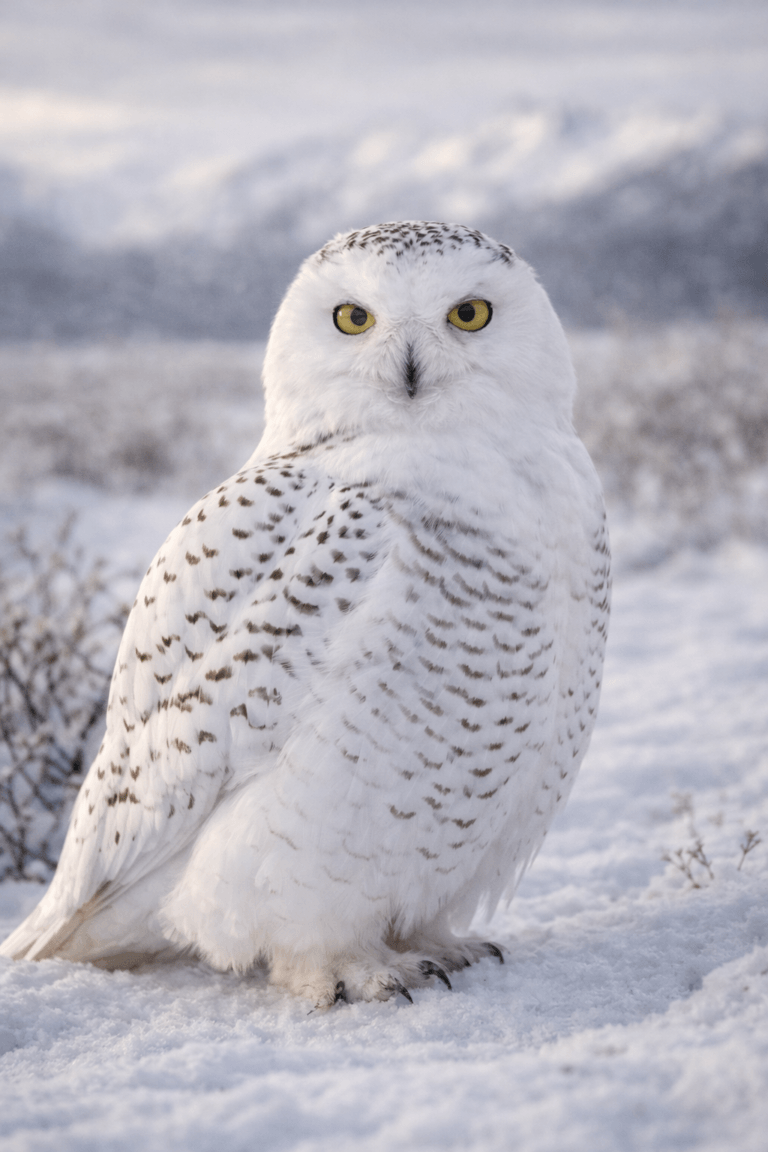
Seeing a Snowy Owl in Alaska feels almost unreal. Against open tundra or frozen flats, they look like part of the landscape — a white shape sitting motionless until it turns its head and those bright yellow eyes lock onto movement.
Unlike most owls, Snowy Owls are active during the day. They belong to open country, not forests, and they rely on wide visibility rather than concealment.
Identification
Snowy Owls are large and powerful, with a thick body and rounded head.
Color: Mostly white with dark barring (heavier barring on females and younger birds)
Eyes: Bright yellow
Wingspan: Up to five feet
Posture: Often perched low on tundra mounds, fence posts, or driftwood
Their flight is steady and direct, low across open ground.
Where You’ll See Them in Alaska
Snowy Owls are most closely associated with:
Arctic tundra
Open coastal flats
Treeless Interior fields in winter
Airport perimeters and wide open gravel areas
They need open sightlines. Forest edges aren’t their territory.
During certain winters, they move farther south in what’s called an “irruption” year, depending largely on food availability in the Arctic.
Seasonal Behavior
Spring: Nesting begins on tundra ridges.
Summer: Chicks are raised on open ground.
Fall: Some disperse southward.
Winter: Seen across wider parts of Alaska, especially open Interior country.
Snowy Owls depend heavily on small mammals like lemmings. When prey numbers shift, so do the owls.
Because they conserve energy carefully in cold climates, keeping distance while observing them matters. A good pair of binoculars makes tundra viewing far more rewarding without forcing a bird to fly.