
Skagway, Alaska
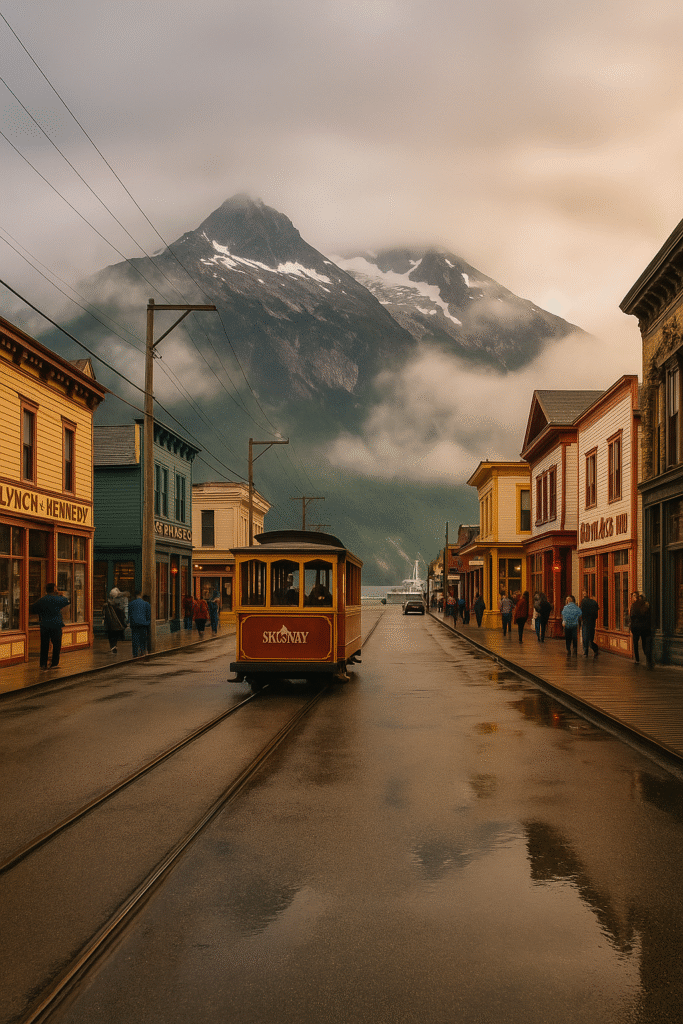
Skagway is a town that feels like a stage set for history, yet it’s alive with modern adventure. Located at the northern end of the Inside Passage, Skagway was the gateway to the Klondike Gold Rush of 1898. In its peak boomtown days, the muddy streets were lined with saloons, brothels, and fortune seekers heading north with dreams of striking it rich. Today, much of that frontier character remains preserved in the historic downtown, where wooden boardwalks, restored false-front buildings, and the stories of stampeders echo at every corner.
With a population of around 1,000 year-round residents, Skagway transforms each summer when visitors arrive by cruise ship, ferry, or highway. The town’s compact layout makes it easy to explore on foot, with shops, museums, and tour outfitters clustered around Broadway Street. Beyond downtown, Skagway is surrounded by towering peaks, waterfalls, and the dramatic fjord waters of Lynn Canal.
The community has balanced its gold rush legacy with outdoor recreation and cultural heritage. Visitors can step aboard the famous White Pass & Yukon Route Railway for a journey through alpine passes once crossed by stampeders, or hike historic trails like the Chilkoot, where remnants of old camps still scatter the route. Festivals and events celebrate both Skagway’s past and its present, blending history with music, art, and small-town Alaskan life.
For many, Skagway offers the best of both worlds: a living museum of the Klondike era and a jumping-off point for some of Southeast Alaska’s most dramatic scenery.
Did You Know?
Skagway boomed to nearly 30,000 residents during the Klondike Gold Rush, making it the largest city in Alaska at the time.
The White Pass & Yukon Route Railway, built in 1898, climbs nearly 3,000 feet in just 20 miles and is still in operation today as a scenic railway.
Broadway Street is lined with restored gold rush–era buildings, many of which are part of the Klondike Gold Rush National Historical Park.
Skagway is one of only a few Southeast Alaska towns connected to the road system, accessible via the Klondike Highway from Canada.
Despite the summer influx of visitors, the town’s year-round population is only about 1,000 people.
Lorem ipsum dolor sit amet, consectetur adipiscing elit. Ut elit tellus, luctus nec ullamcorper mattis, pulvinar dapibus leo.