
Gyrfalcons in Alaska
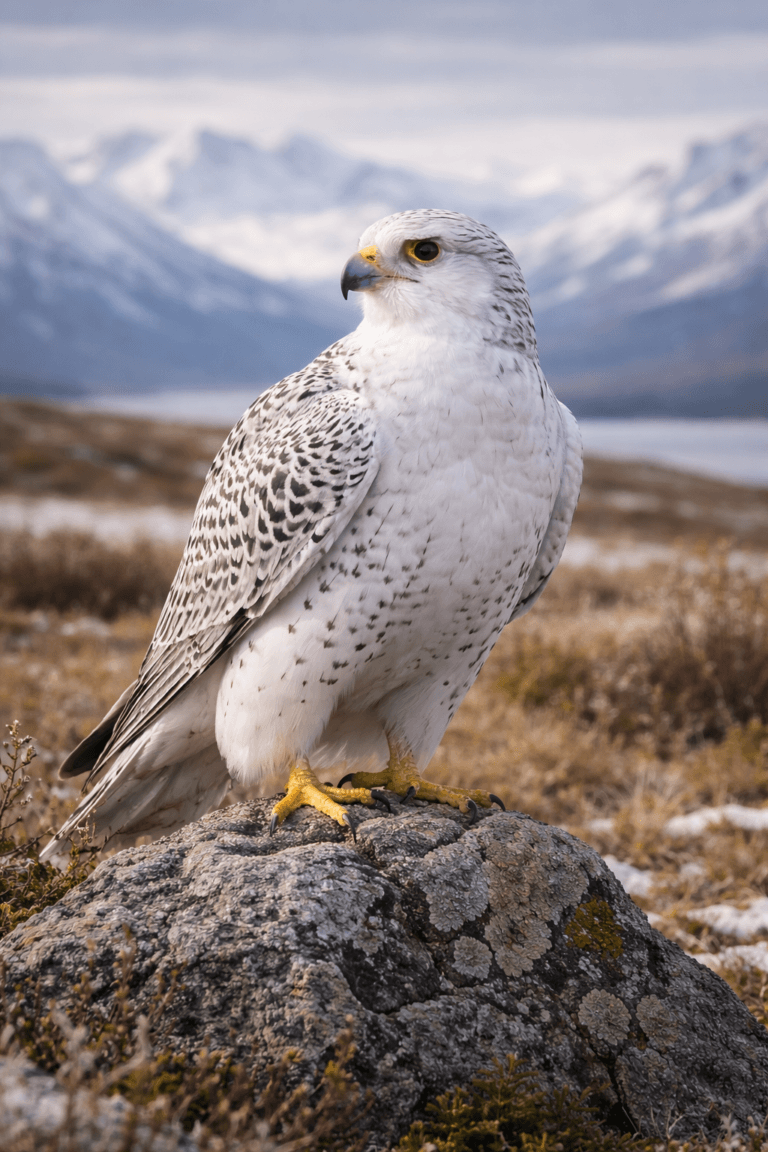
The Gyrfalcon feels like it belongs to wind and stone. You won’t usually see one casually. When you do, it’s often a fast shape cutting across tundra or perched high on a cliff face, scanning open country below.
This is the largest falcon in the world, built for the wide, cold landscapes of Alaska’s north and alpine regions.
Identification
Gyrfalcons are powerful, broad-winged falcons with a heavy chest and strong flight.
Color: Varies from dark gray to nearly white depending on region
Build: Larger and bulkier than Peregrine Falcons
Wings: Long and pointed
Tail: Long with distinct barring
They don’t hover like kestrels. Their flight is direct and forceful, often low across open ground.
Where You’ll See Them in Alaska
Gyrfalcons are most often found in:
Arctic tundra
Alpine mountain slopes
Coastal cliffs in northern regions
Open, treeless landscapes
They prefer expansive visibility and rocky nesting sites.
Because of their remote habitats, sightings usually happen in wide open country rather than forested areas.
Seasonal Patterns
Spring: Nesting begins on cliffs or high rocky ledges
Summer: Hunting ptarmigan and other ground birds
Fall: Some remain north; others move slightly southward
Winter: Often seen in open tundra or windswept Interior regions
Ptarmigan are a primary food source, and their populations often influence falcon presence.
Gyrfalcons have long held importance in Arctic cultures and were historically prized in falconry due to their size and strength.
If you’re glassing open tundra or mountain ridges, steady binoculars or a spotting scope can make the difference between missing a distant silhouette and identifying it clearly. High wind exposure is common in falcon habitat, so layered wind-resistant clothing is more practical than you’d expect.