
Disclosure: This page may contain affiliate links. As an Amazon Associate, I earn from qualifying purchases at no extra cost to you.
Navigation matters in Alaska because cell service is not something you can count on everywhere. Long highways, remote trailheads, back roads, hunting areas, fishing spots, campgrounds, and mountain valleys can all take you outside reliable phone coverage faster than expected.
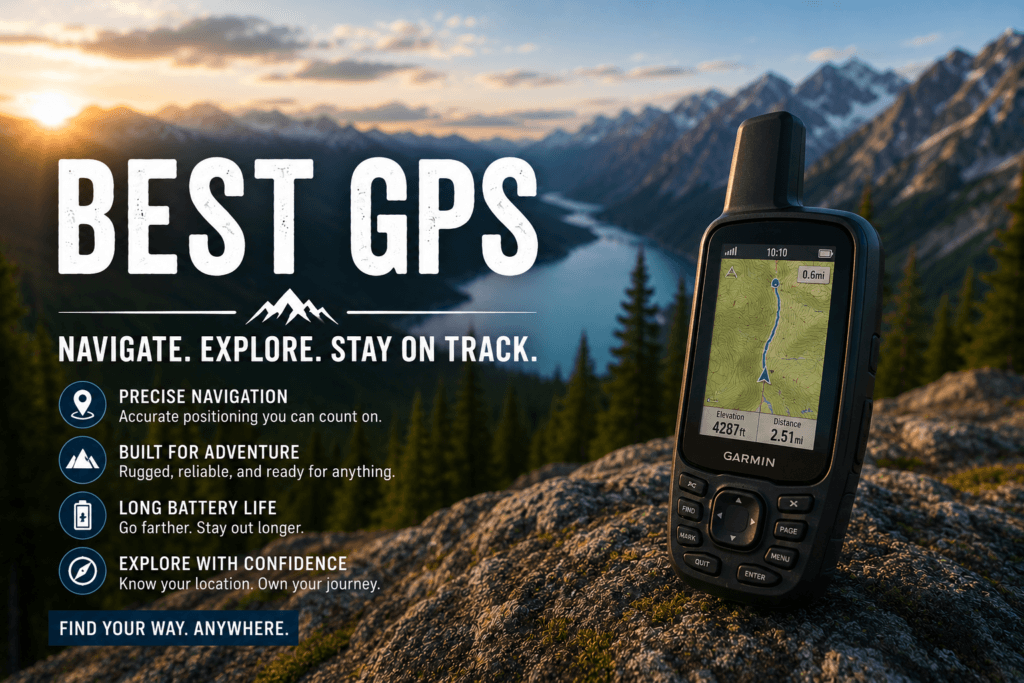
The best GPS and navigation devices for Alaska adventures should help you stay oriented, plan routes, communicate when needed, and travel with more confidence when your phone alone is not enough. Whether you are road-tripping, hiking, camping, hunting, fishing, boating, or exploring remote areas, having a dependable navigation system matters.
This guide covers practical GPS and navigation devices for Alaska travel, including handheld GPS units, satellite GPS communicators, hiking GPS devices, large-screen outdoor navigators, overland navigation systems, and road-trip GPS units.
Quick Navigation
Quick Picks
- Best Overall: Garmin GPSMAP 67i
- Best Satellite GPS: Garmin inReach Mini 2
- Best Hiking GPS: Garmin eTrex Solar
- Best Large Screen GPS: Garmin Montana 760i
- Best Overland GPS: Garmin Tread Overland
- Best Highway Navigation Unit: Garmin DriveSmart 76
GPS & Navigation Devices for Alaska Adventures
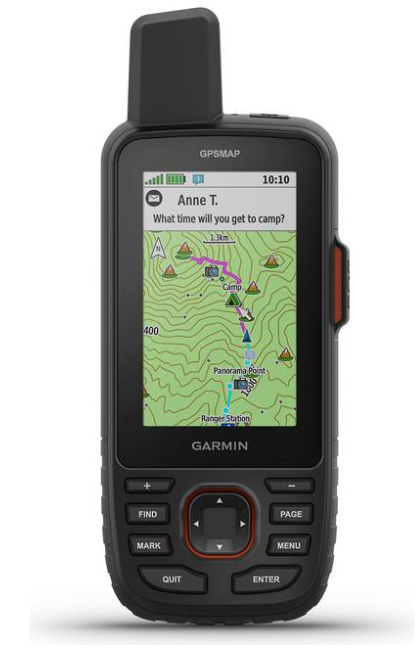
Best Overall — Garmin GPSMAP 67i
The Garmin GPSMAP 67i is a strong overall navigation device for Alaska because it combines handheld GPS navigation with satellite communication features. That makes it useful for hikers, hunters, backcountry travelers, photographers, and anyone spending time away from reliable cell service.
In Alaska, having both navigation and messaging in one rugged device can be valuable. Trails, river corridors, gravel roads, and remote areas can become confusing quickly, especially when weather changes or visibility drops. A device like this gives you more tools than a phone alone.
Best for: Backcountry travel, hiking, hunting, remote navigation, satellite messaging, and serious Alaska adventure use.
Check Price on Amazon
Best Satellite GPS — Garmin inReach Mini 2
The Garmin inReach Mini 2 is one of the most useful compact devices for Alaska travel because it gives you satellite messaging, location sharing, tracking, and SOS capability in a small package. It is not a full large-screen GPS, but it is extremely useful when communication matters.
This device makes sense for travelers who may be outside cell service but do not want to carry a larger unit. It is especially useful for hiking, hunting, camping, fishing, boating, photography, road trips, and winter travel.
Best for: Satellite messaging, SOS capability, location sharing, lightweight backcountry travel, and remote Alaska adventures.
Check Price on Amazon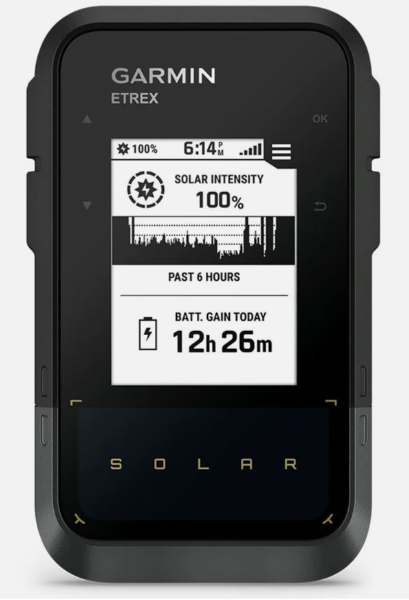
Best Hiking GPS — Garmin eTrex Solar
The Garmin eTrex Solar is a practical hiking GPS for travelers who want a smaller navigation device for trails, routes, and outdoor use. It is a good fit for people who want simple handheld navigation without carrying a large screen device.
For Alaska hiking and outdoor travel, a dedicated GPS can be helpful when your phone battery is low or maps are not loading. The solar feature can also be useful during long daylight seasons, though it should still be treated as a supplement rather than your only power plan.
Best for: Hiking, backpacking, trail navigation, lightweight GPS use, and travelers who want a simple dedicated navigation tool.
Check Price on Amazon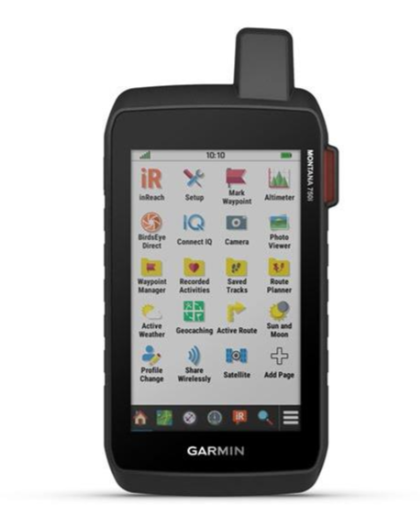
Best Large Screen GPS — Garmin Montana 760i
The Garmin Montana 760i is a better fit for travelers who want a larger screen and more robust outdoor navigation features. A bigger display can be easier to read when following routes, checking maps, or navigating from a vehicle, ATV, boat, or camp setup.
In Alaska, large-screen navigation can be helpful when you are moving between highways, gravel roads, trailheads, remote camps, and outdoor routes. This device is more substantial than a lightweight hiking GPS, but that can be a benefit for more serious navigation needs.
Best for: Large-screen navigation, outdoor travel, vehicle-supported adventures, hunting, camping, boating, and rugged Alaska navigation.
Check Price on Amazon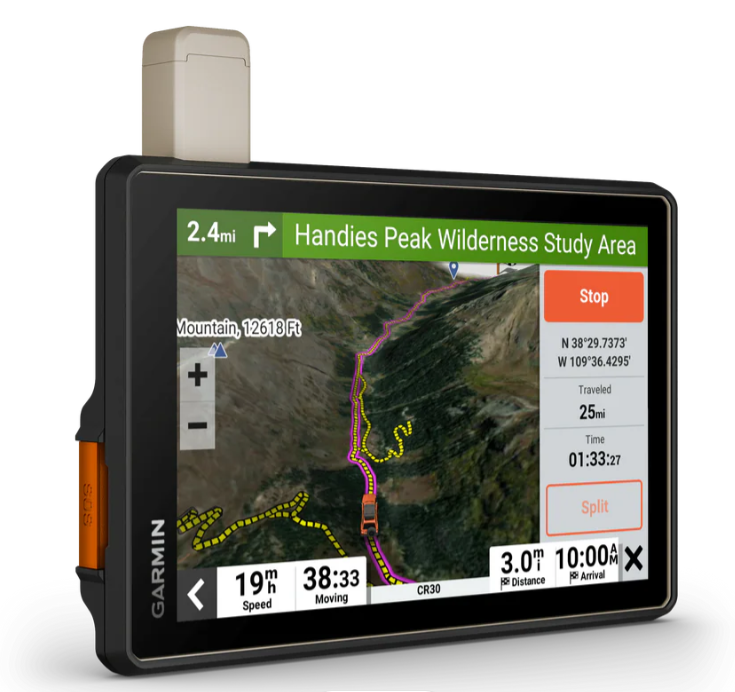
Best Overland GPS — Garmin Tread Overland
The Garmin Tread Overland is built for rugged vehicle navigation and overland-style travel. It makes sense for people driving remote routes, gravel roads, off-highway areas, and longer Alaska road trips where normal phone navigation may not be enough.
For Alaska, vehicle-based navigation matters because distances are large and road conditions can vary. A rugged navigation system can help with planning routes, staying oriented, and navigating beyond basic city driving.
Best for: Overland travel, remote roads, vehicle-based adventures, gravel routes, road trips, and rugged Alaska navigation.
Check Price on Amazon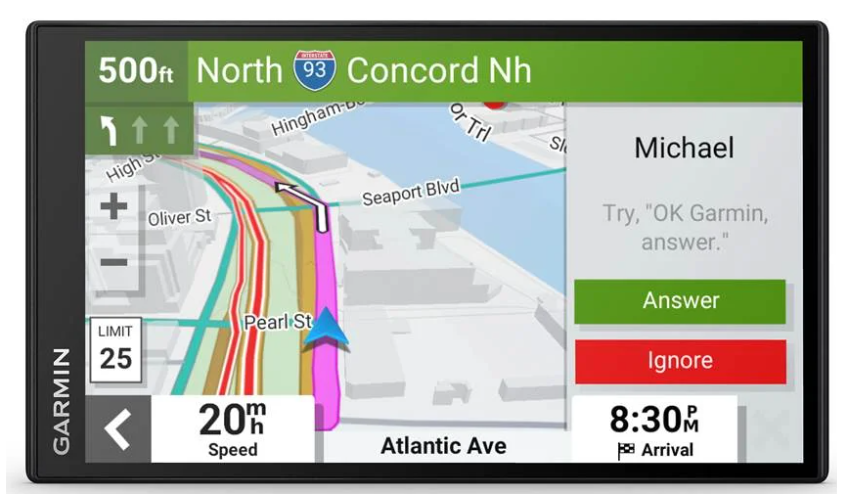
Best Highway Navigation Unit — Garmin DriveSmart 76
The Garmin DriveSmart 76 is a practical option for travelers who are mostly focused on road navigation. It is not a backcountry GPS, but it can be useful for Alaska road trips where you want a dedicated navigation screen instead of relying entirely on your phone.
This kind of device makes sense for rental vehicles, RV travel, long highway drives, and travelers who prefer a separate GPS unit. Alaska road trips can involve long distances between towns, so having dependable route guidance can reduce stress.
Best for: Highway travel, RV trips, rental cars, road trips, dedicated navigation, and travelers who want a separate GPS screen.
Check Price on AmazonGPS & Navigation Device Comparison Chart
| Product | Best For | Device Type | Backcountry Use | Road Trip Use | Alaska Suitability | Price Range |
|---|---|---|---|---|---|---|
| Garmin GPSMAP 67i | Best Overall | Handheld GPS + Satellite | Excellent | Good | Excellent | $$$ |
| Garmin inReach Mini 2 | Satellite GPS | Satellite Communicator | Excellent | Very Good | Excellent | $$$ |
| Garmin eTrex Solar | Hiking GPS | Handheld GPS | Very Good | Fair | Very Good | $$ |
| Garmin Montana 760i | Large Screen GPS | Rugged GPS | Excellent | Very Good | Excellent | $$$$ |
| Garmin Tread Overland | Overland GPS | Vehicle Navigator | Good | Excellent | Excellent | $$$$ |
| Garmin DriveSmart 76 | Highway Navigation | Road GPS | Poor | Excellent | Good | $$ |
Why Navigation Matters in Alaska
Alaska is large, spread out, and full of areas where cell service is limited or unavailable. You do not have to be deep in the wilderness to lose coverage. It can happen on highways, trails, river corridors, coastal routes, and back roads.
Good navigation helps you make better decisions before small problems become bigger ones. It can help you stay on route, mark locations, find your way back to a vehicle, communicate delays, and understand where you are when conditions change.
Navigation is not just about convenience. In Alaska, it can become part of your safety system. Weather, darkness, terrain, water crossings, and long distances all make reliable navigation more important.
Why Your Phone Is Not Always Enough
Phones are useful, and many travelers will use them every day in Alaska. They work well for maps in towns, photos, reservations, messages, and basic route planning. The problem is that phones depend on battery life, downloaded maps, and sometimes cell service.
If you are relying on your phone, download offline maps before leaving service. Bring backup power and do not assume your phone will last all day if you are also using it for photos, videos, weather, and communication.
A dedicated GPS or satellite device gives you another layer of reliability. That does not mean phones are useless. It means you should know where the limits are.
GPS Devices vs. Satellite Communicators
A GPS device helps you navigate. A satellite communicator helps you communicate when there is no cell service. Some devices combine both functions, but it is important to understand what you are actually buying.
Handheld GPS units are useful for maps, routes, tracks, waypoints, and staying oriented. Satellite communicators are useful for check-ins, location sharing, two-way messaging, and SOS features. Both can be valuable in Alaska.
If you are staying near towns and highways, you may only need a phone and maybe a road GPS. If you are hiking, hunting, boating, camping remotely, or traveling far from service, satellite communication becomes much more important.
Road Trips and Remote Highways
Alaska road trips are incredible, but distances are large. Towns can be far apart, weather can change, and some highways have long stretches with limited service. Good navigation helps you plan fuel stops, lodging, detours, and realistic travel times.
Dedicated road GPS units can be useful if you do not want to rely entirely on your phone. Overland-style navigators can help if you are exploring gravel roads, remote routes, or vehicle-based adventure areas.
Still, no device replaces preparation. Know your route, check road conditions, carry paper backup information when appropriate, and do not assume every road is simple just because it appears on a map.
Backcountry Navigation
Backcountry navigation in Alaska requires more than following a blue dot on a screen. Trails may be faint, terrain can be wet or brushy, weather can reduce visibility, and river or snow conditions can change the route entirely.
A handheld GPS can help you track your route, mark important points, and return to a known location. This is useful for hiking, hunting, fishing, camping, berry picking, photography, and general exploring.
Carry redundancy when the stakes are higher. A GPS device, offline maps, paper map, compass, satellite communicator, and route plan all work together. The more remote the trip, the less you should depend on one device alone.
Battery Life and Cold Weather
Cold weather affects batteries, and that includes GPS devices and satellite communicators. A device that lasts a long time in mild weather may drain faster in cold temperatures. This matters during winter travel, northern lights outings, hunting season, and shoulder-season trips.
Keep critical devices charged and bring backup power when possible. For small devices, a power bank and charging cable can make a big difference. For longer trips, consider how often you will need to recharge and where that power will come from.
Do not wait until the battery is almost dead to think about charging. Make charging part of your routine whenever power is available.
What to Look for in an Alaska Navigation Device
The right navigation device depends on how you travel. A road tripper, hiker, hunter, snowmachiner, and backcountry photographer do not all need the same tool. Start by thinking about where you will actually go and what could go wrong if your phone stops working.
For remote travel, look for durability, battery life, satellite communication options, map capability, and ease of use. For road trips, screen size and road navigation features may matter more. For hiking, size and battery life are usually more important.
Do not buy a complicated device and leave it in the box until your trip. Learn how to use it before you need it. Navigation gear only helps if you understand it.
Common Navigation Mistakes
One common mistake is assuming cell service will be available because a place is popular. Popular Alaska destinations can still have weak or nonexistent service. Download maps and plan ahead.
Another mistake is buying a GPS device but never practicing with it. You should know how to mark a waypoint, follow a track, check battery status, and access emergency functions before your trip.
A third mistake is relying on only one navigation method. Electronics are useful, but they can fail, get wet, run out of power, or be misplaced. Backup plans matter.
Frequently Asked Questions
Do I need a GPS device for Alaska?
Not every traveler needs one. If you are staying in towns and using guided tours, your phone may be enough. If you are hiking, road-tripping remote areas, hunting, fishing, camping, boating, or traveling outside cell service, a GPS or satellite device is worth considering.
Will my phone GPS work without cell service?
Your phone can still use GPS without cell service, but maps may not load unless they are downloaded ahead of time. Battery life is also a concern, especially if you use your phone for photos, video, and communication.
What is the difference between GPS and inReach?
GPS helps you know where you are and navigate. Garmin inReach devices add satellite communication features like messaging, tracking, location sharing, and SOS. Some devices combine both navigation and satellite communication.
What GPS is best for Alaska road trips?
For highway travel, a dedicated road GPS like the Garmin DriveSmart 76 can be useful. For more rugged vehicle travel or overland-style routes, a device like the Garmin Tread Overland may make more sense.
Do I still need paper maps?
Paper maps can still be useful, especially for remote travel and backup planning. Electronics are convenient, but they can fail. For serious backcountry trips, redundancy is smart.
Should I carry a satellite communicator in Alaska?
If you will be outside reliable cell service, especially in remote areas, a satellite communicator is worth serious consideration. It can help you send messages, share your location, and request emergency help if needed.
Final Thoughts
The best GPS and navigation device for Alaska depends on where you are going and how remote your trip will be. For serious backcountry use, the Garmin GPSMAP 67i is a strong all-around choice because it combines navigation and satellite communication features.
The Garmin inReach Mini 2 is excellent for lightweight satellite communication. The Garmin eTrex Solar works well for hiking, the Montana 760i offers a larger rugged screen, the Garmin Tread Overland is useful for vehicle-based adventure, and the Garmin DriveSmart 76 is a practical highway navigation option.
Alaska rewards preparation. A good navigation system helps you travel with more confidence, stay oriented when service disappears, and avoid turning a simple outing into a stressful situation. Know your route, keep your devices charged, and do not rely on one tool alone.