
Beluga Whales in Alaska
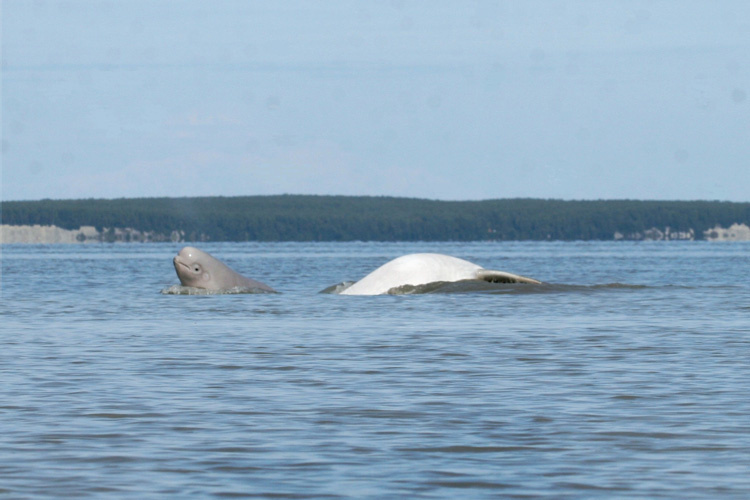
Beluga whales don’t always announce themselves dramatically. Often, you’ll first notice a pale shape just beneath the surface — a smooth white back rising and disappearing again in a quiet roll. In certain light, they almost glow against gray water.
In Alaska, belugas are closely tied to shallow coastal systems and river mouths. They prefer areas where freshwater meets saltwater, where fish runs bring steady feeding opportunities.
Identification
Belugas are smaller than humpbacks or orcas but still substantial animals.
Color: Adults are bright white; juveniles are gray
Size: 10–16 feet long
Head: Rounded forehead (called a melon)
Dorsal fin: None — just a low ridge along the back
Their lack of a dorsal fin makes their silhouette different from other whales in Alaska. At the surface, you’ll usually see a smooth, rolling motion rather than a tall fin cutting through the water. Belugas are highly vocal underwater, earning them the nickname “canaries of the sea.”
Where You’ll See Them in Alaska
Belugas are most commonly found in:
Cook Inlet
Turnagain Arm
Knik Arm
Yukon and Kuskokwim River deltas
Arctic coastal waters
One of the most well-known viewing locations is Beluga Point, just south of Anchorage along the Seward Highway. From the roadside pullouts overlooking Turnagin Arm, visitors sometimes spot belugas traveling with the tide, especially during fish runs.
Timing matters. Tidal movement in Turnagain Arm strongly influences when whales pass through. Viewing is often best around mid-tide transitions when currents are active. Unlike offshore whale tours, Beluga Point offers land-based viewing. A steady pair of binoculars makes a big difference — belugas surface briefly and can be easy to miss without magnification.
Seasonal Patterns
Cook Inlet belugas are present year-round, though visibility varies by season and ice conditions. Summer months often provide more consistent viewing conditions due to daylight and accessibility.
In western and northern Alaska, belugas follow seasonal fish migrations, moving between coastal and river systems.
Belugas hold deep importance in Alaska Native subsistence traditions, particularly in western and northern communities. Harvesting practices are regulated and rooted in generations of knowledge about migration timing and respectful use.
Because Cook Inlet belugas are a small and vulnerable population, responsible viewing matters. Staying within designated pullouts and avoiding shoreline disturbance helps protect both habitat and whales.
Turnagain Arm winds can be strong and sudden, even on calm Anchorage days. Wind-resistant layers and stable footing on gravel pullouts make viewing more comfortable than most visitors expect. Belugas may not breach or tail-slap like humpbacks, but their quiet presence in silty tidal water is uniquely Alaska.