
Animals of Alaska
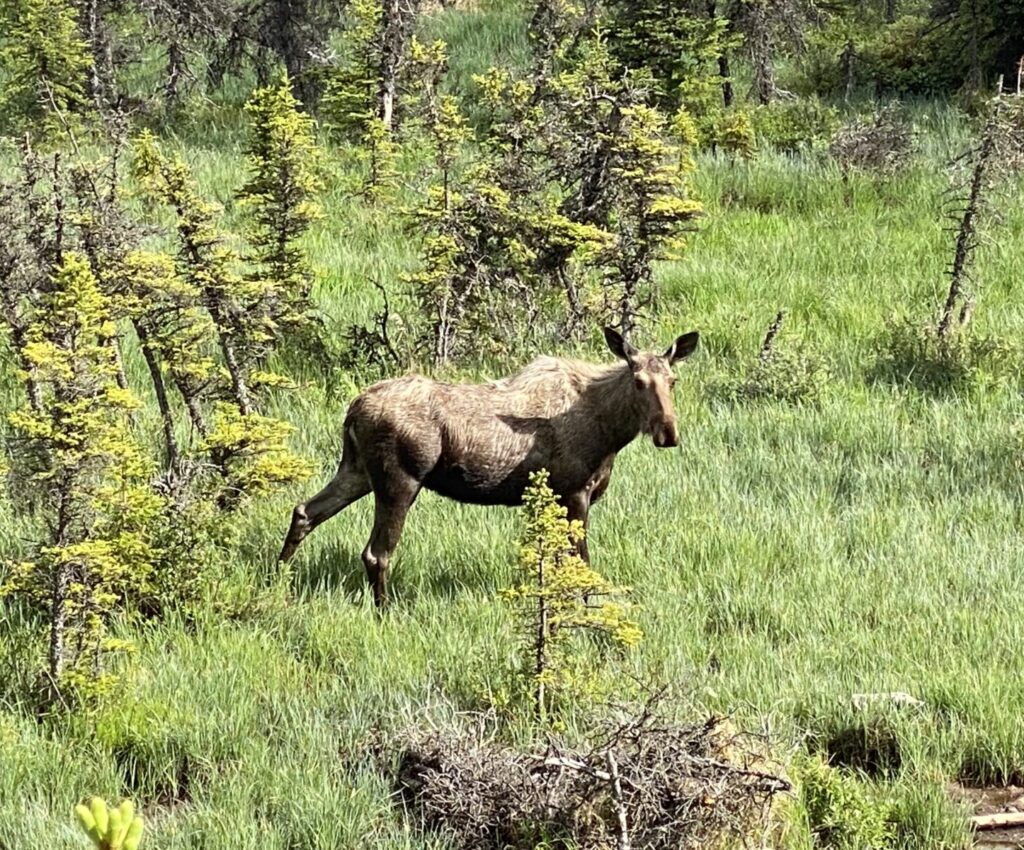
Alaska is home to some of the most recognizable and resilient wildlife in North America. Vast wilderness, low population density, and diverse ecosystems allow animals to thrive across mountains, forests, rivers, tundra, and coastal waters.
Many of Alaska’s animals are adapted to extreme conditions. Long winters, deep snow, limited daylight, and seasonal food availability shape how wildlife migrates, hibernates, hunts, and survives. In summer, long daylight hours create brief but intense periods of growth and activity.
From large land mammals to migratory birds and marine species, animals play a central role in Alaska’s ecosystems and cultural identity. This page provides an overview of the major types of animals found in Alaska, where they live, and why they matter.
Types of Animals Found in Alaska
Alaska’s wildlife can be grouped by habitat and lifestyle. Climate, geography, and access to food strongly influence where different animals are found.
Land Mammals
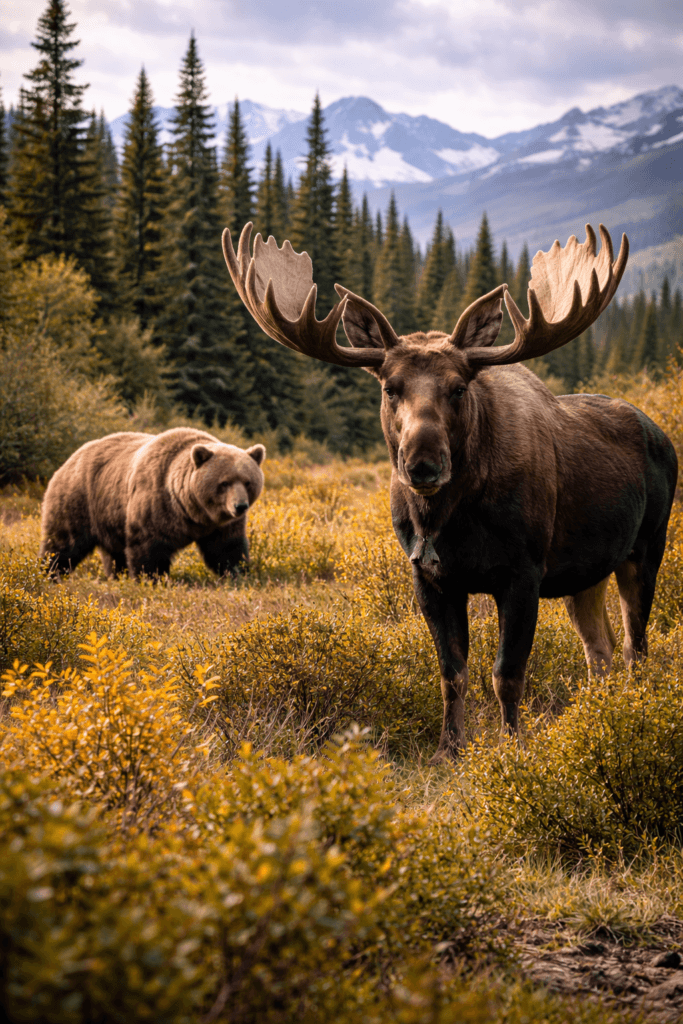
Land mammals are among the most well-known animals in Alaska and range from large predators to small forest and tundra species. Many rely on seasonal behaviors such as migration, hibernation, or thick winter coats to survive cold conditions.
Examples include Moose, commonly found in forests and wetlands across the state, and Brown Bear, which inhabits coastal areas, river systems, and wilderness regions.
Birds
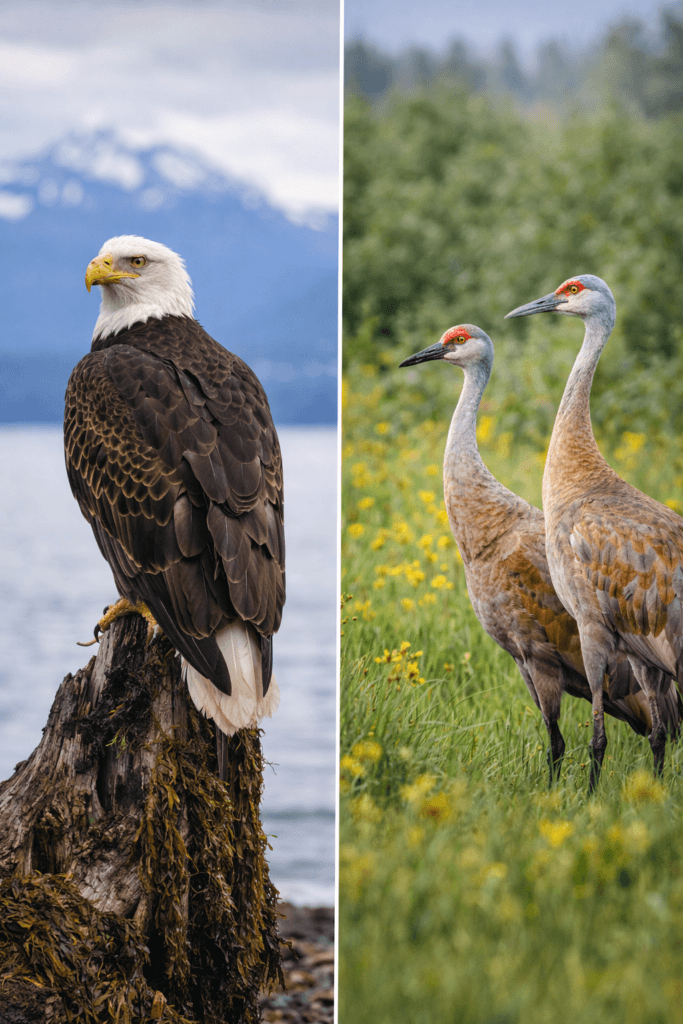
Alaska supports hundreds of bird species, many of which migrate thousands of miles each year. Birds take advantage of Alaska’s productive summers to nest, feed, and raise young before migrating south.
Examples include Bald Eagle, frequently seen along coastlines and rivers, and Sandhill Crane, a migratory species found in wetlands and open landscapes
Marine Mammals
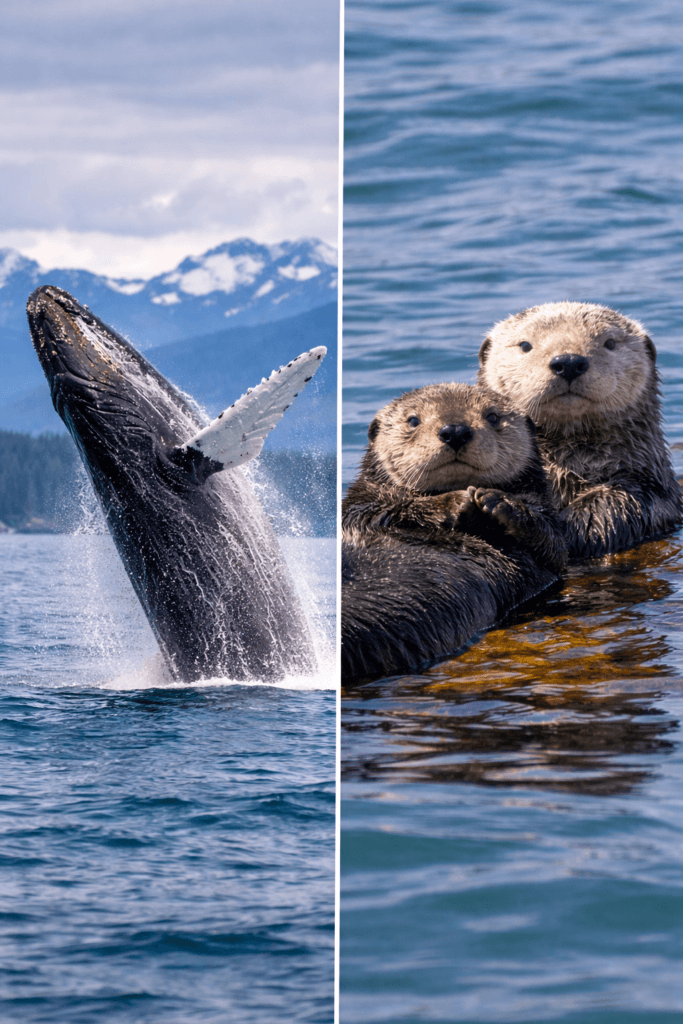
Alaska’s coastal waters support a wide range of marine mammals that depend on cold, nutrient-rich seas. These animals are commonly found along the coast, in the Bering Sea, and throughout the Gulf of Alaska.
Examples include Humpback Whale, often seen during summer feeding seasons, and Sea Otter, which lives along rocky shorelines and kelp forests.
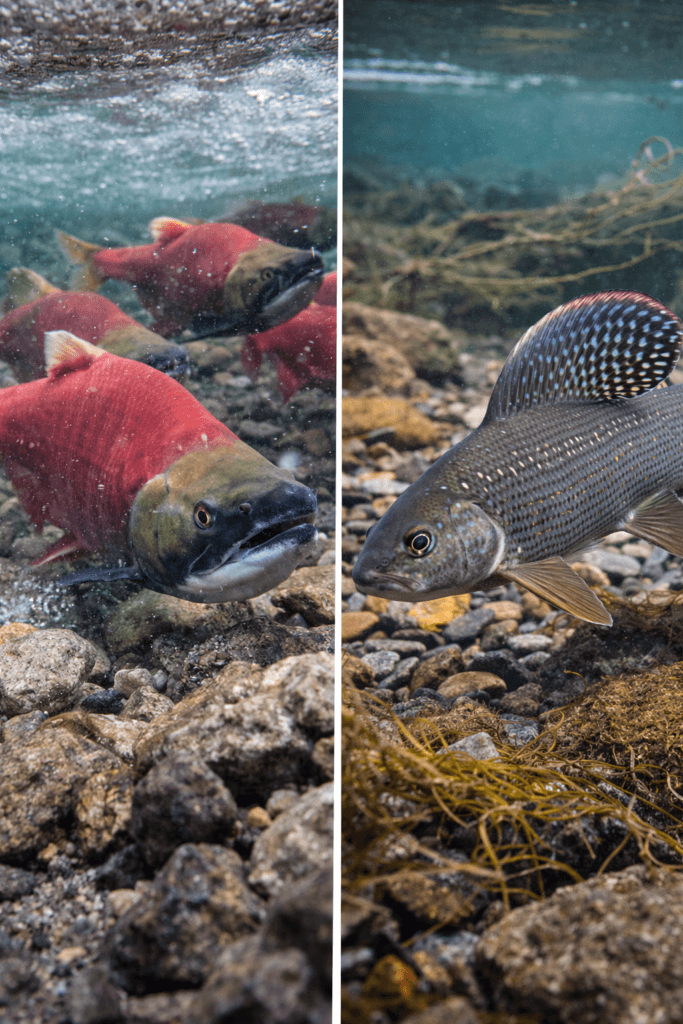
Fish
Fish play a critical role in Alaska’s ecosystems and food systems. Rivers, lakes, and coastal waters support both freshwater and saltwater species, many of which migrate between the two.
Examples include Salmon, which travel from the ocean to freshwater rivers to spawn, and Arctic Grayling, a freshwater fish commonly found in cold northern rivers and lakes.
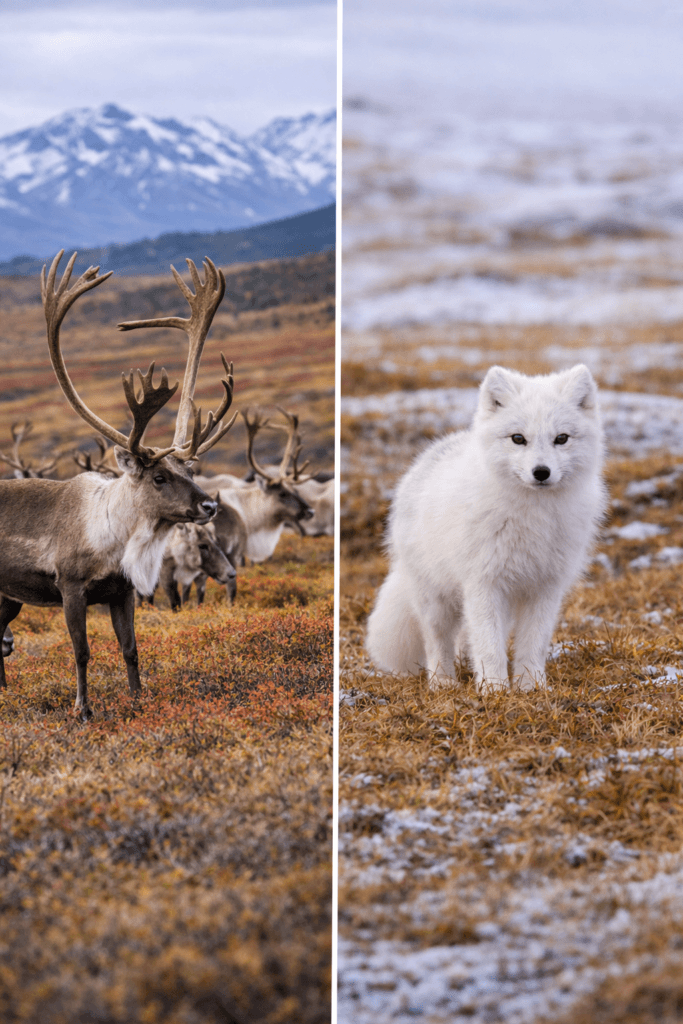
Arctic and Tundra Animals
Northern Alaska supports animals specially adapted to open tundra environments and extreme seasonal conditions. These species often rely on camouflage, migration, or compact body shapes to conserve heat.
Examples include Caribou, which migrate long distances across tundra landscapes, and Arctic Fox, known for its seasonal coat changes.
Animals are not evenly distributed across Alaska. Coastal regions support marine life and dense bird populations, while Interior forests are home to large land mammals. Tundra regions support fewer species but often host large seasonal migrations.
Wildlife plays a vital role in shaping Alaska’s ecosystems. Animals influence vegetation, nutrient cycles, and predator-prey relationships. Many species are also central to subsistence lifestyles, recreation, tourism, and scientific research.
Beyond ecology, animals hold deep cultural importance in Alaska. Indigenous knowledge, traditions, and stories are closely tied to wildlife and seasonal patterns. Respect for animals remains an important part of life across the state.
Alaska is home to hundreds of animal species, some widespread and others limited to specific regions or habitats. Some are easily observed, while others remain elusive and rarely seen.
The following animals serve as starting points for learning more about Alaska’s wildlife. Each will be explored in greater detail on its own dedicated page.
Notable Animals of Alaska
Moose
Brown Bear
Black Bear
Caribou
Dall Sheep
Gray Wolf
Wolverine
Bald Eagle
Humpback Whale
Orca
Sea Otter
Harbor Seal
Salmon
Arctic Grayling