
Disclosure: This page may contain affiliate links. As an Amazon Associate, I earn from qualifying purchases at no extra cost to you.
A first aid kit is one of those things you hope you do not need, but Alaska is not the place I would travel without one. Long drives, remote stops, hiking trails, fishing areas, cruise excursions, campgrounds, cabins, and weather changes all create situations where small injuries can happen far from quick help.
The best travel first aid kits for Alaska should be practical, organized, easy to pack, and appropriate for the type of trip you are taking. You do not need a full wilderness medical setup for every vacation, but you do need enough basic supplies to handle cuts, blisters, scrapes, minor burns, allergic reactions, headaches, stomach issues, and common travel problems.
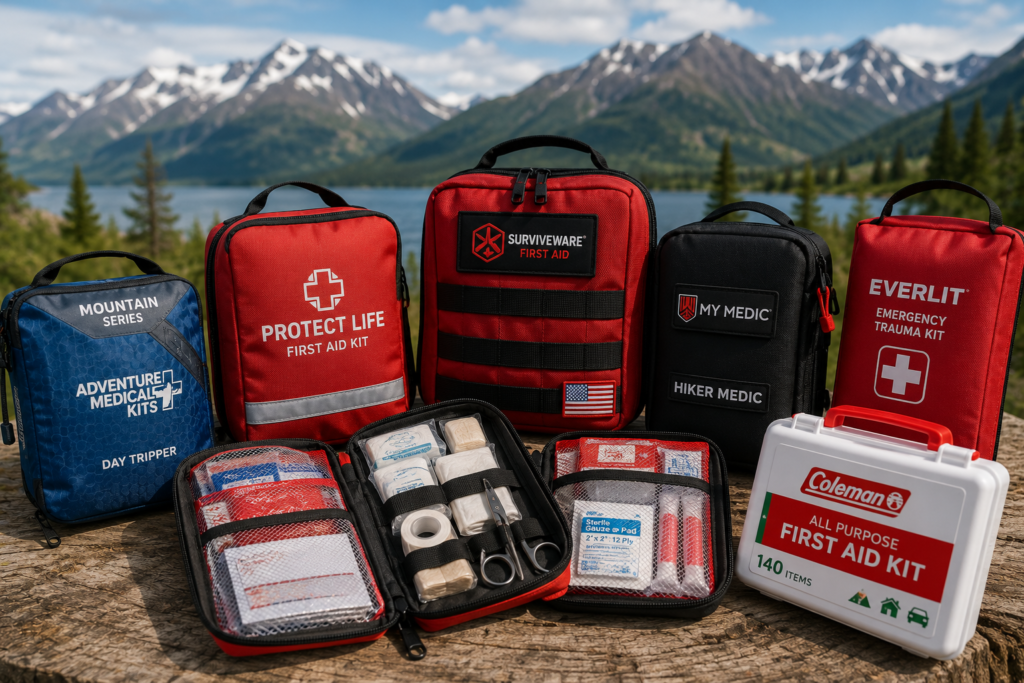
This guide covers practical first aid kits for Alaska travel, including compact kits, family-friendly kits, hiking kits, larger emergency kits, and budget-friendly options for road trips, cruises, hiking, camping, fishing, and general adventure travel.
Quick Navigation
- Quick Picks
- Best Travel First Aid Kits for Alaska
- First Aid Kit Comparison Chart
- Why First Aid Matters in Alaska
- First Aid for General Alaska Travel
- First Aid for Alaska Road Trips
- First Aid for Hiking and Outdoor Adventures
- First Aid for Alaska Cruises
- What to Add to a Store-Bought Kit
- Common First Aid Kit Mistakes
- Frequently Asked Questions
- Final Thoughts
Quick Picks
- Best Overall: Adventure Medical Kits Mountain Series
- Best Basic Travel Kit: Protect Life First Aid Kit
- Best Larger Kit: Surviveware Large First Aid Kit
- Best Hiking Kit: MyMedic Hiker Medic
- Best Emergency Trauma Kit: EVERLIT Emergency Trauma Kit
- Best Budget Kit: Coleman All Purpose First Aid Kit
Best Travel First Aid Kits for Alaska
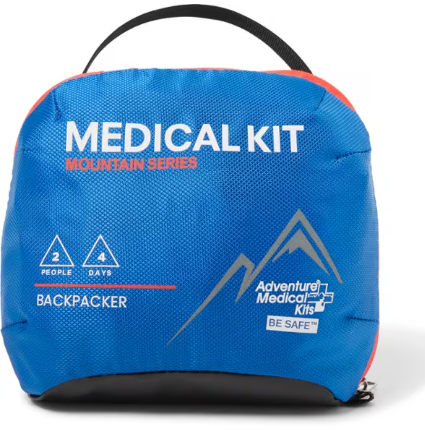
Best Overall — Adventure Medical Kits Mountain Series
The Adventure Medical Kits Mountain Series is a strong overall first aid kit for Alaska because it is built more for real outdoor use than a tiny glove box kit. It makes sense for travelers who plan to hike, camp, fish, road trip, explore trails, or spend time away from town.
Alaska adventures often involve longer distances from services. Even a minor injury can become more frustrating when you are hours from a pharmacy or sitting in a remote cabin without easy access to supplies. A more capable kit gives you a better starting point.
This is a good choice if you want one first aid kit that can work across several Alaska trip styles instead of buying separate kits for every activity.
Best for: Alaska road trips, hiking, camping, fishing, family travel, cabins, and travelers who want a more complete first aid setup.
Check Price on Amazon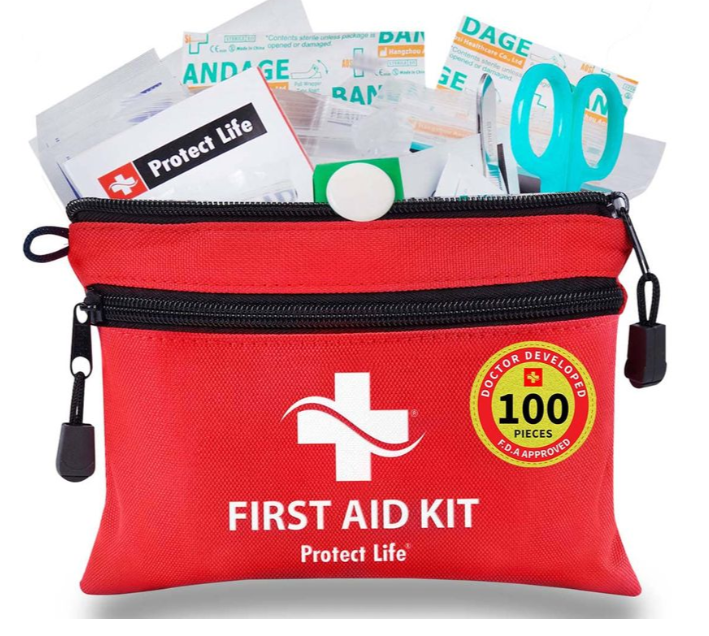
Best Basic Travel Kit — Protect Life First Aid Kit
The Protect Life First Aid Kit is a practical basic kit for travelers who want something easy to keep in luggage, a rental car, a camper, or a day bag. It covers common minor injuries without being overly bulky.
This kind of kit is useful for Alaska because many travel days involve small problems: blisters, cuts, scrapes, headaches, minor stomach issues, or a kid falling on gravel. Those are not dramatic emergencies, but they are much easier to handle when you already have supplies.
If your trip is mostly road travel, sightseeing, cruises, or light excursions, a basic kit like this can be enough when paired with your personal medications and a few extra items.
Best for: Basic travel, families, rental cars, cruises, light excursions, and travelers who want an easy starter first aid kit.
Check Price on Amazon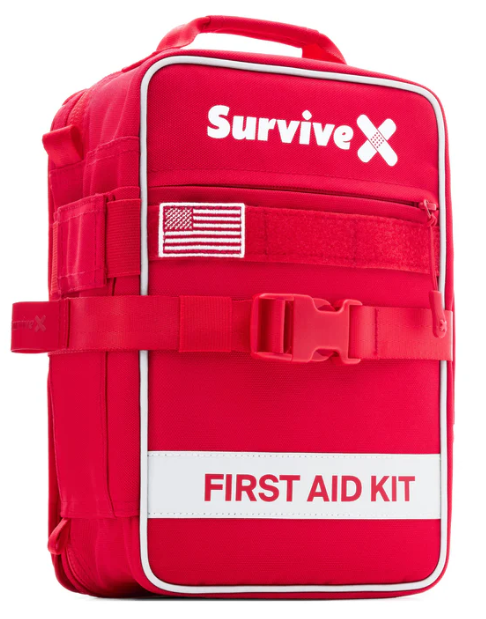
Best Larger Kit — Surviveware Large First Aid Kit
The Surviveware Large First Aid Kit is a better choice for travelers who want a more organized and substantial kit. It makes sense for road trips, family travel, RV travel, cabin stays, camping, and longer Alaska itineraries where you want more than the bare minimum.
Organization matters in a first aid kit. When someone is bleeding, crying, cold, or uncomfortable, you do not want to dump a messy pouch onto the ground and search for the right item. A well-organized kit saves time and stress.
This is a strong option to keep in a vehicle or lodging base while using a smaller kit for day hikes or excursions.
Best for: Alaska road trips, families, RVs, cabins, longer trips, vehicle kits, and travelers who want a larger organized first aid setup.
Check Price on Amazon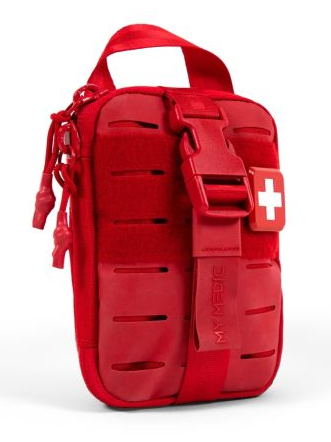
Best Hiking Kit — MyMedic Hiker Medic
The MyMedic Hiker Medic is a good option for travelers who want a smaller kit focused on hiking and outdoor movement. It is easier to carry in a day pack than a large vehicle kit, which matters when you are actually out on the trail.
Alaska hikes can involve roots, rocks, mud, wet boardwalks, uneven ground, and changing weather. Blisters, cuts, scrapes, and small injuries are common enough that carrying a compact first aid kit is simply smart.
This kind of kit is not meant to replace a larger emergency setup, but it works well as the first aid kit you actually carry with you during the day.
Best for: Hiking, day packs, cruise excursions, short trails, outdoor activities, and travelers who need a compact carry kit.
Check Price on Amazon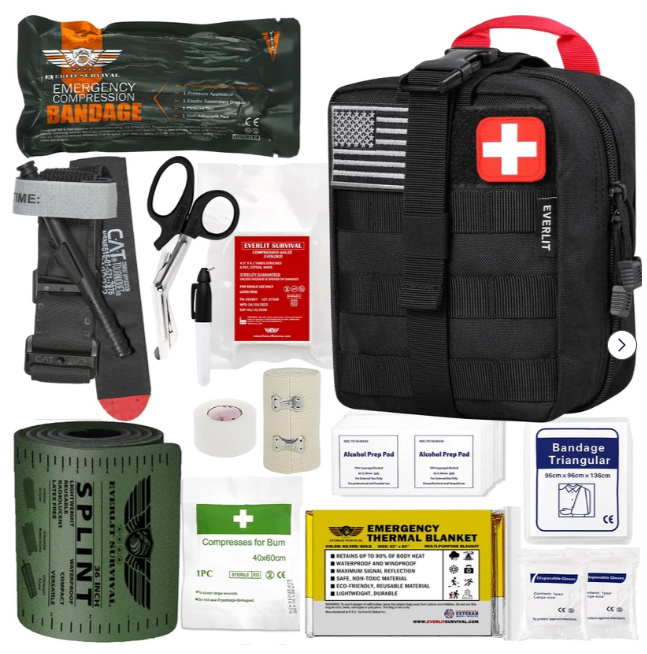
Best Emergency Trauma Kit — EVERLIT Emergency Trauma Kit
The EVERLIT Emergency Trauma Kit is more serious than a basic first aid kit. It is better suited for travelers who want emergency preparedness gear for road trips, remote routes, vehicle travel, hunting, fishing, or areas where help may be farther away.
Not every Alaska visitor needs a trauma-focused kit, but there are situations where a more robust emergency option makes sense. Long highway drives, remote camping, off-road travel, winter trips, and backcountry activities all increase the value of having more than bandages and aspirin.
This is the kind of kit I would think of as part of a broader emergency setup, especially for vehicle-based Alaska travel.
Best for: Road trip emergency kits, remote travel, hunting, fishing, vehicle preparedness, and travelers who want a more serious emergency kit.
Check Price on Amazon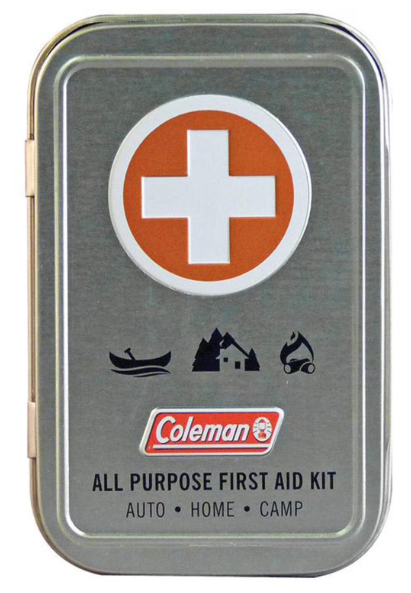
Best Budget Kit — Coleman All Purpose First Aid Kit
The Coleman All Purpose First Aid Kit is a simple budget-friendly option for travelers who want basic supplies without spending much. It is not the kit I would choose for serious backcountry use, but it is better than having nothing.
This kind of kit can work well for casual road trips, cruise cabins, rental cars, hotel rooms, and light travel. It is useful for common small issues like cuts, scrapes, minor blisters, and simple bandage needs.
If you choose a basic kit like this, I would add personal medications, pain relievers, blister care, allergy medicine, and anything specific to your family or health needs.
Best for: Budget travel, cruise cabins, rental cars, casual trips, and travelers who want a simple basic first aid kit.
Check Price on AmazonFirst Aid Kit Comparison Chart
| Product | Best For | Kit Type | Best Use | Portability | Alaska Suitability | Price Range |
|---|---|---|---|---|---|---|
| Adventure Medical Kits Mountain Series | Best Overall | Outdoor first aid kit | Travel, hiking, camping | Good | Excellent | $$ |
| Protect Life First Aid Kit | Basic Travel Kit | General first aid kit | Cars, luggage, cabins | Very Good | Good | $ |
| Surviveware Large First Aid Kit | Larger Kit | Organized first aid kit | Road trips and families | Fair | Very Good | $$ |
| MyMedic Hiker Medic | Hiking Kit | Compact outdoor kit | Day hikes and excursions | Excellent | Very Good | $$ |
| EVERLIT Emergency Trauma Kit | Emergency Preparedness | Trauma kit | Vehicle and remote travel | Fair | Very Good | $$$ |
| Coleman All Purpose First Aid Kit | Budget Kit | Basic first aid kit | Light travel | Excellent | Good | $ |
Why First Aid Matters in Alaska
First aid matters in Alaska because help, stores, and supplies may not be as close as travelers expect. Even when you are not doing anything extreme, you may be hours from the nearest pharmacy or urgent care.
Most travel first aid situations are not dramatic. They are small cuts, blisters, headaches, stomach issues, insect bites, minor burns, scrapes, sore muscles, and allergic reactions. But those small problems are much easier to handle when you already have supplies with you.
A first aid kit is not about being afraid of Alaska. It is about being prepared enough to keep small problems from disrupting your trip.
First Aid for General Alaska Travel
For general Alaska travel, you want a kit that covers basic needs without becoming too bulky. Bandages, antiseptic wipes, blister care, gauze, tape, tweezers, pain relievers, allergy medicine, stomach medicine, and personal prescriptions are a strong starting point.
If you are staying in towns and taking guided tours, a compact kit may be enough. If you are driving long distances, hiking, camping, or staying in cabins, a more complete kit makes sense.
Think about your actual itinerary. The farther you are from towns and services, the more capable your kit should be.
First Aid for Alaska Road Trips
Road trips are one of the best reasons to carry a larger first aid kit. Alaska highways can involve long stretches between services, construction delays, remote pullouts, wildlife stops, and weather changes.
A road trip kit can stay in the vehicle, so it does not need to be as small as a hiking kit. That means you can carry extra bandages, medications, emergency supplies, gloves, trauma items, and backup basics.
If you are driving long distances in Alaska, a first aid kit should be part of your vehicle setup along with water, snacks, power banks, emergency blankets, and basic roadside gear.
First Aid for Hiking and Outdoor Adventures
For hiking and outdoor adventures, your first aid kit needs to be small enough that you will actually carry it. A giant kit left in the car does not help much when you are two miles down a trail with a blister or cut.
Blister care is especially important. Alaska trails can be wet, uneven, root-filled, rocky, muddy, or steeper than expected. Foot problems can make even a short hike miserable.
A compact hiking kit should go in your day pack alongside water, rain gear, snacks, and an extra layer.
First Aid for Alaska Cruises
Alaska cruise travelers still benefit from a small first aid kit. Even though cruise ships have medical services, you do not want to visit the medical center for every blister, headache, scrape, or stomach issue.
Shore excursions can involve walking, hiking, kayaking, whale watching, bus rides, rain, stairs, uneven docks, and long days away from your cabin. A small kit in your day pack can be very helpful.
For cruises, I would keep basic medicine and blister care available, especially if you plan to do active excursions.
What to Add to a Store-Bought Kit
Most store-bought first aid kits are a good start, but they are rarely perfect. I would customize your kit before traveling to Alaska.
Consider adding your personal medications, extra blister pads, pain relievers, allergy medicine, anti-diarrheal medicine, motion sickness medication, electrolyte packets, hand warmers for colder trips, and any supplies specific to your family.
If you wear contacts, have allergies, travel with kids, or have medical conditions, customize the kit around real needs instead of relying only on what came inside the pouch.
Common First Aid Kit Mistakes
One common mistake is buying a kit and never opening it until something goes wrong. You should know what is inside before your trip.
Another mistake is assuming the kit includes medication. Many first aid kits focus heavily on bandages and wound care but do not include the medicines travelers actually reach for most often.
A third mistake is leaving the kit behind. The best first aid kit is the one you actually have with you when you need it. Keep a larger kit in the vehicle or lodging and a smaller kit in your day pack when heading out.
Frequently Asked Questions
Do I need a first aid kit for Alaska?
Yes, it is a smart item to bring. You may not need anything dramatic, but a first aid kit is useful for blisters, cuts, scrapes, headaches, stomach issues, bug bites, and minor travel problems.
What should be in an Alaska travel first aid kit?
A good kit should include bandages, gauze, antiseptic wipes, tape, blister care, tweezers, gloves, pain relievers, allergy medicine, stomach medicine, and any personal medications you need.
Is a small first aid kit enough?
For town-based travel and cruises, a small kit may be enough. For road trips, camping, hiking, fishing, or remote travel, a larger or more capable kit is better.
Should I carry a first aid kit while hiking?
Yes. A compact first aid kit belongs in your day pack, especially for blister care, cuts, scrapes, and minor trail injuries.
Do Alaska cruises require a first aid kit?
You do not technically need one, but it is still useful. A small kit can save you from needing help for minor issues during shore excursions or while away from your cabin.
Should I customize a store-bought first aid kit?
Yes. Add personal medications, blister care, allergy medicine, pain relievers, stomach medicine, and anything specific to your health needs or travel group.
Final Thoughts
The best travel first aid kit for Alaska depends on how far you are going from towns and what kind of trip you are taking. A cruise traveler may only need a compact kit, while a road tripper or camper should carry something more complete.
For most Alaska travelers, the smartest setup is one reliable first aid kit customized with personal medications and a few Alaska-specific extras like blister care, allergy medicine, and stomach medicine.
You do not bring a first aid kit because you expect something bad to happen. You bring one because small problems are easier to handle when you are prepared.