
Battery Management for Alaska Adventures: Keep Devices Powered
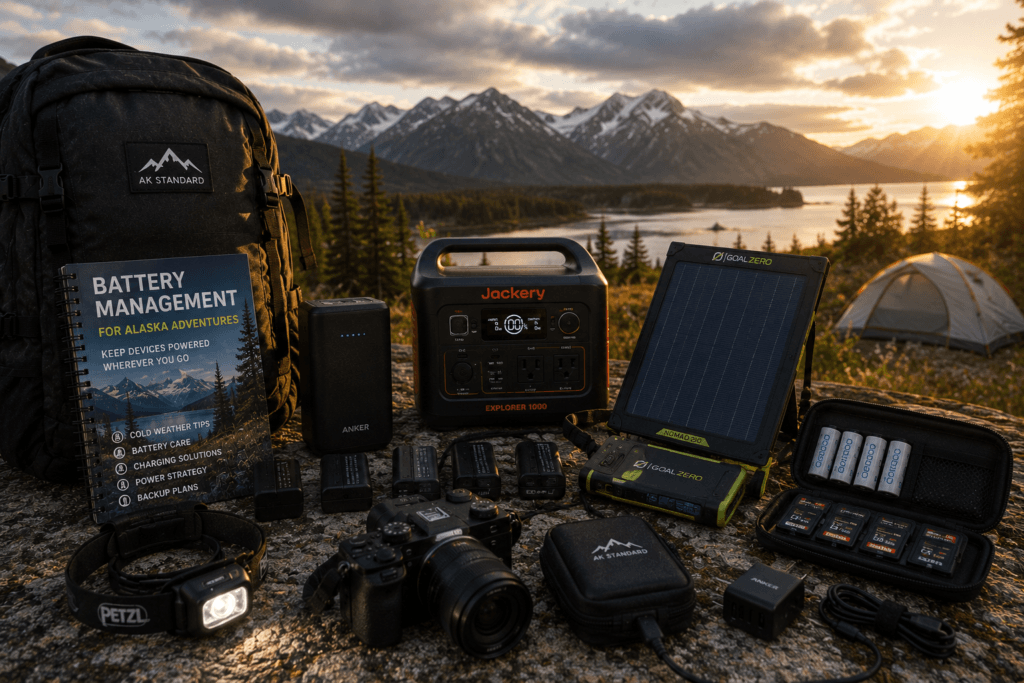
Battery Management for Alaska Adventures: Keep Devices Powered
Few things are more frustrating than reaching a great viewpoint, spotting wildlife, finding the northern lights, or needing navigation help only to discover your battery is dead. Alaska's cold temperatures, long days, remote locations, and limited charging opportunities can drain batteries faster than many people expect.
This guide is designed to help you keep your cameras, phones, GPS devices, drones, satellite communicators, and other electronics powered throughout your Alaska adventure. A little planning goes a long way when you're traveling through one of the largest and most remote places in North America.
Why Batteries Matter More in Alaska
Most people do not think much about battery management until something stops working. In Alaska, electronics often play a bigger role than they do at home. Phones provide navigation, cameras capture memories, GPS units help you stay on route, and satellite devices can become important safety tools.
Many Alaska trips also involve long drives, campgrounds, cabins, ferries, fishing trips, and backcountry travel where charging opportunities are limited. If your batteries die, replacing that power may not be as simple as plugging into the nearest outlet.
Good battery management starts before the trip even begins.
Cold Weather Drains Batteries Faster
Cold temperatures are one of the biggest challenges for battery-powered electronics. Batteries operate through chemical reactions, and those reactions slow down when temperatures drop. The result is reduced performance and shorter run times.
A battery that normally lasts all day indoors may only last a fraction of that time during a cold morning in Alaska. This becomes especially noticeable during winter travel, northern lights photography, snowmachine trips, and shoulder-season adventures.
Understanding this reality helps you plan for it instead of being surprised by it.
Keep Spare Batteries Warm
One of the simplest tricks for improving battery performance is keeping spare batteries warm. Batteries stored inside a jacket pocket often perform significantly better than batteries left exposed to cold air.
Photographers have been doing this for years because camera batteries are especially sensitive to cold conditions. The same principle applies to drone batteries, GPS units, and many other portable devices.
If you're traveling in cold weather, body heat can become one of your most effective battery management tools.
- Store spare batteries in inside pockets
- Keep batteries out of direct exposure when possible
- Rotate batteries as needed
- Bring extras for cold-weather trips
Bring More Battery Capacity Than You Think You'll Need
Many travelers underestimate how much power they will use in Alaska. Long sightseeing days, photography sessions, navigation apps, videos, and wildlife viewing opportunities can quickly drain devices.
It is usually better to bring more battery capacity than you think you need. Extra power is often lighter and cheaper than dealing with dead electronics during an important part of your trip.
Think of battery capacity the same way you think about extra layers or rain gear. You may not always need it, but you'll be glad to have it when conditions change.
Power Banks Are One of the Best Investments
If there is one item most Alaska travelers should carry, it is a quality power bank. Power banks provide portable backup power for phones, cameras, GPS units, action cameras, and many other devices.
They are particularly useful during long driving days, flights, ferry trips, camping adventures, and photography outings. A fully charged power bank can often keep multiple devices running for days.
For many travelers, a good power bank provides the simplest and most reliable backup charging solution available.
- Charge before leaving each day
- Carry charging cables
- Choose adequate capacity
- Protect from moisture
Managing Camera Batteries
Cameras tend to use more battery power than many people realize. Image review, video recording, image stabilization, autofocus systems, and cold temperatures all contribute to increased battery consumption.
Photographers should always carry spare batteries, especially during wildlife photography, northern lights photography, or extended sightseeing days. Missing a once-in-a-lifetime photo because of a dead battery is a mistake worth avoiding.
Get into the habit of charging batteries every night whenever power is available.
Managing Drone Batteries
Drone batteries deserve special attention because they often have shorter flight times than people expect. Wind, cold temperatures, and repeated flights can quickly reduce available power.
Never plan your day around a single battery. Multiple batteries allow you to take advantage of changing conditions and unexpected opportunities without worrying about running out of power.
Always monitor battery health and avoid pushing batteries too close to their limits during flights.
- Bring multiple batteries
- Charge whenever possible
- Monitor battery health
- Keep batteries warm before flights
Managing Phone Batteries
Phones are often the hardest-working devices on an Alaska trip. They handle navigation, photography, communication, weather forecasts, reservations, maps, and countless other tasks.
Unfortunately, all of those features consume power. Constantly searching for signal in remote areas can also accelerate battery drain.
Using airplane mode when appropriate, lowering screen brightness, and carrying a power bank can significantly improve battery life.
GPS & Satellite Device Power Planning
GPS units and satellite communicators are often carried for safety purposes. That means they need to work when you actually need them, not just when conditions are convenient.
Build redundancy into your system whenever possible. Backup batteries, charging options, and regular charging routines help ensure these devices remain available during emergencies.
Do not assume a device will stay charged simply because it worked fine on previous trips.
Vehicle Charging During Road Trips
Road trips provide excellent opportunities to recharge equipment. Many Alaska travelers spend significant time driving between destinations, making vehicle charging one of the easiest ways to maintain battery levels.
Bring the appropriate vehicle chargers and charging cables before leaving home. A few hours in the car can often recharge several devices at once.
Use driving time strategically so batteries are ready when you arrive at your destination.
- Vehicle USB charger
- 12V charging adapter
- Multiple charging cables
- Backup charging accessories
Solar Charging for Extended Trips
Solar chargers can be useful for longer camping trips, remote cabins, and backcountry adventures. Alaska's long summer daylight hours often provide excellent charging opportunities when conditions are favorable.
However, solar charging works best as part of a larger system rather than as your only power source. Pairing a solar panel with a power bank is often the most practical setup.
This allows you to collect energy during the day and use it when you actually need it.
Protect Electronics from Moisture
Rain, fog, snow, condensation, and boat spray are common realities in Alaska. Moisture can damage batteries, charging ports, and sensitive electronics if equipment is not properly protected.
Dry bags, waterproof pouches, and weather-resistant cases help reduce the risk of problems. It is much easier to prevent water damage than it is to recover from it.
Battery management is not just about power—it is also about protecting the devices that use that power.
Common Battery Management Mistakes
One of the most common mistakes is bringing only a single battery for critical devices. Another is assuming batteries will perform the same in Alaska as they do at home.
Many travelers also forget charging cables, wall adapters, or vehicle chargers. A fully charged power bank is not very useful if you cannot connect it to your device.
A simple pre-trip checklist can prevent most battery-related problems.
Printable Battery Management Checklist
- Fully charge all devices before departure
- Bring spare camera batteries
- Bring spare drone batteries
- Pack a power bank
- Pack charging cables
- Bring vehicle chargers
- Bring wall chargers
- Download offline maps
- Keep batteries warm in cold weather
- Protect electronics from moisture
- Charge devices whenever power is available
- Carry backup charging options
Related Alaska Photography & Tech Guides
Battery management is only one part of building a reliable Alaska technology system. These guides can help you prepare the rest of your gear for your trip.
- Alaska Adventure Tech Packing List
- Alaska Photography Packing List
- Best Solar Chargers and Battery Banks for Alaska
- GPS & Navigation Devices for Alaska Adventures
- Best Cameras for Alaska Travel
- Best Drones for Alaska Photography
- How to Photograph the Northern Lights in Alaska
Final Thoughts
Good battery management is not exciting, but it is one of the easiest ways to improve your Alaska experience. Reliable power helps keep your cameras, navigation tools, communication devices, and emergency equipment ready when you need them.
Bring more battery capacity than you think you'll need, protect equipment from cold and moisture, and take advantage of every charging opportunity. A little preparation can prevent a lot of frustration once your adventure begins.