
Alaska Adventure Tech Packing List: Essential Gear & Electronics
Alaska Adventure Tech Packing List: Essential Gear & Electronics
Alaska is a big place, and many of the best adventures happen far from reliable cell service, charging stations, and convenient stores. Whether you're driving the Parks Highway, hiking into the backcountry, camping for a week, or exploring remote areas, having the right technology can make your trip safer, easier, and more enjoyable.
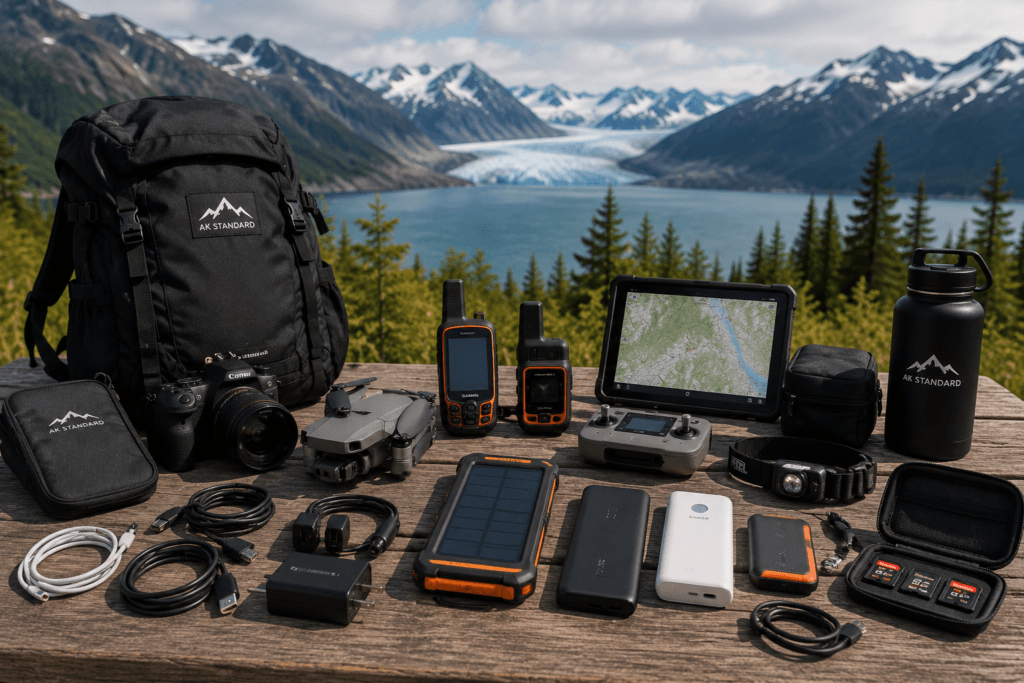
This Alaska adventure tech packing list focuses on the electronics and technology that actually matter in Alaska. The goal is not to carry every gadget available. The goal is to bring equipment that helps you stay powered, navigate confidently, communicate when necessary, and capture the experience along the way.
Quick Alaska Adventure Tech Checklist
This checklist covers the basics most Alaska travelers should consider. Some trips will require more equipment than others, but these are the items worth thinking about before you leave home.
- Phone
- Phone charger
- Power bank
- Charging cables
- Vehicle charger
- GPS device
- Offline maps downloaded
- Satellite communicator
- Camera or action camera
- Extra batteries
- Headlamp
- Solar charger (optional)
- Drone and batteries (if applicable)
- Memory cards
- Portable storage device
Phone & Everyday Electronics
Your phone will probably be the most-used piece of technology you bring to Alaska. It serves as a camera, navigation tool, weather resource, communication device, and emergency backup all in one. The problem is that phones are only useful when they have power and signal.
Do not assume you will always have service. Many Alaska highways, trails, and remote destinations have limited coverage or no coverage at all. Download maps, save important information ahead of time, and make sure your phone stays charged throughout the day.
- Phone
- Protective case
- Screen protector
- Charging cable
- Vehicle charger
- Power bank
Navigation Equipment
Navigation becomes more important the farther you travel from major towns. While phones work well in many situations, they should not always be your only navigation tool. Batteries die, apps crash, and signal disappears.
A dedicated GPS device provides another layer of security, especially for hiking, hunting, camping, fishing, and backcountry travel. Even if you primarily use your phone, downloading offline maps before your trip is one of the smartest things you can do.
- GPS device
- Offline maps
- Paper maps
- Compass
- Route information
- Backup navigation plan
Communication Devices
Communication equipment becomes increasingly valuable as you move farther from towns and highways. Cell service can disappear quickly in Alaska, and many popular outdoor destinations have little or no coverage at all.
Satellite communicators allow you to send messages, share your location, and contact emergency services even when your phone is useless. For remote adventures, they are often one of the best safety investments you can make.
- Satellite communicator
- Emergency contact information
- Charging cable
- Backup battery
Power Banks & Portable Charging
Modern travel depends on batteries. Phones, cameras, GPS units, drones, satellite communicators, and headlamps all require power. Running out of battery can quickly turn a minor inconvenience into a major problem.
Power banks are one of the simplest and most useful pieces of technology you can bring to Alaska. A quality power bank can keep essential devices running during long travel days, camping trips, ferry rides, and unexpected delays.
- Power bank
- Charging cables
- Wall charger
- Vehicle charger
- USB adapter
Solar Chargers
Solar chargers are not necessary for every Alaska trip, but they can be useful for longer adventures away from power. They work best during summer when daylight hours are long and opportunities to recharge are limited.
Solar charging should usually be viewed as a supplement rather than your only charging method. Pairing a solar panel with a power bank often provides the most practical setup for extended trips.
- Portable solar panel
- Solar-compatible power bank
- Charging cables
- Mounting clips or straps
Camera & Adventure Electronics
Many travelers bring additional electronics beyond their phone. Cameras, action cameras, drones, and GPS devices all help document the trip and improve the overall experience. These devices also create additional power and storage needs.
Before your trip, make sure you have the batteries, memory cards, chargers, and storage space necessary to support the equipment you plan to use. A forgotten charger can make an expensive device useless.
- Camera
- Action camera
- Extra batteries
- Battery charger
- Memory cards
- Portable storage device
Drone Equipment
Drones can capture incredible views of Alaska, but they require additional planning. Wind, weather, battery life, and local regulations all play a role in successful drone operations.
If you are bringing a drone, make sure you have enough batteries for the day and understand where flying is permitted. Many public lands, parks, and protected areas have restrictions that you should review before arriving.
- Drone
- Remote controller
- Extra batteries
- Charging equipment
- Memory cards
- Drone case
Headlamps & Lighting
Lighting is easy to overlook until you need it. A headlamp is useful for camping, hiking, roadside repairs, northern lights photography, and unexpected delays after dark.
Even during summer, there are situations where having hands-free lighting makes life easier. During spring, fall, and winter, a dependable headlamp becomes even more important.
- Headlamp
- Extra batteries
- Rechargeable light
- Backup flashlight
Cold Weather Electronics Tips
Cold temperatures can dramatically reduce battery performance. Electronics that seem fully charged indoors may drain much faster once exposed to Alaska weather.
Keep spare batteries in an inside pocket whenever possible. Bringing additional battery capacity is usually a better strategy than assuming your normal battery life estimates will hold true in cold conditions.
Protect electronics from moisture, condensation, and sudden temperature changes. A little preparation can prevent expensive equipment failures.
Alaska-Specific Tech Packing Tips
Technology should support your trip, not complicate it. Focus on equipment that solves real problems rather than packing gadgets simply because they exist.
Reliable navigation, dependable power, and emergency communication are usually more valuable than the latest piece of tech. Build your system around safety and practicality first, then add convenience items if they make sense.
Most importantly, remember that some of the best parts of Alaska happen away from screens. Use technology as a tool, but don't forget to enjoy where you are.
Printable Alaska Adventure Tech Packing List
- Phone
- Phone charger
- Vehicle charger
- Charging cables
- Power bank
- GPS device
- Offline maps downloaded
- Paper maps
- Compass
- Satellite communicator
- Camera
- Action camera
- Extra batteries
- Battery charger
- Memory cards
- Portable storage device
- Headlamp
- Backup flashlight
- Solar charger
- Drone and batteries (if applicable)
Related Alaska Photography & Tech Guides
These guides can help you choose the right technology for your trip and avoid common mistakes. Start with the pages that match your adventure, then build a system that works for your specific travel style.
- Best Cameras for Alaska Travel
- Wildlife Photography Gear for Alaska
- Best Drones for Alaska Photography
- GPS & Navigation Devices for Alaska Adventures
- Best Solar Chargers and Battery Banks for Alaska
- Battery Management for Alaska Adventures
- Alaska Photography Packing List
- Drone Photography in Alaska Guide
Final Thoughts
A good Alaska adventure tech packing list is not about bringing more electronics. It is about bringing the right electronics. Reliable power, navigation, communication, and backup systems often matter far more than the newest gadget.
Start with your phone, charging equipment, navigation tools, and communication devices. Then add cameras, drones, and specialty gear based on your trip. A little preparation goes a long way when you're traveling through one of the biggest and most remote places in North America.