
Alaska has no shortage of souvenirs, locally owned businesses, and products inspired by the state. Walk into a gift shop, browse an online store, or visit a local market, and you’ll find everything from handmade jewelry and traditional artwork to hoodies, coffee mugs, knives, and specialty foods.
But just because something says Alaska on the label doesn’t necessarily mean it was made here.
Some products are manufactured in Alaska by local businesses. Others are designed here but produced elsewhere. And plenty of souvenirs are mass-produced outside the state, even though they’re sold in Alaska shops.
That doesn’t mean every product made elsewhere is a bad purchase. It simply means there’s a difference between buying something that represents Alaska and buying something that was actually made here.
If supporting Alaska makers matters to you, knowing how to recognize authentic Alaska-made products can help you make more informed purchases.
What Does Alaska-Made Actually Mean?
When a product is described as Alaska-made, the expectation is that it was manufactured, produced, or substantially transformed within the state.
That might include a handcrafted piece of jewelry, a locally sewn jacket, a pottery mug made by an Alaska artist, or food produced by an Alaska business.
However, not every ingredient or material has to originate in Alaska for the finished product to be made here.
A local craftsperson might purchase leather, fabric, beads, or other materials from outside the state and turn them into a finished product in Alaska. What matters is where the actual production takes place.
It’s also important to distinguish between a product’s manufacturing location and the location of the company selling it.
An Alaska-owned business may design its clothing locally while having the garments manufactured elsewhere. That business is still part of Alaska’s economy, but its clothing shouldn’t automatically be described as Alaska-made.
Understanding the Official Made in Alaska Program
One of the easiest ways to identify qualifying Alaska-made products is to look for the state’s official Made in Alaska program.
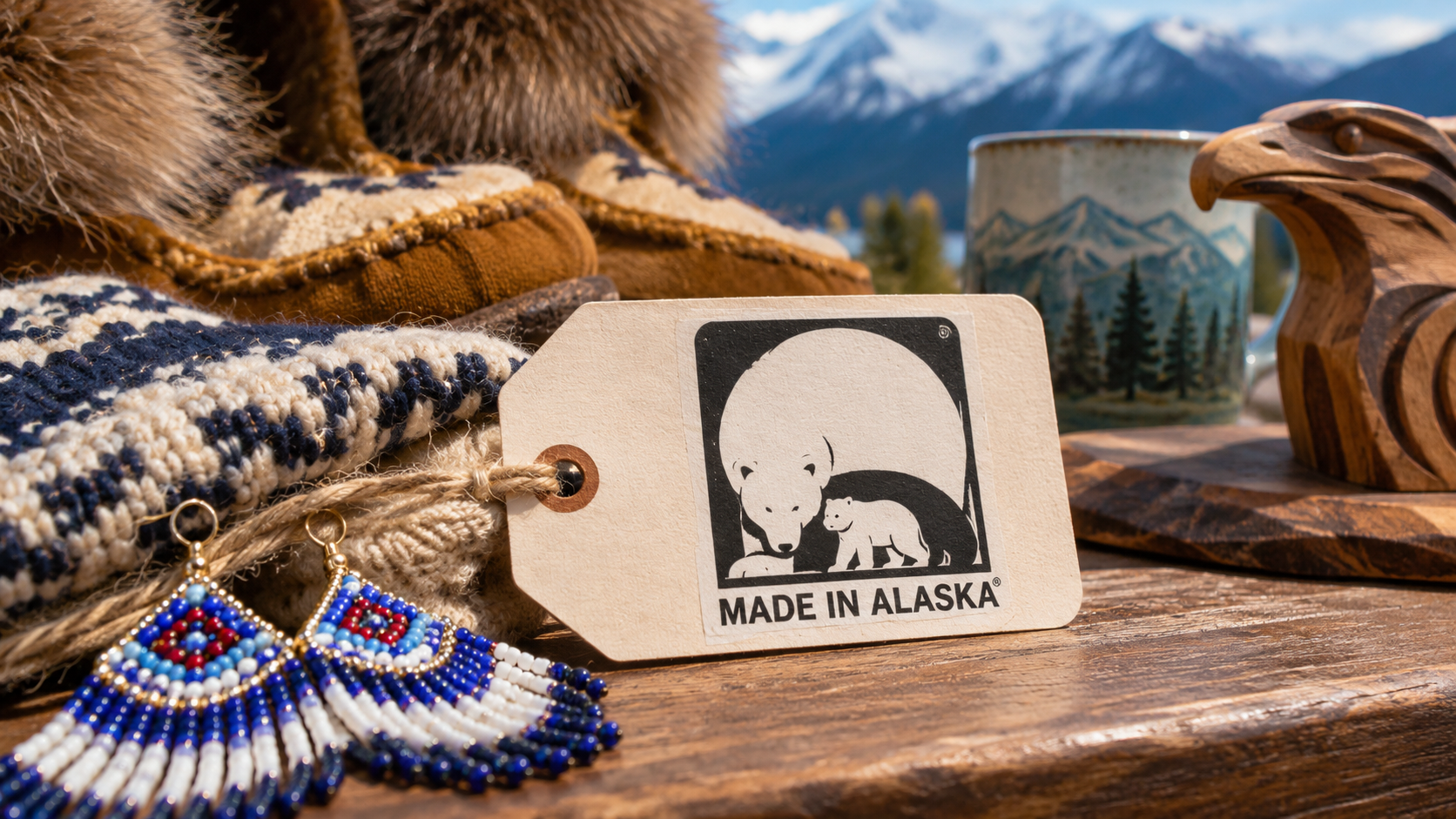
The program is administered by the State of Alaska and allows qualifying businesses to use the recognizable bear-and-cub logo on approved products.
The logo is intended to help shoppers recognize products that meet the program’s Alaska manufacturing requirements.
Under the program, qualifying products generally must be manufactured, crafted, or produced in Alaska, with a substantial portion of the production process occurring within the state.
Businesses apply to participate in the program, and approved products may display the official logo.
You can learn more through the State of Alaska Made in Alaska Program.
What the Bear-and-Cub Logo Tells You
The official logo helps identify products participating in the state’s Made in Alaska program.
When you see it on a product, it indicates that the business has received authorization to use the logo for qualifying products.
However, the absence of the logo doesn’t necessarily mean a product wasn’t made in Alaska.
Many small makers, independent artists, and home-based businesses create their products locally without participating in the official program.
The logo is a useful starting point, but it isn’t the only way to identify genuine Alaska-made goods.
Alaska-Made vs. Alaska-Owned vs. Alaska-Designed
These terms are often used interchangeably, but they don’t mean the same thing.
Alaska-Made
The product itself is manufactured, crafted, or produced in Alaska.
Examples might include locally sewn clothing, handmade pottery, carved artwork, or specialty food products manufactured within the state.
Alaska-Owned
The business is owned or operated by people in Alaska, but its products may be manufactured elsewhere.
An Alaska-owned clothing shop might sell hoodies printed locally, garments designed in Alaska but manufactured out of state, or products purchased from wholesale suppliers.
Buying from these businesses can still support local jobs, families, and communities.
Alaska-Designed
The design or creative work originates in Alaska, even if the finished product is manufactured somewhere else.
This is common with clothing, stickers, prints, accessories, and other merchandise featuring original artwork.
Purchasing Alaska-designed products can support local creativity, particularly when the artist or designer receives income from the sale.
Alaska-Inspired
The product features Alaska themes, wildlife, landscapes, or place names, but it may have no connection to an Alaska maker or business.
A souvenir with a moose or mountain printed on it might be Alaska-inspired without being Alaska-made, Alaska-designed, or Alaska-owned.
There’s nothing inherently wrong with purchasing it. Just don’t assume that an Alaska theme means the product was produced locally.
How to Check Where a Product Was Made
Fortunately, you don’t need to be an expert to figure out whether a product is genuinely made in Alaska.
A few simple checks can help you understand what you’re purchasing.
1. Look for Manufacturing Information
Start with the product label, packaging, or online description.
Some businesses clearly identify where their products are made. Others explain their manufacturing process or introduce the people who create their products.
Look for descriptions such as “handcrafted in Alaska,” “sewn in Alaska,” or “produced in Alaska.”
Keep in mind that phrases such as “Alaska brand” or “inspired by Alaska” don’t necessarily describe where manufacturing occurs.
2. Research the Business
Visit the business’s website and look for information about its location, manufacturing process, and history.
Businesses that make products locally often explain how and where those products are produced.
Some have workshops, studios, kitchens, or manufacturing facilities in Alaska. Others work with outside manufacturers.
Neither arrangement automatically makes a business more trustworthy, but knowing the difference helps you make an informed decision.
3. Ask the Seller
One of the simplest ways to learn about a product is to ask.
Questions worth asking include:
- Was this product actually made in Alaska?
- Who made it?
- Where does the manufacturing take place?
- Is the artwork an original piece or a reproduction?
- Does the artist or maker receive income from this sale?
Local galleries, artist cooperatives, and small businesses are often good places to have these conversations.
4. Buy Directly From Makers When Possible
Purchasing directly from an artist, craftsperson, or manufacturer is one of the most straightforward ways to understand where a product comes from.
Alaska has makers selling through independent websites, local shops, seasonal markets, and community events.
Buying directly can also mean more of your purchase goes to the person who created the product.
How to Identify Authentic Alaska Native Art
Alaska Native art deserves particular attention because it represents the traditions, knowledge, and creativity of Alaska’s Indigenous peoples.
Across the state, artists create beadwork, carvings, masks, jewelry, textiles, prints, and contemporary artwork reflecting their individual styles and cultural backgrounds.
Unfortunately, mass-produced souvenirs sometimes imitate traditional designs without being created by Alaska Native artists.
When shopping for authentic Alaska Native artwork, it’s important to understand who created the piece and how it’s represented.
Look for the Artist’s Name
Authentic artwork should ideally include information identifying the artist.
Depending on the seller and the type of work, you may also find details about the artist’s community, cultural background, or artistic process.
Not every handmade item comes with extensive documentation, especially when purchasing directly from a maker, but reputable sellers should be able to explain the origin of the work.
Understand the Indian Arts and Crafts Act
The federal Indian Arts and Crafts Act prohibits misrepresenting products as Indian-made or as the work of a particular Indian tribe when those claims are false.
The law is intended to protect consumers and the livelihoods of Native artists from deceptive marketing.
It doesn’t mean that every Alaska-inspired design must be created by an Alaska Native artist. It means sellers cannot falsely represent a product’s Native origin.
The U.S. Department of the Interior’s Indian Arts and Crafts Board provides additional information about the law and purchasing authentic Native artwork.
Shop Through Trusted Artists and Galleries
Buying directly from Alaska Native artists or from galleries that identify and support their artists can help reduce uncertainty.
Some places to explore include:
- Maruskiya’s — Nome gallery featuring Alaska Native artwork and regional artists.
- Sulianich Art Center — Kotzebue center supporting artists from Northwest Alaska.
- Aan Hít — Juneau tribal enterprise offering artwork, jewelry, and gifts.
- Crazy Wolf Studio — Ketchikan studio featuring regional Native artwork.
Ask about the individual artist and the specific piece before purchasing, particularly when authenticity is an important part of your decision.
Common Misconceptions About Alaska-Made Products
Everything Sold in Alaska Is Made in Alaska
Not even close.
Alaska gift shops sell products from many different manufacturers and suppliers, including businesses outside the state and overseas.
Always check the origin of the individual product rather than assuming that its location on a store shelf tells you where it was made.
Products Without the Official Logo Aren’t Authentic
Also incorrect.
Many legitimate Alaska makers don’t participate in the official Made in Alaska program.
A locally crafted product can still be genuinely made in Alaska without displaying the bear-and-cub logo.
Alaska-Owned Means Alaska-Manufactured
Not necessarily.
Alaska-owned businesses may sell locally manufactured products, imported merchandise, or a combination of both.
If manufacturing location matters to you, check the details of the specific product.
Higher Prices Always Mean Something Is Handmade
Price alone isn’t proof of authenticity.
Handcrafted products can cost more because of labor, materials, shipping, and Alaska’s higher operating costs. But an expensive souvenir isn’t automatically handmade or locally produced.
Look for information about the maker rather than relying on the price tag.
Why Supporting Alaska Makers Matters
Alaska is a challenging place to operate a business.
Shipping costs, limited road access, seasonal tourism, and the expense of bringing materials into the state can make manufacturing and selling products more complicated than in many other places.
For businesses in smaller communities, reaching customers can be especially difficult.
When you purchase something made by an Alaska artist or business, you’re helping support the work that goes into creating it.
That might mean supporting a family-owned manufacturer, a local food producer, an independent artist, or a craftsperson working from a small community. And when you choose a product with a clear connection to its maker, you often bring home something more meaningful than a generic souvenir.
Where to Find Authentic Alaska-Made Products
You’ll find Alaska-made products throughout the state, but some shopping locations make it easier to connect with local makers.
Artist cooperatives, cultural centers, independent galleries, and community markets are useful places to start.
Look for shops that identify their artists, explain where products are made, and provide information about the people behind the work.
Some makers sell online and ship throughout the United States, while others primarily sell locally or through seasonal events.
For a broader look at Alaska businesses and local shopping opportunities, explore our Alaska-Made & Alaska-Based Products guide.
Quick Checklist Before You Buy
If you’re unsure whether something is genuinely made in Alaska, keep these questions in mind:
- Does the product identify where it was manufactured?
- Does it display an authorized Made in Alaska logo?
- Can the seller identify the artist or manufacturer?
- Is the business Alaska-owned, Alaska-designed, or actually manufacturing in Alaska?
- If it’s Alaska Native art, is the artist’s identity and the work’s origin clearly represented?
- Am I purchasing directly from the maker or through a business that supports them?
You don’t need every answer to make a worthwhile purchase, but these questions can help you decide whether the product matches what you’re looking for.
Final Thoughts
Finding authentic Alaska-made products doesn’t have to be complicated.
Start by understanding the difference between products made in Alaska, businesses owned by Alaskans, and merchandise simply inspired by the state.
Look for the official Made in Alaska logo when appropriate, learn about the people behind the products, and ask questions when you’re unsure.
Whether you’re purchasing handmade jewelry, artwork, clothing, specialty foods, or something practical for everyday life, knowing where it came from makes the purchase more meaningful.
Alaska has plenty of talented people creating things worth supporting. Taking a little time to find them is well worth the effort.