
Alaska Backcountry Safety Guide (2026)
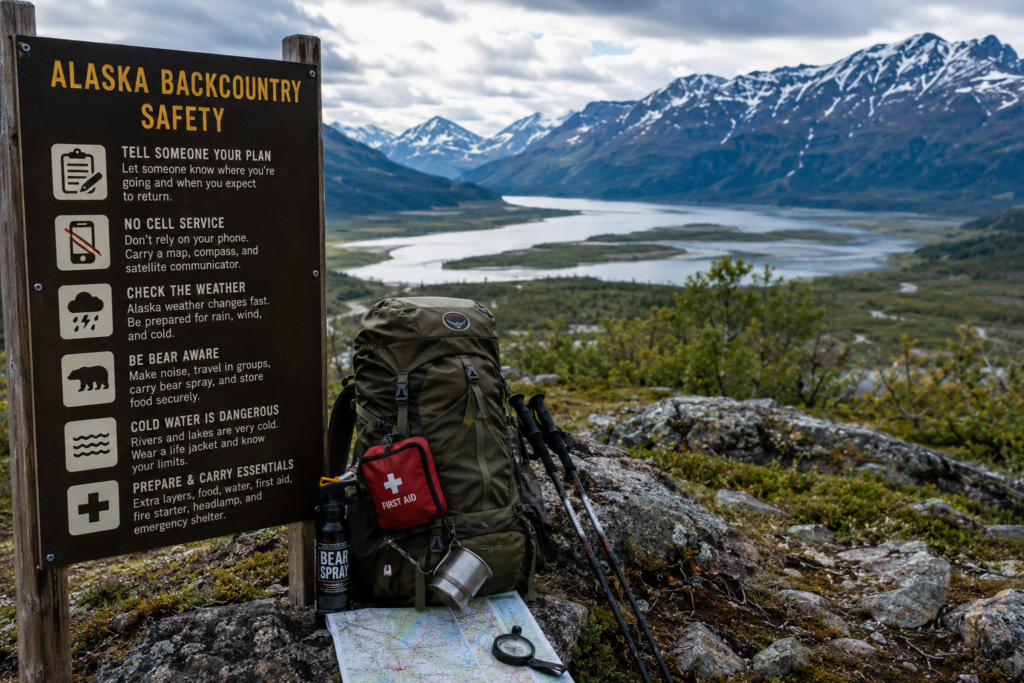
Alaska’s backcountry is one of the last places in North America where you can still experience true wilderness.
That is part of what makes it incredible.
It is also what makes it dangerous.
Large distances, changing weather, wildlife, rough terrain, poor cell service, cold water, and isolation can turn small mistakes into serious situations fast. Even experienced hikers and hunters regularly underestimate Alaska conditions.
The goal is not to avoid the backcountry.
It is to prepare realistically for it.
This guide covers the major safety considerations for hiking, camping, fishing, road trips, remote travel, and general wilderness exploration across Alaska.
Alaska Is Bigger & More Remote Than Most People Expect
One of the biggest mistakes visitors make is treating Alaska like a typical national park vacation.
Distances here are massive.
A “short drive” can still mean:
- No fuel for 100+ miles
- No cell service
- No nearby towns
- No tow trucks
- No medical help nearby
Weather and road conditions can also change rapidly.
Many Alaska highways and remote roads have:
- Frost heaves
- Gravel sections
- Wildlife crossings
- Limited lighting
- Long stretches without services
Backcountry travel here requires more planning than many people expect.
Tell Someone Your Plan
This is one of the simplest and most important safety habits.
Before going into remote areas:
- Tell someone where you are going
- Tell them when you expect to return
- Share trail names or GPS coordinates if possible
- Include vehicle information
- Check in when you return
Even experienced Alaska outdoors people do this regularly.
Cell Service Is Limited
Many parts of Alaska have little or no service.
This includes:
- National parks
- Hiking trails
- Fishing areas
- Highways
- Mountain regions
- Remote campgrounds
Do not assume you can call for help.
Helpful Backup Communication Options
Many travelers now carry:
- Satellite communicators
- Emergency beacons
- GPS devices
- Offline maps
These become especially valuable during:
- Solo hikes
- Hunting trips
- Winter travel
- Backcountry camping
- Remote driving routes
Offline navigation apps are also extremely helpful in Alaska.
Weather Changes Fast
Alaska weather can shift quickly even during summer.
You may experience:
- Rain
- Wind
- Cold temperatures
- Dense fog
- Snow at elevation
- Sudden temperature drops
all within a single day.
Common Alaska Weather Mistakes
People often:
- Underestimate rain
- Wear cotton clothing
- Forget layers
- Ignore wind exposure
- Assume summer means warm
Cold rain combined with wind can become dangerous surprisingly fast.
Dress in Layers
Layering is one of the most important Alaska outdoor skills.
A good layering system helps regulate:
- Heat
- Sweat
- Wind exposure
- Rain protection
Most Alaska outdoor systems include:
- Moisture-wicking base layer
- Insulating mid-layer
- Waterproof outer shell
Avoid cotton whenever possible in wet or cold conditions.
Bear Safety in Alaska
Bears are part of Alaska life.
Most encounters are avoidable, but people still need to take them seriously.
General Bear Safety Tips
While hiking:
- Make noise in brushy areas
- Avoid surprising animals
- Watch for tracks and scat
- Keep distance from wildlife
- Travel in groups when possible
At camp:
- Store food properly
- Keep camps clean
- Never leave food unattended
- Cook away from sleeping areas
- Dispose of fish remains far from camp
Carry Bear Spray
Bear spray is strongly recommended in many parts of Alaska.
Know:
- Where it is stored
- How to deploy it
- Wind direction before use
A buried bear spray canister inside a backpack is not very helpful during a fast encounter.
Moose Are Dangerous Too
Many visitors focus entirely on bears and forget about moose.
Moose injure people in Alaska every year.
They can become aggressive when:
- Protecting calves
- Stressed during winter
- Surprised
- Cornered
Moose can move much faster than people expect.
If a moose becomes agitated:
- Back away slowly
- Put objects between you and the animal
- Never approach calves
- Do not attempt photos at close range
Water Safety Matters
Alaska water is often extremely cold.
Even during summer:
- Rivers can be glacier-fed
- Lakes stay cold year-round
- Hypothermia can develop quickly
Cold water shock alone can become deadly.
Common Water Risks
Backcountry water hazards include:
- Fast rivers
- Slippery rocks
- Strong currents
- Sudden drop-offs
- Tides
- Cold shock
- Changing weather on lakes
Wear life jackets whenever appropriate.
River Crossings
River crossings are one of the most underestimated dangers in Alaska.
Conditions can change daily based on:
- Rain
- Snowmelt
- Glacier melt
- Temperature shifts
Never assume a crossing will remain safe later in the day.
Basic River Crossing Tips
- Unbuckle backpack waist straps
- Use trekking poles
- Cross slowly
- Avoid strong fast channels
- Turn around if conditions feel unsafe
There is no shame in not crossing.
Navigation & Getting Lost
Trails in Alaska are not always well marked.
Some routes become:
- Muddy
- Overgrown
- Braided
- Difficult to follow
Fog and weather can also erase visibility quickly.
Carry:
- Physical maps
- GPS devices
- Offline navigation apps
- Extra batteries or power banks
Do not rely entirely on cell service.
Vehicle Emergency Preparedness
Road trips through Alaska require preparation.
Even major highways can have long remote stretches.
Helpful Emergency Vehicle Items
Many Alaska travelers carry:
- Full-size spare tire
- Jumper cables
- Portable air compressor
- Extra fuel
- Food and water
- Blankets
- Rain gear
- Basic tools
- Headlamps
- First aid kit
In winter, preparation becomes even more important.
Hiking Safety in Alaska
Many Alaska trails involve:
- Mud
- Steep elevation
- Loose rock
- River crossings
- Wildlife
- Sudden weather changes
Good footwear matters.
So does pacing yourself realistically.
A short Alaska trail can still become physically demanding.
Helpful Hiking Habits
- Start earlier than planned
- Carry more water than expected
- Bring extra layers
- Keep emergency snacks
- Know sunset times
- Turn around before exhaustion sets in
Campfire & Cooking Safety
Campfires are part of Alaska camping culture, but conditions can become dangerous quickly during dry periods.
Always:
- Follow fire restrictions
- Fully extinguish fires
- Avoid leaving fires unattended
- Keep cooking areas clean
In wet conditions, stoves are often more reliable than relying entirely on firewood.
Insects & Mosquitoes
Mosquitoes can be intense in many areas of Alaska during summer.
Some areas also deal with:
- No-see-ums
- Black flies
- Ticks (less common, but increasing)
Helpful gear includes:
- Head nets
- Bug spray
- Lightweight layers
- Tent screens
Bug pressure changes heavily by region and season.
Trust Your Instincts
One of the best safety tools in Alaska is good judgment.
If something feels wrong:
- Weather
- Water crossings
- Wildlife behavior
- Exhaustion
- Trail conditions
listen to that feeling.
Turning around is normal in Alaska.
Experienced outdoors people do it all the time.
Final Thoughts
Alaska’s backcountry is incredible because it is still wild.
That same wilderness also means you are often responsible for your own preparation, decisions, and safety.
The goal is not fear.
It is respect.
With realistic planning, proper gear, weather awareness, and good judgment, Alaska’s wilderness becomes one of the most rewarding outdoor experiences anywhere.