
Western Hemlock in Alaska
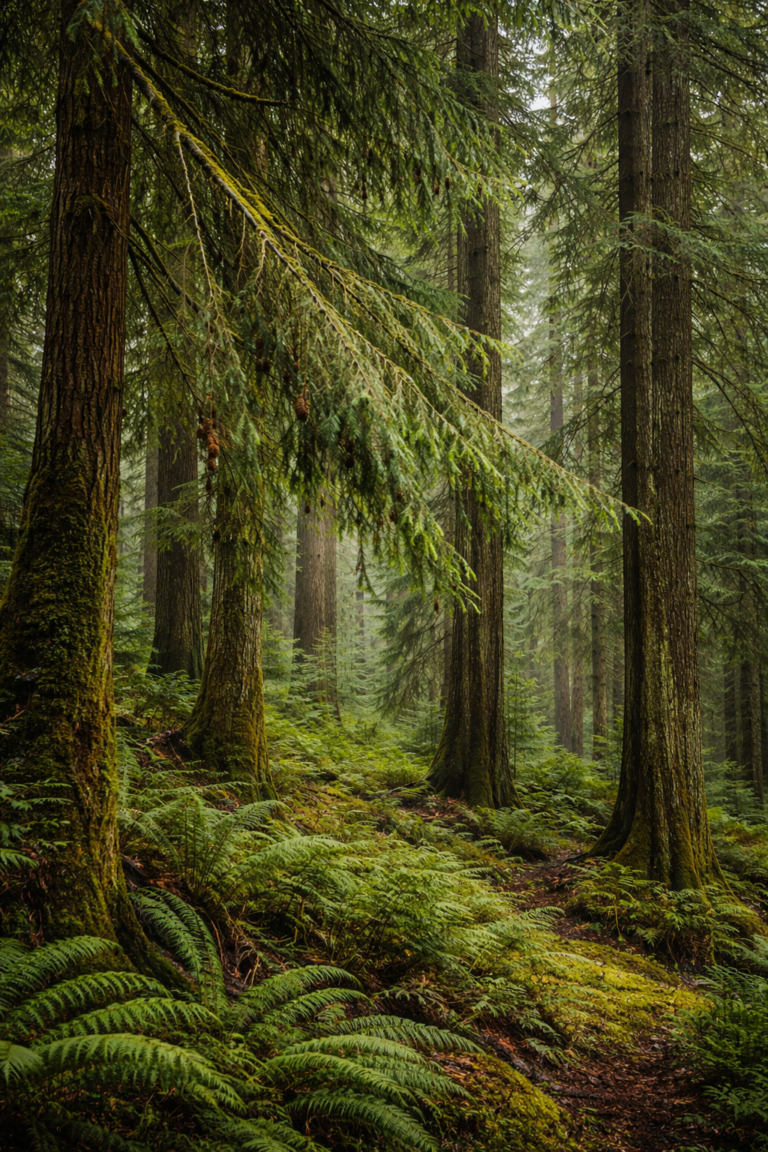
Western Hemlock in Alaska
If you’ve spent time in Southeast Alaska or along the coastal forests, you’ve seen it even if you didn’t realize it.
Soft-looking branches. Drooping tips. Deep green needles. A dense, layered forest that blocks out light.
Western hemlock is one of the defining trees of Alaska’s coastal rainforest. It doesn’t just grow there it helps create the entire environment.
You’ll find it packed tightly into moist forests, often growing beneath or alongside Sitka spruce.
Where It Grows
Western hemlock prefers:
• Southeast Alaska
• Coastal rainforests
• Moist, shaded environments
• Low to mid elevations
• Nutrient-rich soils
It thrives where rainfall is high and temperatures stay relatively mild.
Unlike Interior trees, it does not tolerate extreme cold or dry conditions well.
When to Notice It
Year-round.
Western hemlock is an evergreen, keeping its needles through every season.
In spring and summer, new growth appears as lighter green tips. Small cones develop and hang from branches.
In winter, its drooping shape and dense structure make it stand out in the darker coastal forest.
How to Identify It
Key traits:
• Short, flat needles
• Needles vary slightly in length
• Soft to the touch (not sharp like spruce)
• Drooping branch tips
• Small cones hanging downward
• Thin, layered bark
If you look closely, the top of the tree often appears slightly uneven or leaning due to the drooping leader.
This is one of the easiest ways to distinguish it from spruce.
Is It Useful?
Yes.
Western hemlock has been used for:
• Lumber and construction
• Pulp and paper
• Fuel (though not as hot-burning as spruce)
• Traditional uses by Indigenous communities
The wood is lighter and less dense than spruce, but still widely used.
Why It Matters in Alaska
Western hemlock is a foundation species in coastal ecosystems.
It creates dense forest cover, supports wildlife, and helps regulate moisture in the environment.
These forests hold incredible amounts of biomass and are among the most productive in the world.
If you’re exploring Southeast Alaska, you’re almost always standing in a forest shaped by western hemlock.