
Quaking Aspen in Alaska
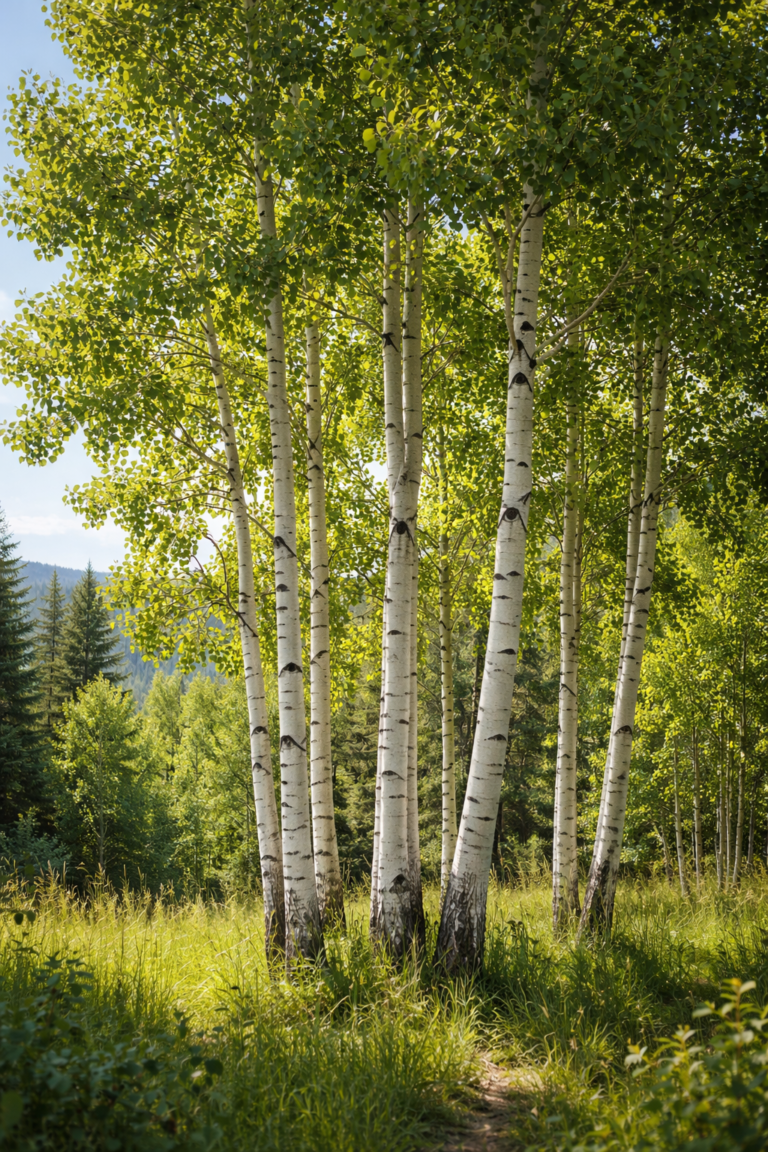
Quaking Aspen in Alaska
If you’ve seen a stand of pale trees with leaves shaking in the wind, you’ve seen quaking aspen.
Light bark. Thin trunks. Leaves that never seem still.
Quaking aspen is one of the first trees to return after disturbance. Fire, clearing, or shifting ground—this tree moves in fast.
You’ll find it scattered across Interior Alaska, especially in areas that have burned in recent years.
Where It Grows
Quaking aspen prefers:
• Interior Alaska
• Burned or disturbed areas
• Open hillsides
• Well-drained soils
• Mixed forest with birch and spruce
It does not compete well in dense, mature forests. It needs light and space.
After wildfire, it often appears quickly and forms large stands.
When to Notice It
Spring through fall is when it stands out most.
Leaves emerge bright green in spring, darken in summer, and turn yellow in fall.
The movement is what gives it away—leaves tremble constantly, even in light wind.
In winter, the smooth white bark and straight trunks make it easy to spot against snow.
How to Identify It
Key traits:
• Smooth, pale white to greenish bark
• Round leaves with small teeth
• Flattened leaf stems
• Leaves “quake” in the wind
• Slender trunks
• Often grows in clusters
Aspen spreads through its root system, so what looks like many trees is often one connected organism.
Is It Useful?
Yes.
Quaking aspen has been used for:
• Firewood (burns fast and hot)
• Pulp and wood products
• Wildlife habitat
• Soil stabilization after disturbance
It plays a major role in early forest recovery.
Why It Matters in Alaska
Quaking aspen represents change.
It moves in after fire, reshapes the landscape, and prepares the ground for slower-growing trees like spruce.
Without it, recovery after wildfire would look very different.
If you’re seeing aspen, you’re looking at a forest in transition.