
Wild Strawberries in Alaska
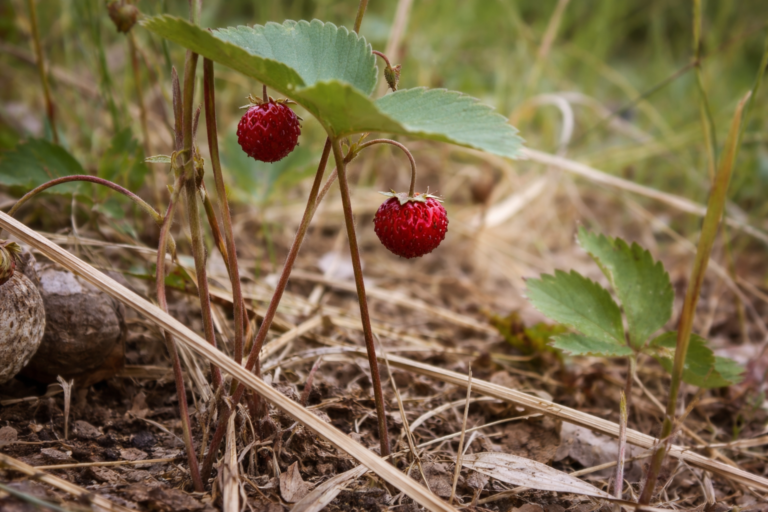
Wild Strawberry in Alaska
Wild strawberry is a low-growing plant found across parts of Alaska, known for its small red berries and familiar strawberry appearance. While the berries themselves are edible, the plant is included in cautionary discussions because it can be confused with other look-alike species that are not safe.
What It Is
Wild Strawberry (Fragaria spp.) is a perennial plant that produces small, sweet red berries close to the ground.
It is one of the few truly edible berries that grows in low, spreading patches.
Where It Grows
Wild strawberry is commonly found in:
Open meadows and grassy areas
Forest edges and clearings
Roadsides and disturbed soils
Coastal and Interior regions of Alaska
Sunny, well-drained locations
It prefers areas with good sunlight and lighter soils.
Plant Characteristics
Wild strawberry is a small, ground-level plant that spreads through runners.
Key features include:
Three-part (trifoliate) leaves with serrated edges
Small white flowers with yellow centers
Bright red berries growing close to the ground
Thin runners that spread outward
The low height and leaf pattern make it recognizable.
Flowers & Seasonal Changes
Wild strawberry blooms in late spring with small white flowers.
By early to mid-summer, the plant produces small red berries.
The berries are usually much smaller than store-bought strawberries but are often more flavorful.
Toxicity & Danger
Wild strawberry itself is not toxic and is safe to eat.
However, confusion with similar-looking plants can lead to accidental consumption of harmful species.
Some look-alikes may produce berries that are:
Bland or tasteless
Not safe to eat
Potentially irritating if consumed in large amounts
Correct identification is essential.
Why It’s Dangerous
Wild strawberry can be risky because:
It is easily confused with similar low-growing plants
Some look-alikes produce non-edible or misleading fruit
People may assume all small red berries are safe
It grows in mixed environments alongside other species
The danger comes from misidentification, not the plant itself.
Medicinal & Historical Notes
Wild strawberries have been used traditionally as a food source.
The berries are commonly eaten fresh and can also be used in jams or desserts.
Leaves have occasionally been used in teas, though this is less common.
Identification Tips
Three-part leaves with jagged edges
Small white flowers with yellow centers
Red berries growing close to the ground
Low, spreading growth pattern
Thin runners extending from the plant
The combination of leaf shape and low-growing berries is key.
Why It Matters in Alaska
Wild strawberry is important to recognize because:
It is one of the few easy-to-identify edible berries
It grows in accessible areas
It can be confused with other plants
It highlights the importance of proper plant identification
Understanding plants like wild strawberry helps build confidence and safety when foraging in Alaska.