
Mount Spurr Volcano
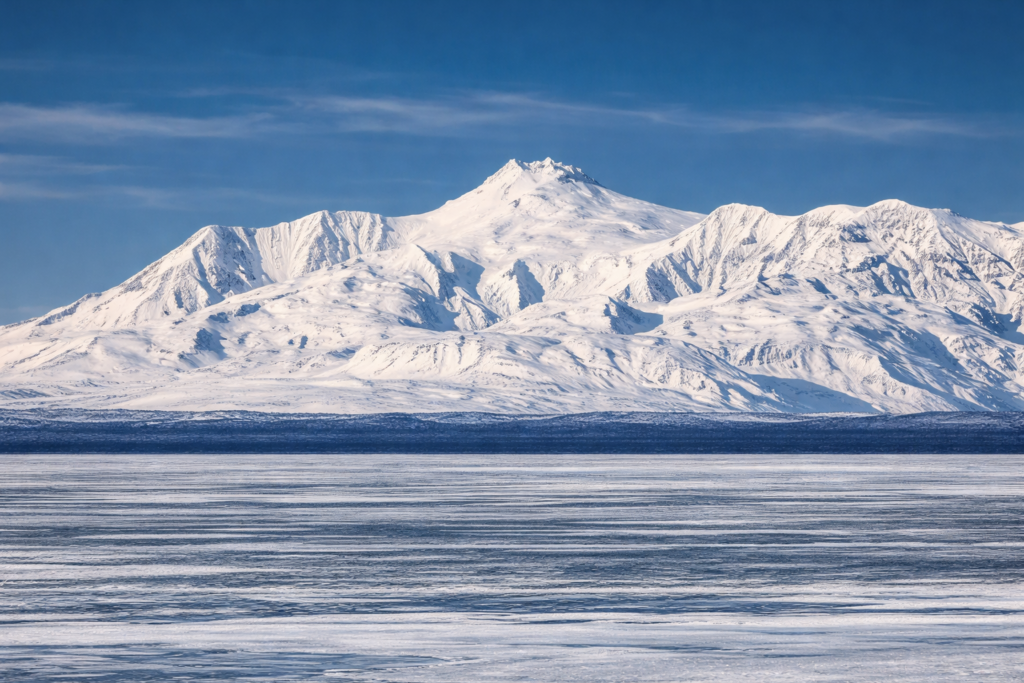
Mount Spurr rises to 11,070 feet west of Anchorage and is one of the closest active volcanoes to the city. It sits at the northern end of Cook Inlet and is part of the Aleutian volcanic arc, the same chain of volcanoes that includes Mount Redoubt and stretches across southern Alaska.
From Anchorage, Spurr can sometimes be seen on clear days, though it’s often hidden behind weather and distance. The mountain itself is broad and heavily glaciated, with ice covering much of its upper slopes. What makes it different is the summit area — instead of one clean peak, it has multiple volcanic features, including the main summit and a side vent known as Crater Peak.
Crater Peak is where most of the recent activity has happened. Eruptions in 1953 and again in 1992 sent ash clouds into the atmosphere that reached Anchorage and surrounding areas. Ashfall affected air quality, grounded flights, and coated parts of the region, showing just how impactful even a relatively distant eruption can be.
Like other volcanoes in this area, Mount Spurr is covered in glaciers, and the interaction between heat and ice can create unstable conditions. During eruptions, melting ice can lead to mudflows and debris moving down the mountain’s slopes.
There’s no direct road access to Mount Spurr, so most people experience it from afar — either across Cook Inlet or from the air. On a clear day, it stands out as a wide, snow-covered mass, but it doesn’t always reveal itself easily.
Mount Spurr isn’t constantly active, but it’s closely monitored because of how near it is to Anchorage. It’s a reminder that even in areas that feel stable, Alaska’s landscape is still shaped by forces moving beneath the surface.