
Alaska Violet
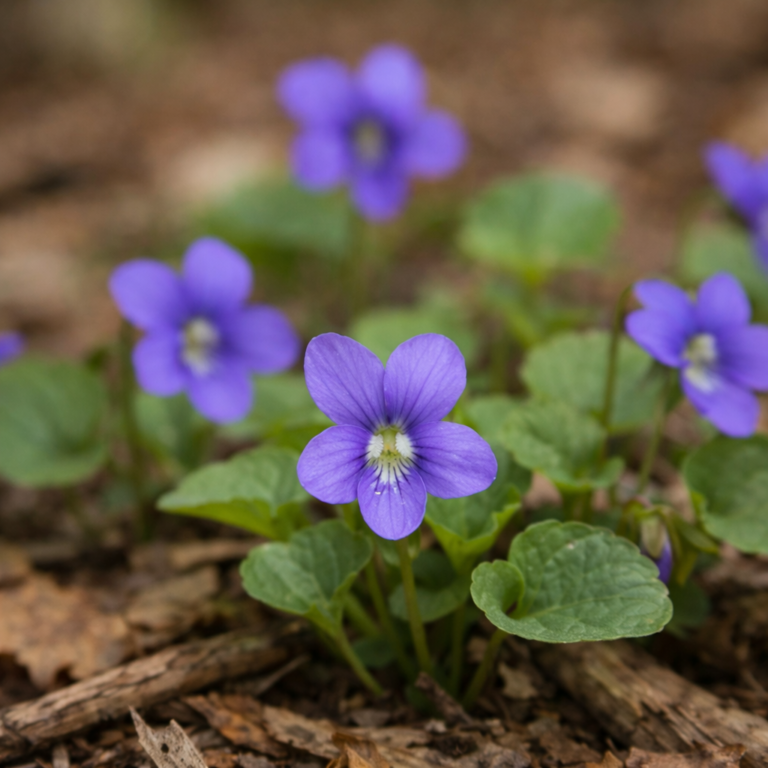
Alaska Violet in Alaska
Alaska violet is a small, low-growing wildflower that appears quietly across forests and open ground. Its soft purple to blue blooms sit close to the ground, often partially hidden among leaves and moss.
It’s not a plant you notice from far away. You find it by slowing down and looking closer.
Where It Grows
Alaska violet prefers:
• Boreal forests
• Woodland edges
• Tundra margins
• Moist meadows
• Interior and Southcentral Alaska
It grows in areas with partial shade and consistent moisture. You’ll often find it mixed into moss, leaf cover, and low vegetation.
When to Notice It
Late spring through early summer. Alaska violet blooms early in the growing season, often appearing before larger plants fully fill in the landscape.
Because it stays low, it’s easiest to notice when you’re already looking down — along trails, forest floors, or open ground.
How to Identify It
Key traits:
• Small purple to blue flowers
• Five rounded petals
• Low, ground-hugging growth
• Heart-shaped or rounded leaves
• Short stems close to the ground
The flowers are usually single and sit just above the leaves. The plant stays compact and spreads slowly.
Why It Matters in Alaska
Alaska violet is part of the ground layer of Alaska’s ecosystems. It grows in stable environments where moisture and shade allow smaller plants to thrive.
It fills in the space beneath larger plants, adding to the overall diversity of the landscape.
Is It Edible?
No. Alaska violet is not considered a food plant and is not used for foraging. It should be left undisturbed in its natural environment.
Why It Matters in Alaska
Alaska violet is easy to overlook, but once you notice it, you start seeing it in many places. It grows quietly, close to the ground, adding detail to forests and open areas.
Recognizing it helps you see beyond the larger plants and understand the smaller layers that make up Alaska’s ecosystems.
Learn more forest and tundra species in Flowers of Alaska.