
Purple Saxifrage in Alaska
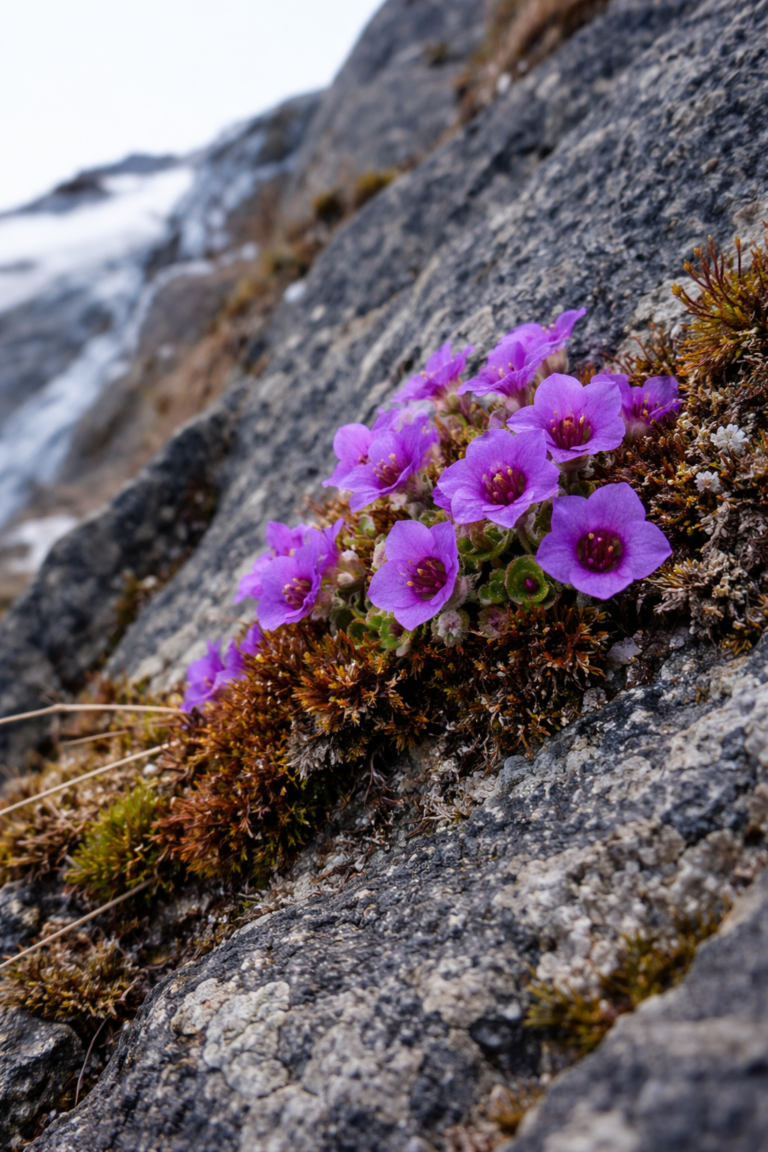
Purple Saxifrage in Alaska
Purple saxifrage is one of the first flowers to bloom in Alaska each year. In some places, it appears while snow is still melting, adding bright color to otherwise bare ground.
It grows low and tight to the surface, forming small clusters of purple to pink flowers that stand out against rock and tundra.
This is a plant built for cold, wind, and short growing seasons.
Where It Grows
Purple saxifrage prefers:
• Arctic tundra
• Alpine ridges
• Rocky slopes
• Gravelly, well-drained soil
• Exposed, high-elevation terrain
You’ll find it in areas where conditions are too harsh for most other plants.
It often grows directly between rocks or in thin soil where moisture drains quickly.
When to Notice It
Early spring into summer.
It is one of the earliest blooming plants in Alaska, sometimes appearing as soon as snow begins to melt.
Because of this, it is often one of the first signs that the growing season has started in tundra and alpine environments.
How to Identify It
Key traits:
• Small purple to pink flowers
• Low, clumping growth
• Thick, leathery leaves
• Grows in tight patches close to the ground
The plant stays very low, using the ground for protection against wind and cold.
Flowers often appear in dense clusters, creating small patches of color in otherwise rocky or barren areas.
Why It Matters in Alaska
Purple saxifrage is adapted to some of the toughest environments in Alaska.
It grows in places with thin soil, strong winds, and cold temperatures, where most plants cannot survive.
Because it blooms so early, it plays a role in supporting early-season pollinators.
Is It Edible?
No.
Purple saxifrage is not considered a food plant and is not used for foraging.
It is best left undisturbed in its natural environment.
Why It Matters in Alaska
Purple saxifrage represents the start of Alaska’s growing season in tundra and alpine regions.
It grows quietly in places that look lifeless at first glance, bringing color and life back to the landscape after winter.
Recognizing it helps you understand how plants survive in Alaska — low to the ground, resilient, and adapted to extreme conditions.
Learn more tundra and alpine species in Flowers of Alaska.