
Lemmings in Alaska
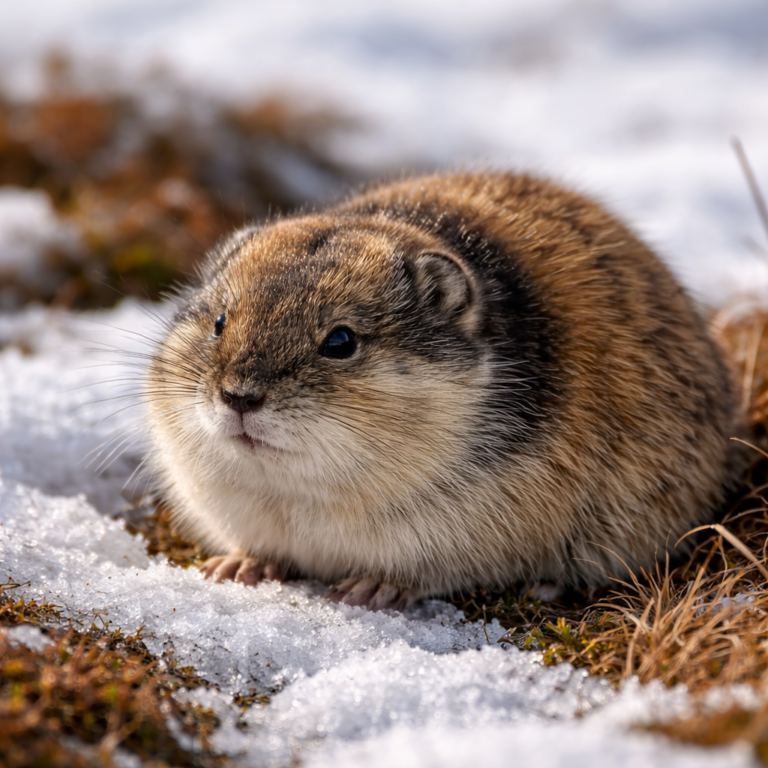
You rarely see a lemming for long. A quick movement through low tundra grass, a flicker beneath snow, then it’s gone. But despite their size, lemmings quietly shape much of Arctic Alaska. They are one of the foundation species of tundra ecosystems — small, fast-breeding rodents built for cold, open landscapes. In the far north, many predators depend on them.
Identification
Lemmings are small, round-bodied rodents adapted to cold climates.
-
Color: Brown, gray, or mottled
-
Size: 4–6 inches long
-
Body: Compact with short tail
-
Ears: Small and partially hidden in fur
They resemble voles but are stockier, with dense fur suited for Arctic winters.
Lemmings remain active year-round, even beneath snowpack.
Where You’ll See Them in Alaska
Lemmings are most common in:
-
Arctic tundra
-
Northern coastal plains
-
Western Alaska
-
Open, treeless terrain
They prefer low vegetation — moss, sedges, and grasses — where they build shallow burrows and snow tunnels.
Most sightings happen by chance. You’re more likely to notice predator activity than the lemming itself.
Seasonal Patterns
-
Winter: Active under snow, creating tunnel systems
-
Spring: Population growth increases
-
Summer: Peak activity above ground
-
Fall: Preparing for colder months
Lemming populations naturally rise and fall in cycles. In high population years, predators like Arctic foxes, snowy owls, and jaegers increase in number as well. The myth that lemmings run off cliffs in mass suicide is false. Population crashes are natural fluctuations, not dramatic migrations.
Lemmings are a reminder that small species hold large influence in the Arctic. Without them, predator numbers and nesting success shift dramatically.
If you’re traveling tundra in summer, steady footing matters more than spotting skill. Low vegetation can hide soft ground and uneven surfaces. Wind exposure is constant in open country, even when temperatures feel mild. Lemmings may be small, but they are central to Alaska’s northern wildlife patterns.