
Rock Ptarmigan in Alaska
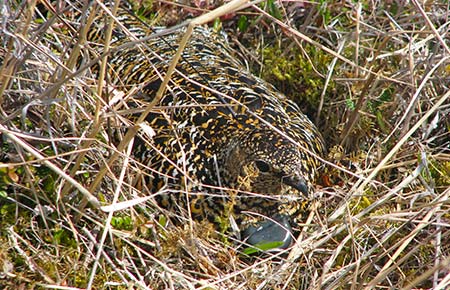
Rock Ptarmigan don’t rely on brush the way Willow Ptarmigan do. They belong higher — in alpine slopes, windswept ridges, and Arctic rock fields where trees disappear and the landscape turns raw and exposed. If you hike above treeline in summer or travel northern tundra in winter, you may flush one from rocky ground and barely see where it went. Their camouflage is that good. They survive where cover is minimal and wind rarely stops.
Identification
Rock Ptarmigan are slightly smaller and more compact than Willow Ptarmigan, with a stockier alpine build.
-
Summer: Mottled gray-brown with fine patterning to match rock and gravel
-
Winter: Nearly pure white
-
Spring males: Bright red eyebrow combs
-
Feet: Fully feathered, acting like snowshoes
They tend to stay low to the ground and rely on camouflage before choosing to fly.
Where You’ll See Them in Alaska
Rock Ptarmigan are most common in:
-
Alpine tundra above treeline
-
Arctic slopes
-
Rocky ridgelines
-
High mountain terrain
They prefer dry, rocky habitats rather than willow thickets.
Because they inhabit exposed areas, sightings often happen in wide open country rather than forest edges.
Seasonal Patterns
-
Spring: Territorial displays begin on high ground
-
Summer: Nesting occurs in rocky tundra areas
-
Fall: Small groups begin forming
-
Winter: Camouflage shifts to full white
Like other ptarmigan, they may burrow into snow for insulation during extreme cold.
Rock Ptarmigan are an important subsistence species in many northern communities and have long been part of seasonal hunting cycles. They are also Alaska’s official state game bird.
If you’re hiking alpine terrain, sturdy footwear matters more than binocular strength. Loose rock, steep slopes, and sudden weather shifts are part of ptarmigan habitat. Layered wind protection is often essential above treeline, even in midsummer.
Rock Ptarmigan don’t stand out against the landscape — they disappear into it. Spotting one often feels like discovering movement in stillness.