
Trumpeter Swans in Alaska
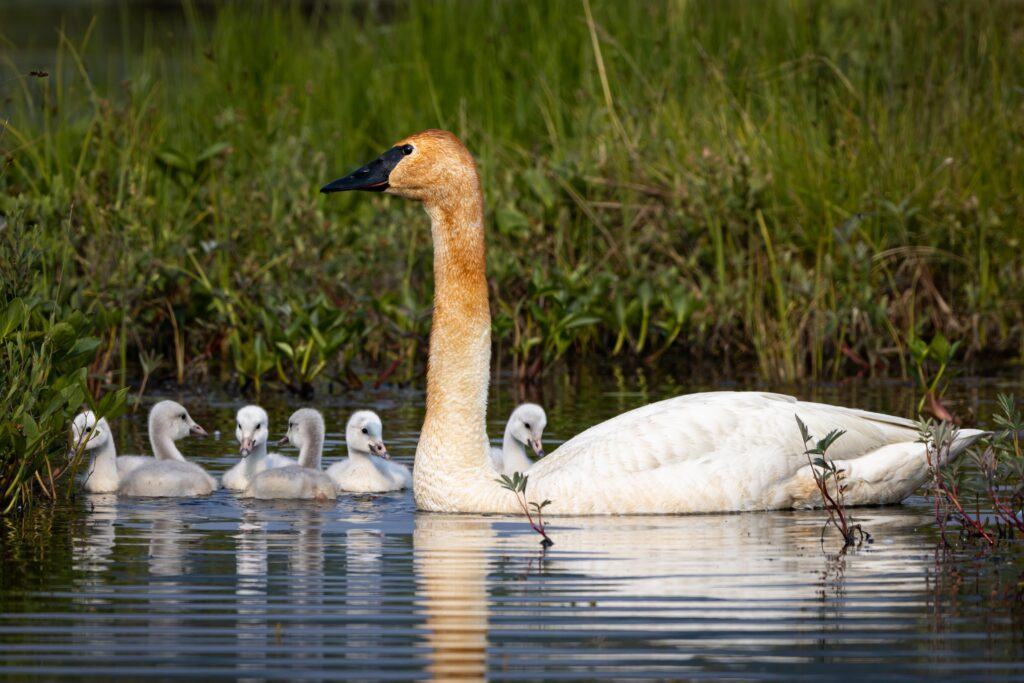
There’s something quiet and steady about seeing a Trumpeter Swan on an Alaska wetland. They don’t rush. They don’t scatter easily. They move with slow confidence across still water, long neck curved in a soft S-shape, white against dark marsh grass.
In early spring, when much of the Interior is still locked in ice, the return of swans feels like a turning point.
Identification
Trumpeter Swans are the largest native waterfowl in North America, and they carry that size with presence.
Color: Pure white body
Beak: Black, often extending up to the eye
Neck: Long and upright
Wingspan: Can reach over seven feet
In flight, their wingbeats are deep and steady, and you can sometimes hear the low, resonant sound that gives them their name.
They’re often confused with Tundra Swans, but Trumpeters are generally larger with a heavier head and bill.
Where You’ll See Them in Alaska
Trumpeter Swans favor:
Interior wetlands and shallow lakes
River sloughs
Marshy meadows
Southcentral lake systems
The Copper River Basin and parts of the Interior host strong breeding populations.
They require quiet, shallow water with good visibility and access to aquatic vegetation.
Seasonal Patterns
Arrival: Early spring as ice breaks
Nesting: Large nests built near shallow water edges
Chicks (cygnets): Gray and downy, staying close to adults
Fall Migration: Southward movement before freeze-up
Swans pair for life, and family groups often remain together through the season.
In some areas of Alaska, swans were once heavily reduced in number, but conservation efforts have helped restore populations. Today, they’re a steady presence in healthy wetland systems. If you’re watching swans along lake edges, staying back from shoreline nesting areas matters. A stable pair of binoculars allows close viewing without forcing birds into the water. Wet meadow ground can be soft during spring thaw, so waterproof footwear is often more useful than expected.