
Harlequin Ducks in Alaska
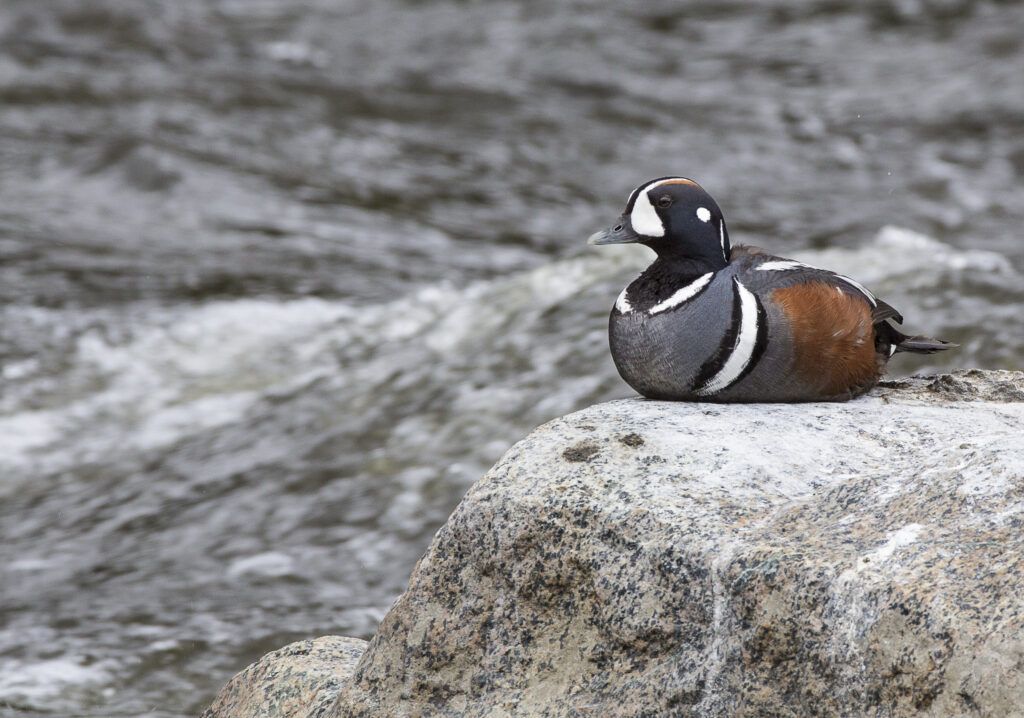
Harlequin Ducks look almost painted. In a state full of dramatic wildlife, they still stand out. The males especially seem too detailed to be real — bold patterns, sharp contrasts, and clean lines against cold moving water. But they aren’t decorative birds. They’re tough. Harlequins spend much of their lives in places where water crashes against rock and current never slows down.
Identification
Harlequin Ducks are compact sea ducks with strong bodies built for rough conditions.
Males (breeding plumage):
Deep slate-blue body
Bright white crescent markings
Rust-colored side patches
Bold facial patterning
Females:
Softer brown-gray coloring
Small white facial spots
Subtle but distinctive profile
They sit low in the water and dive quickly when feeding.
Where You’ll See Them in Alaska
Harlequin Ducks are found in two very different environments depending on season:
Summer: Fast-moving mountain streams and glacial rivers
Winter: Rocky coastlines and exposed marine waters
In spring and summer, they nest along clear, cold rivers — often in surprisingly steep terrain. In fall, they move toward coastal waters, where they handle surf and surge with ease.
If you’re hiking along alpine rivers in early summer, keep an eye on calmer side channels. Harlequins prefer sections with both current and shelter.
Seasonal Patterns
Spring: Courtship along rivers
Summer: Nesting near fast-moving freshwater
Fall: Movement toward the coast
Winter: Feeding in rough coastal surf
Few ducks transition between whitewater rivers and ocean surf the way Harlequins do.
Because they frequent slick riverbanks and uneven coastal rock, steady footing matters if you’re observing them up close. Waterproof hiking boots with good traction make river-edge viewing far safer, especially during glacial melt season.
Harlequin Ducks are not loud or showy in behavior. They blend into moving water and rock, relying on subtle motion rather than open display.