
Steller Sea Lions in Alaska
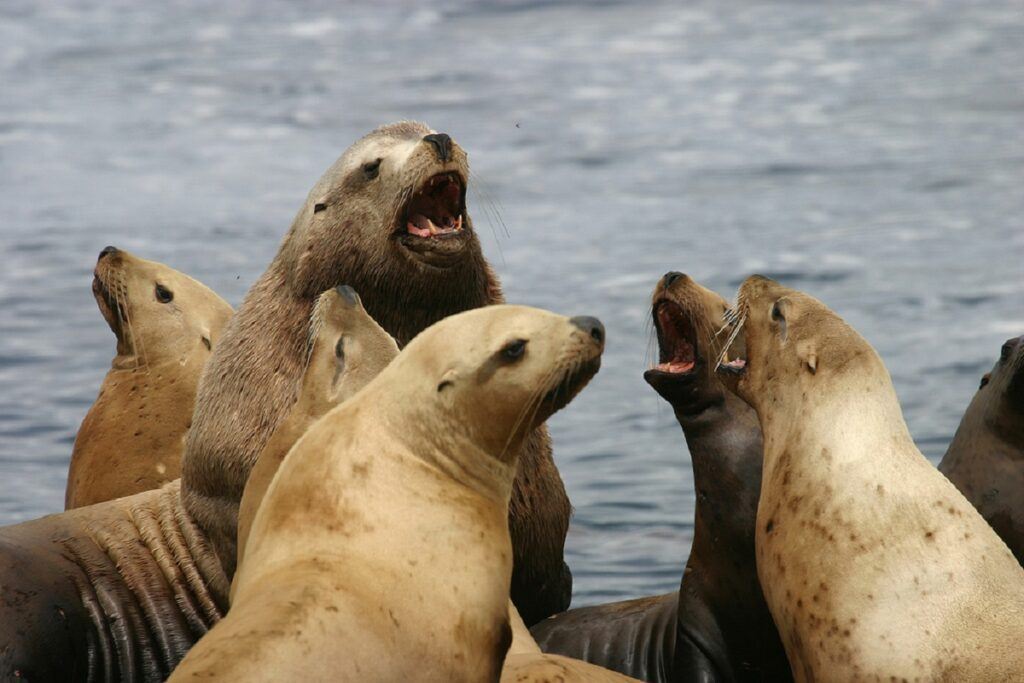
You usually hear Steller sea lions before you see them. Low barks echo off rocky shorelines, mixing with surf and gull calls. Then you spot them — heavy bodies draped across rocks, heads lifted, watching everything. They are the largest sea lions in the world, and in Alaska they feel solid and unapologetic. Where harbor seals are quiet and subtle, sea lions are loud and visible.
Identification
Steller sea lions are large, muscular marine mammals with thick necks and powerful front flippers.
Color: Light tan to reddish-brown
Size: Males can exceed 2,000 pounds; females are much smaller
Head: Broad with visible external ear flaps
Posture: Often upright when on land
Unlike true seals, sea lions have visible ear flaps and can rotate their rear flippers forward, allowing them to “walk” on land more easily.
Adult males are significantly larger and develop thick neck manes, especially during breeding season.
Where You’ll See Them in Alaska
Steller sea lions are common along:
Southeast Alaska
Gulf of Alaska coast
Prince William Sound
Kodiak Island
Aleutian Islands
They gather at established haul-out sites and rookeries, often on offshore rocks or isolated islands.
Boat tours frequently pass known haul-outs, where dozens — sometimes hundreds — of sea lions rest together.
Seasonal Patterns
Sea lions remain in Alaska year-round, though movement patterns shift with breeding and food availability.
Breeding season: Late spring to early summer
Pups: Born at rookeries during early summer
Winter: Feeding in productive coastal waters
Large males defend breeding territories during the summer months, which is when their vocal behavior is most noticeable.
In coastal communities, sea lions have long been part of marine ecosystems relied upon for generations. Today, populations are carefully monitored due to past declines in some regions.
Because sea lions haul out in predictable locations, disturbance is a real concern. Approaching too closely can cause them to rush into the water, potentially injuring pups. Federal regulations require vessels to maintain safe distances.
If viewing from a boat, expect wind exposure and spray. Conditions near offshore rocks can be rough even on calm days, and stable footing on deck makes a difference. Steller sea lions don’t move quietly — they claim space. On a rocky island with surf behind them, they feel completely at home.