
Ribbon Seals in Alaska
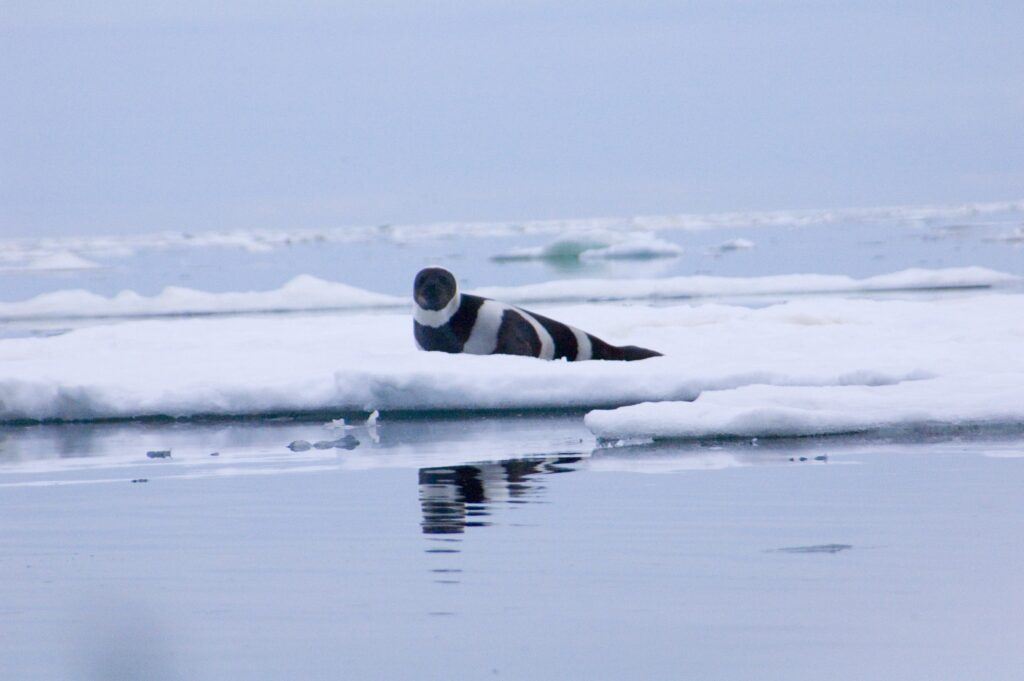
Ribbon seals are rarely the marine mammal people expect to see — and that’s part of what makes them memorable. They don’t haul out in large coastal groups like sea lions. They don’t gather near busy fjords. They belong to drifting sea ice and open northern water.
Most Alaskans will never see one in the wild.
Identification
Ribbon seals are strikingly patterned and easy to recognize if you’re lucky enough to spot one.
Color: Dark brown to nearly black body
Markings: Distinct pale bands wrapping around the neck, shoulders, and hindquarters
Size: Around 5–6 feet long
Build: Streamlined, similar in size to harbor seals
Those pale “ribbons” across their body give them their name and make them stand out sharply against sea ice.
Like harbor seals, they lack external ear flaps and move awkwardly on land compared to sea lions.
Where You’ll See Them in Alaska
Ribbon seals are found primarily in:
Bering Sea
Chukchi Sea
Western Alaska coastal waters
Offshore Arctic ice edges
They are strongly associated with seasonal sea ice and are rarely seen near populated southern coasts.
Sightings are typically from vessels operating in northern waters or by observers in remote western communities.
Seasonal Patterns
Spring: Often seen resting on sea ice during breeding season
Summer: Follow retreating ice northward
Winter: Spend more time in open water within Arctic regions
Unlike large haul-out species, ribbon seals are usually solitary or seen in small numbers.
Their diet includes fish and cephalopods, and they are strong divers capable of navigating cold, deep waters.
Ribbon seals are part of subsistence traditions in western Alaska, though they are not as commonly harvested as walrus or some other marine mammals. As with other Arctic species, their populations are closely monitored due to changing sea ice conditions.
Arctic viewing conditions are harsh and unpredictable. Fog, wind, and shifting ice make sightings rare and weather-dependent. Layered insulation and wind protection are essential for extended time on northern waters. Ribbon seals don’t gather in spectacle. They exist at the edge of visibility — shaped by ice and distance, part of Alaska’s quieter marine world.