
Sandhill Cranes in Alaska
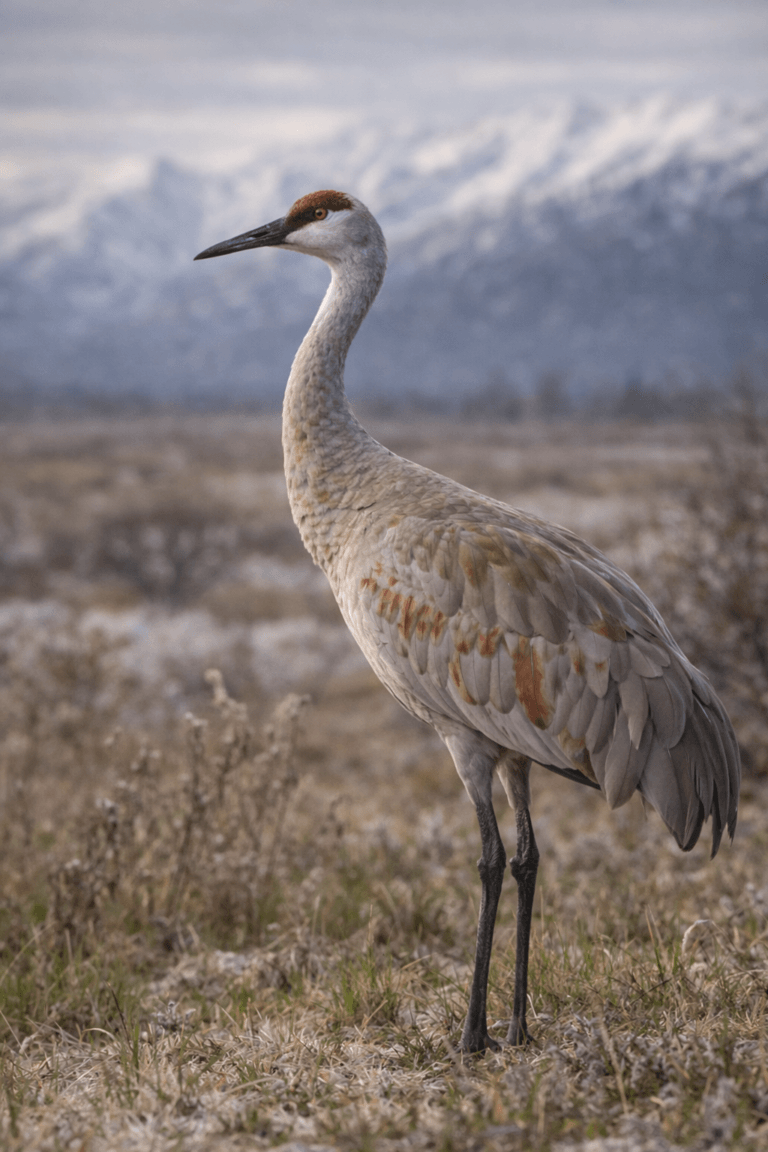
When Sandhill Cranes return in spring, Alaska feels different. Their rolling, rattling calls echo across wetlands and river valleys, carrying farther than you expect. It’s one of those sounds that signals winter is finally loosening its grip.
They don’t arrive quietly. You’ll often hear them before you see them — long necks stretched forward, wings moving in slow, deliberate beats as they circle into marshy ground.
Identification
Sandhill Cranes are tall, elegant birds built for open wetlands.
Color: Gray body with occasional rusty staining
Crown: Distinct red patch on top of the head
Legs & Neck: Long and extended in flight
Wingspan: Around six feet
In flight, they hold their necks straight out, unlike herons which tuck theirs back.
Where You’ll See Them in Alaska
Sandhill Cranes favor:
Interior wetlands and sloughs
The Tanana Valley
Susitna River flats
Copper River Delta
Open hay fields and marsh edges
They prefer wide visibility and shallow water areas for nesting.
Large gatherings can form in late summer before migration, especially in agricultural valleys and open flats.
Seasonal Behavior
Arrival: Late April to early May
Nesting: Wet meadows and marshes
Chicks: Brown and long-legged, often seen trailing adults
Departure: Late August through September
Their migration is one of Alaska’s most noticeable seasonal transitions.
In many rural areas, cranes have long been part of seasonal rhythms — watched, respected, and in some communities hunted responsibly.
If you’re viewing cranes in marsh country, waterproof footwear and steady footing matter. Wetland ground shifts quickly under weight, especially in spring thaw. A spotting scope or stable binoculars setup allows you to observe courtship dances and group behavior without disturbing them.