
Cloudberries in Alaska
Cloudberries in Alaska
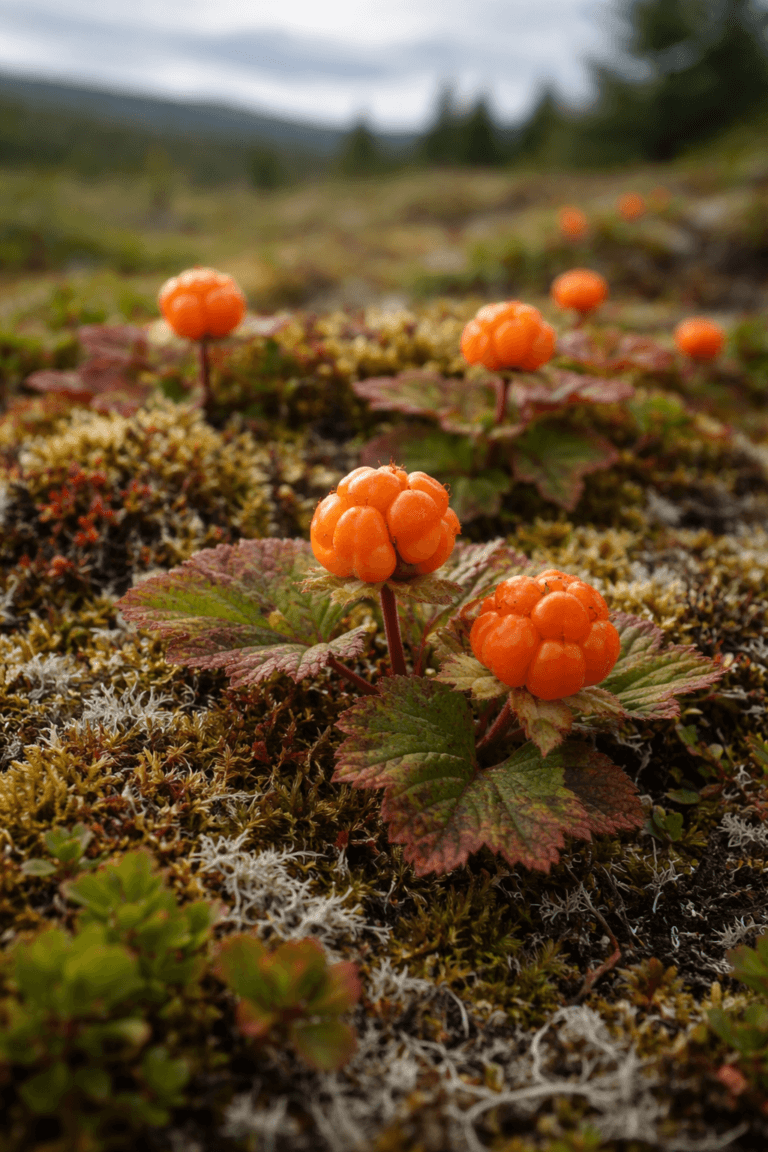
Cloudberries are one of Alaska’s most unique and sought-after wild berries. Small, amber-colored, and delicate, they grow low to the ground in tundra and boggy landscapes. Each plant produces a single berry. When ripe, they shift from red to a soft golden-orange and develop a rich, almost creamy flavor that’s both sweet and tart. They’re not abundant everywhere, and finding a good patch feels like a quiet reward.
Where Cloudberries Grow
Cloudberries are most common in:
• Arctic and Western Alaska
• Tundra regions
• Bogs and wet ground
• Open, mossy terrain
They prefer cool climates and thrive in low, open landscapes where the ground stays damp.
Harvest season usually runs from mid to late summer, depending on region and snowmelt timing.
Identifying Cloudberries
Cloudberries grow on low, spreading plants with:
• Broad, lobed leaves
• Single white spring flowers
• One berry per stem
• Amber or golden fruit when ripe
The berries resemble a small raspberry in shape but are firmer and less hollow.
Because they are delicate, they bruise easily and should be handled carefully.
Edible Uses
Cloudberries are highly valued for:
• Jam
• Syrup
• Desserts
• Mixed into yogurt or cream
• Preserves
They are often sweetened before use due to their natural tartness.
Because they are soft and juicy, a shallow picking container helps prevent crushing while harvesting.
This page will later link to cloudberry jam and dessert recipes in the Alaska Recipes section.
A Northern Berry
Cloudberries are closely tied to northern landscapes. They are especially meaningful in Arctic communities and have long been gathered during short summer harvest windows.
They’re not flashy, but they are distinctly Alaska.