
Spruce Trees in Alaska
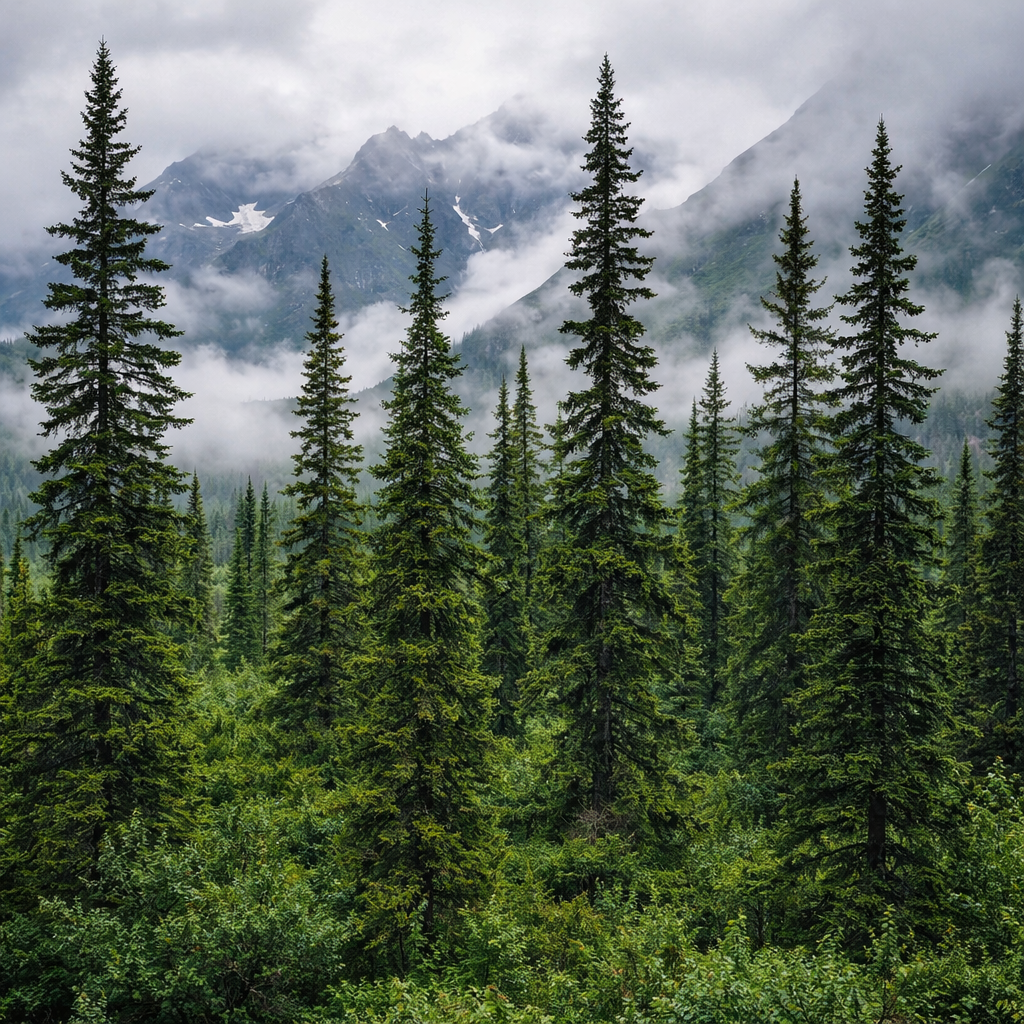
Spruce Trees of Alaska
Spruce trees define much of Alaska’s landscape. From the Interior to coastal forests, their narrow spires and dark green needles are a constant presence.
Two species dominate most of the state: White Spruce and Black Spruce. In coastal areas, you’ll also find Sitka Spruce, one of the largest conifers in the world.
Spruce trees are more than scenery. They shape wildlife habitat, influence wildfire cycles, and have long been used for firewood, building materials, and traditional crafts.
Spruce and Fire
Spruce forests are closely tied to Alaska’s fire ecology.
Black spruce in particular creates dense stands that burn intensely. After wildfire, spruce often regenerates, continuing the natural cycle.
Spruce roots grow shallow in permafrost regions, which makes trees susceptible to tipping during windstorms as the ground thaws.
Wildlife and Habitat
Spruce forests provide shelter and food for:
• Moose
• Snowshoe hares
• Lynx
• Birds such as spruce grouse
Dead standing spruce (snags) are important nesting sites for woodpeckers and other cavity-nesting birds.
Everyday Use
Spruce is one of the most practical trees in Alaska.
Dry spruce splits easily and makes dependable firewood. Many cabins and remote structures rely on spruce for heat during long winters.
A sharp splitting axe or maul makes processing spruce much easier, especially when cutting and stacking winter firewood.
A Constant in the Landscape
Spruce trees may not be flashy, but they are foundational.
They frame mountain views, line highways, anchor boreal forests, and quietly shape the rhythm of life across the state.
Edible and Traditional Uses
Young spruce tips (the soft, bright green new growth that appears in late spring) are edible and have been used for generations in northern regions.
Spruce tips are commonly used to make:
• Spruce tip tea
• Spruce tip syrup
• Infused vinegar
• Jelly
• Spruce beer (historically)
The flavor is citrusy and slightly resinous — much milder than mature needles.
Spruce tip tea is one of the simplest uses. Fresh tips are steeped in hot water to create a bright, vitamin-rich drink traditionally used in northern climates.
Only harvest new spring growth, and avoid collecting from trees near roads or polluted areas.
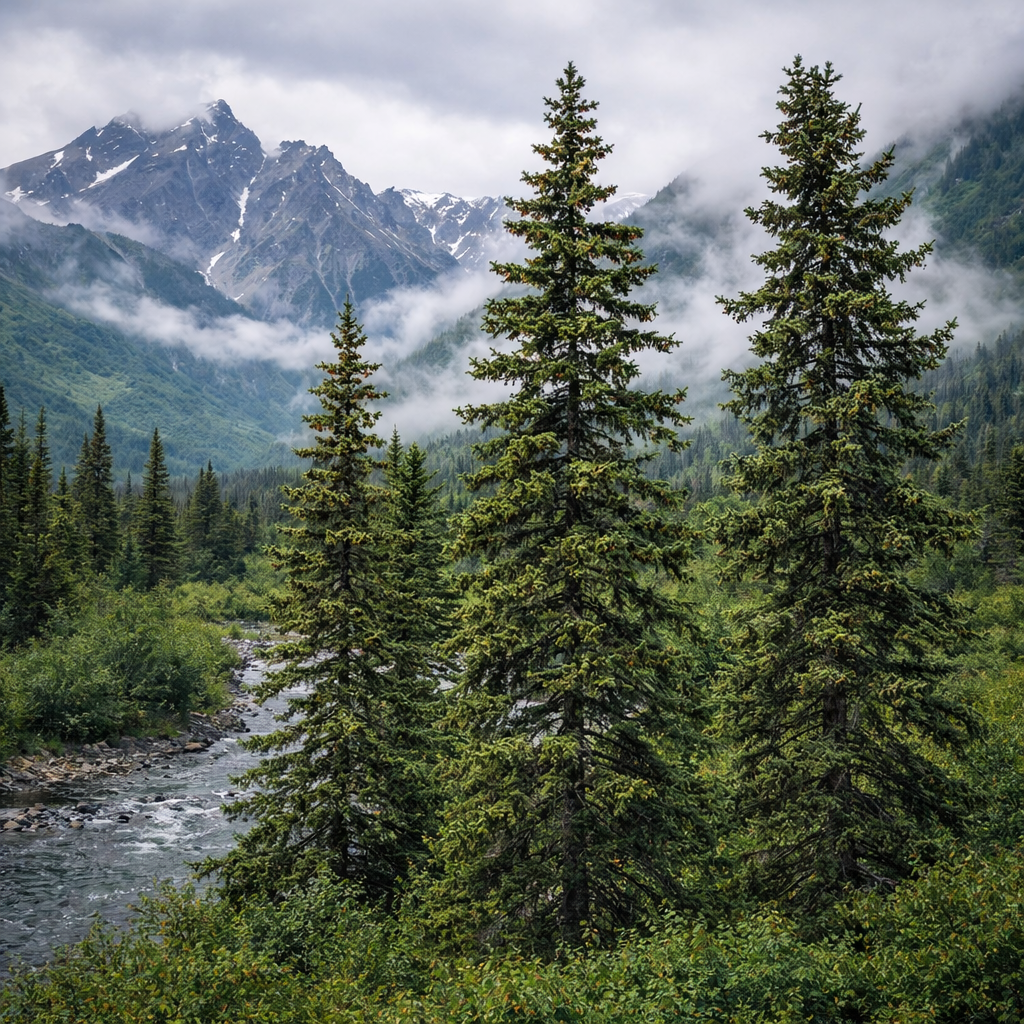
White Spruce (Picea glauca)
White spruce is common across Interior Alaska and parts of Southcentral.
It grows taller than black spruce and prefers well-drained soil. Mature trees can reach 40–80 feet in height.
Identification tips:
• Needles are four-sided and roll easily between fingers
• Cones are longer and hang downward
• Bark is gray-brown and scaly
White spruce is often used for:
• Firewood
• Cabin logs
• Soundboards in instruments
• Construction lumber
It burns hotter and cleaner than black spruce.
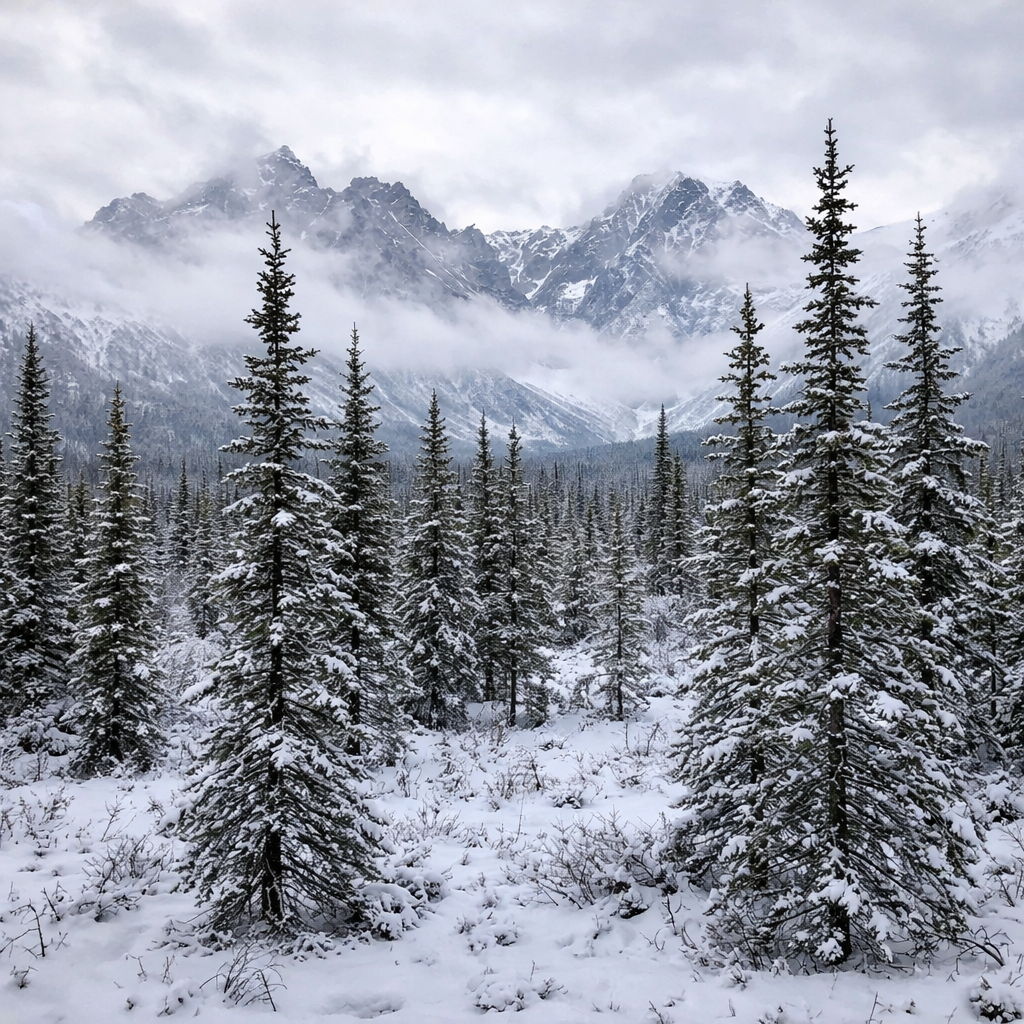
Black Spruce (Picea mariana)
Black spruce dominates colder, wetter areas and muskeg terrain.
It tends to grow shorter and more narrow than white spruce. Many Interior bogs are filled with stunted black spruce stands.
Identification tips:
• Shorter needles
• Smaller cones
• Often grows in wet ground
Black spruce is highly flammable and plays a major role in Alaska’s wildfire cycles.
It is commonly used for:
• Firewood
• Kindling
• Traditional tools
• Shelter poles
Because of its resin content, it lights easily and burns quickly.
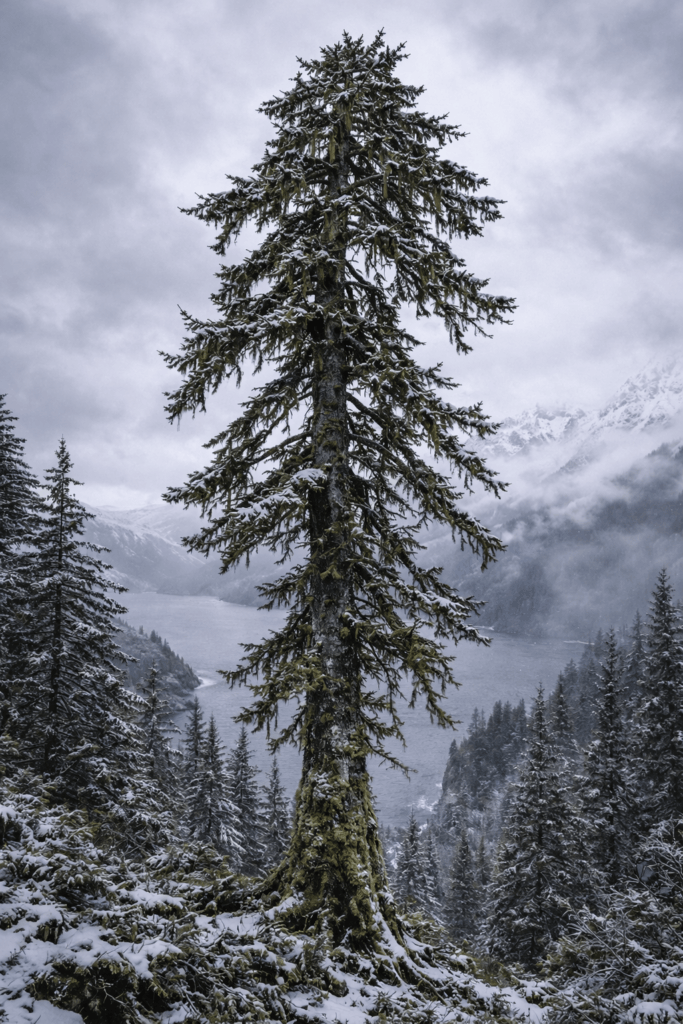
Sitka Spruce (Picea sitchensis)
Found mostly in Southeast Alaska and coastal regions, Sitka spruce grows large and straight in moist environments.
It can exceed 150 feet tall under ideal conditions.
Its wood is valued for:
• Boat building
• Aircraft frames (historically)
• Musical instruments
Sitka spruce is less common in the Interior but dominates coastal rainforests.