
Arctic (Northern) Alaska
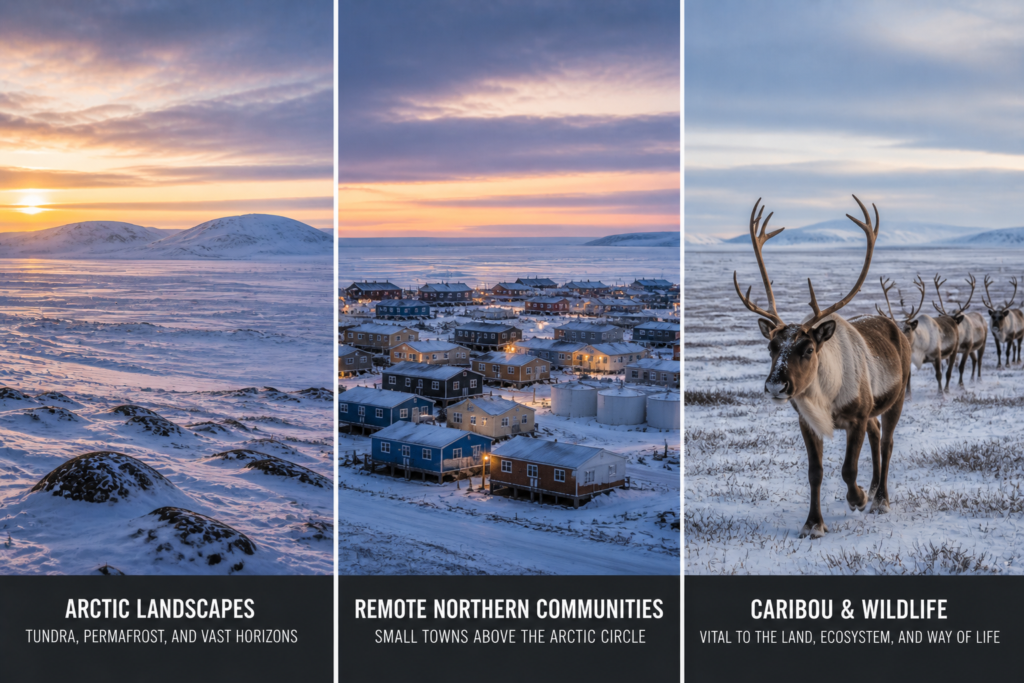
Arctic and Northern Alaska is a completely different world.
This is the far north—above the Arctic Circle—where the landscape opens into tundra, temperatures drop hard in winter, and the sun follows extreme seasonal patterns. You’ll get weeks of continuous daylight in summer and long stretches of darkness in winter.
Travel here isn’t casual. It takes planning, time, and preparation, but it offers one of the most unique experiences in Alaska. You can start mapping out logistics in the Alaska Travel Planning Guide, then build your trip from there.
Quick Facts
Main Hub: Utqiaġvik
Other Key Areas: North Slope, Brooks Range
Access: Flight only, no road connections to most communities
Best For: Arctic experience, midnight sun, polar night, unique landscapes
Best Time to Visit: June to July (summer) / winter for polar conditions
Vibe: Extreme, remote, raw
Geography & Landscape
Arctic Alaska is defined by open tundra and wide horizons.
The land is largely flat, covered in tundra, permafrost, and low vegetation. There are few trees, and the environment feels vast and exposed. Farther south, the Brooks Range introduces rugged mountains and a transition into Interior Alaska.
This is one of the most unique landscapes in the state, shaped by cold temperatures and seasonal extremes.
If you want to understand more about tundra, permafrost, and Arctic ecosystems, explore Natural Features of Alaska.
Climate & Seasons
The Arctic has one of the most extreme climates in Alaska.
Summers are short and cool, typically in the 30s to 40s, with continuous daylight during peak season.
Winters are long and harsh, with temperatures often dropping well below zero and long periods of darkness known as polar night.
Conditions can change quickly, and wind plays a major role in how temperatures feel.
If you’re planning a trip, use Best Time to Visit Alaska to match your timing to what you want to experience.
Alaska Native Culture
Arctic Alaska is home to the Iñupiat people.
For thousands of years, life here has been built around survival in extreme conditions, with deep knowledge of sea ice, wildlife, and seasonal movement. Hunting, fishing, and subsistence practices remain central to life in many communities.
This connection to the land and ocean is essential to understanding the region.
Top Places to Visit in Arctic & Northern Alaska
This is where your trip starts to take shape.
Utqiaġvik is the northernmost city in the United States and the main hub of the region
The North Slope offers vast tundra landscapes and Arctic coastline
The Brooks Range provides a rugged mountain contrast to the tundra
Explore these areas through the city guides as you plan your trip.
Things to Do in Arctic & Northern Alaska
This region is more about environment than activity.
Experiencing the midnight sun in summer is a major draw
Witnessing polar night and extreme winter conditions offers a rare perspective
Wildlife viewing includes caribou, Arctic fox, and marine species
Exploring tundra landscapes provides a completely different Alaska experience
If you want to learn more about Arctic wildlife and ecosystems, explore Natural Features of Alaska.
How to Get Around
Arctic Alaska is not connected to the road system.
Travel is almost entirely by plane, with limited seasonal access by specialized routes. Getting between communities requires planning and flexibility.
Distances are large, and conditions can affect travel quickly.
If you’re planning logistics, use Getting Around Alaska to understand how travel works here.
When to Visit
The best time to visit depends on what you want to experience.
June and July offer continuous daylight and more accessible travel
Winter offers polar night and extreme Arctic conditions
Shoulder seasons are less predictable and harder to navigate
This is one of the most timing-dependent regions in Alaska. Use Best Time to Visit Alaska to plan it right.
Who This Region Is Best For
Arctic Alaska is ideal for travelers looking for a true Arctic experience and something completely different from the rest of the state.
It’s best suited for people comfortable with extreme conditions, limited infrastructure, and more complex travel logistics.
This is not a typical destination—it’s a place you go for a specific experience.
Gear Considerations
Conditions here can be extreme, even in summer.
Warm, wind-resistant layers are essential
Cold-weather gear is critical in winter
Preparation matters more here than almost anywhere else in Alaska
If you want gear that actually works in these conditions, check out the Alaska Gear Guide before your trip.
Plan Your Trip
Start with the Alaska Travel Planning Guide to map out logistics and timing
Explore destinations through the city guides
Learn more about landscapes and wildlife in Natural Features of Alaska
Get prepared with the Alaska Gear Guide