
Alaska Adventure Travel Safety Gear Guide
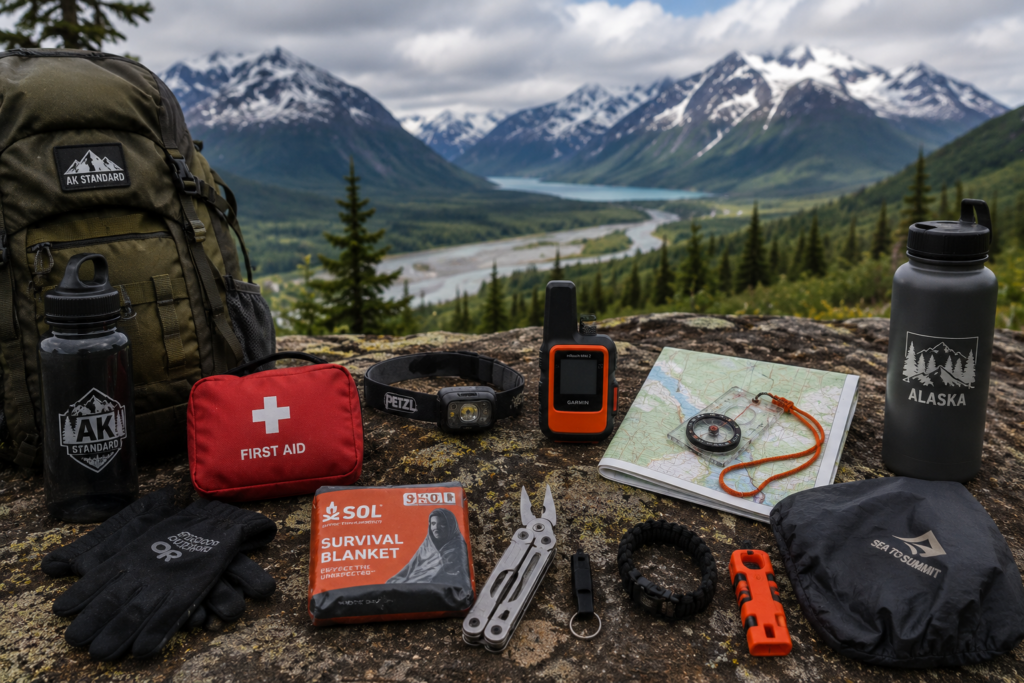
Alaska Adventure Travel Safety Gear Guide: Essential Equipment for Safe Travel
Alaska rewards preparation.
Most trips go exactly as planned, but weather changes quickly, roads can be remote, and cell service is often limited. Having a few key pieces of safety gear can turn a minor inconvenience into a manageable situation rather than an emergency.
You do not need to prepare for every possible scenario, but carrying the right equipment can make your Alaska adventure safer, more comfortable, and a lot less stressful.
Start With the Basics
Before heading into Alaska’s backcountry, on a road trip, or even on a long day excursion, make sure you have a few basic safety essentials:
-
A first aid kit
-
A reliable light source
-
Extra food and water
-
Navigation tools
-
Backup power
-
Emergency clothing layers
-
A way to communicate if plans change
Preparation looks different depending on the trip, but these basics apply almost everywhere in Alaska.
First Aid Supplies
A good first aid kit is one of the easiest and most important items to carry.
At minimum, consider packing:
-
Adhesive bandages
-
Gauze and tape
-
Pain relievers
-
Blister treatment
-
Antihistamines
-
Tweezers
-
Antibiotic ointment
-
Any personal medications
If you’re traveling outside major communities, consider a more comprehensive kit.
Recommended:
-
Best Travel First Aid Kits for Alaska
Lighting and Visibility
Darkness arrives quickly during parts of the year, and weather can reduce visibility even during summer.
Always carry:
-
A headlamp or flashlight
-
Extra batteries
-
A backup light source
Headlamps are especially useful because they keep both hands free during roadside repairs, hiking, camping, or emergency situations.
Recommended:
-
Best Headlamps & Flashlights for Alaska
Navigation and Communication
Many visitors are surprised to discover how limited cell service can be throughout Alaska.
Before traveling:
-
Download offline maps
-
Carry paper maps when possible
-
Share your itinerary with someone
-
Know where services are located
For remote travel, satellite communication devices provide an additional layer of safety.
Consider carrying:
-
GPS devices
-
Satellite communicators
-
Offline navigation apps
-
Physical maps
Backup Power
Phones, GPS units, cameras, and emergency devices are only useful if they have power.
Long travel days, cold temperatures, and remote destinations can drain batteries quickly.
Consider carrying:
-
Power banks
-
Vehicle chargers
-
Backup charging cables
-
Portable battery systems
Always assume you’ll need more power than expected.
Recommended:
-
Best Power Banks for Alaska
-
Travel Tech Essentials for Alaska
Emergency Vehicle Supplies
If you’re planning an Alaska road trip, your vehicle should carry basic emergency supplies.
Recommended items include:
-
Jumper cables
-
Tire repair kit
-
Portable air compressor
-
Flashlight
-
Emergency blanket
-
Extra water
-
Non-perishable snacks
-
Paper maps
-
Basic tools
In Alaska, help may not always be close by.
Recommended:
-
Alaska Road Trip Emergency Kit
-
Road Trip Essentials for Alaska
Water and Food
Dehydration and hunger can become problems faster than many travelers expect.
Always carry:
-
Extra drinking water
-
Water bottles or hydration systems
-
Snacks
-
Emergency food supplies
For remote travel and outdoor adventures, consider carrying water purification equipment.
Recommended:
-
Best Water Bottles & Hydration Systems for Alaska
Weather Protection
Weather is one of the biggest safety considerations in Alaska.
Conditions can change rapidly, especially in the mountains and coastal regions.
Always consider bringing:
-
Waterproof rain gear
-
Extra clothing layers
-
Hats and gloves
-
Emergency blankets
-
Dry bags
The goal is not to be comfortable in perfect weather. The goal is to remain safe when conditions change unexpectedly.
Wildlife Preparedness
Most wildlife encounters in Alaska are uneventful, but preparation is still important.
Remember:
-
Keep your distance from wildlife.
-
Never feed animals.
-
Store food properly.
-
Carry bear spray when appropriate.
-
Know how to respond to wildlife encounters.
The safest wildlife encounter is usually the one that happens from a distance.
Construction Season and Travel Delays
Summer road construction is part of traveling in Alaska.
Be prepared for:
-
Pilot cars
-
Delays
-
Gravel roads
-
Reduced speeds
-
Weather interruptions
-
Longer travel times
Always carry:
-
Extra fuel when appropriate
-
Food and water
-
Backup clothing layers
-
Charging equipment
-
Patience
One of the best safety tools you can bring to Alaska is a flexible schedule.
Final Thoughts
You do not need to prepare for every possible emergency to travel safely in Alaska.
You simply need to recognize that Alaska is larger, wilder, and less predictable than many destinations.
Bring the basics. Prepare for changing conditions. Allow extra time. Carry backup supplies. And remember that the best adventures usually happen when preparation and flexibility work together.