
Drone Photography in Alaska: Tips, Rules & Best Practices
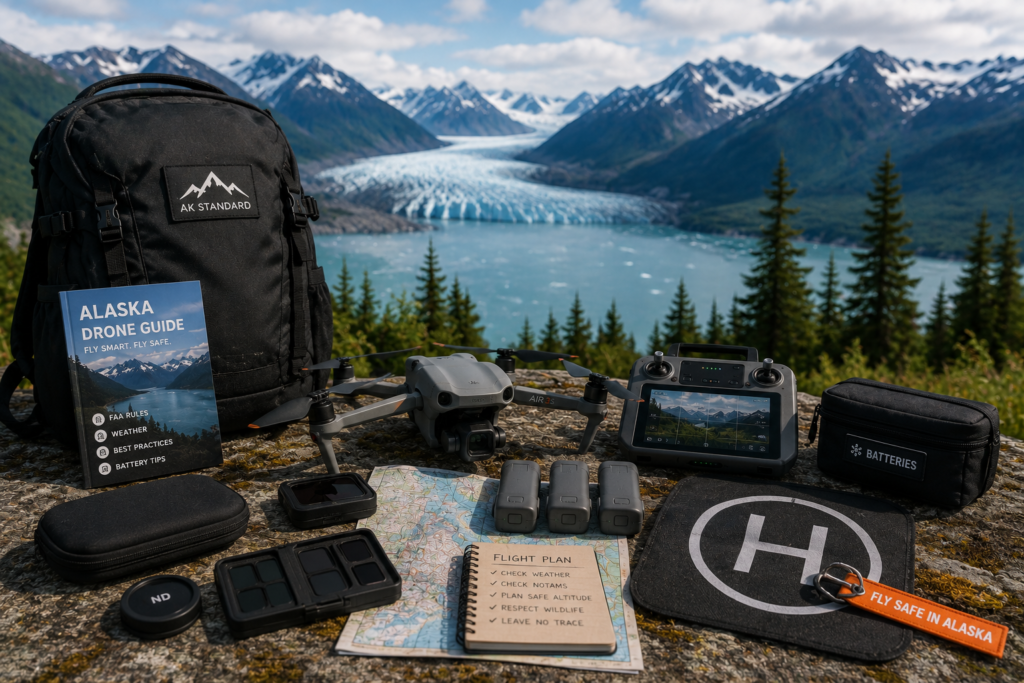
Drone Photography in Alaska: Tips, Rules & Best Practices
Few places in the world are as impressive from the air as Alaska. Glaciers, mountain ranges, braided rivers, coastal fjords, remote cabins, and endless wilderness can create incredible drone photography opportunities. The challenge is that Alaska's weather, wildlife, terrain, and regulations often make flying more complicated than people expect.
This guide is designed to help you understand the basics of drone photography in Alaska. Whether you're bringing a drone on a cruise, road trip, hiking adventure, fishing trip, or wildlife tour, a little preparation can help you capture better footage while avoiding common mistakes.
Why Drones Work So Well in Alaska
Alaska's scale is difficult to appreciate from the ground. Mountains, glaciers, valleys, and rivers often stretch much farther than they appear in photographs. Drone footage helps showcase the size and beauty of the landscape in a way that traditional photography sometimes cannot.
Drones can also reveal patterns in rivers, coastal shorelines, forests, and mountain terrain that are impossible to see from eye level. When used responsibly, they can provide a completely different perspective on an Alaska adventure.
That said, not every location is appropriate for drone use. Understanding where and when to fly is just as important as the equipment you bring.
Know the Rules Before You Fly
One of the biggest mistakes visitors make is assuming they can fly a drone anywhere. Alaska has a mix of federal land, state land, private property, Native corporation lands, national parks, wildlife refuges, and local regulations. The rules can vary dramatically depending on where you are.
Many national parks prohibit recreational drone use entirely. This includes popular destinations where visitors often assume drones are allowed. Always research the specific location before your trip and verify the current regulations.
It is your responsibility as the pilot to understand applicable FAA rules, local restrictions, and land management regulations before launching your drone.
Weather Matters More Than You Think
Weather is one of the biggest challenges for drone photography in Alaska. Conditions can change quickly, especially near mountains, glaciers, coastlines, and large bodies of water. A calm morning can turn into a windy afternoon much faster than many visitors expect.
Wind is often a bigger problem than rain. Strong gusts can make flights unstable, reduce battery life, and create difficult landing conditions. Even high-end drones have limits, and Alaska frequently pushes those limits.
Before every flight, check weather conditions, wind forecasts, visibility, and precipitation. If conditions seem questionable, waiting for a better opportunity is usually the smarter choice.
Battery Management for Drone Flights
Cold temperatures and long travel days can quickly create battery problems. Drone batteries often drain faster in cold conditions, especially during spring, fall, winter, and higher-elevation flights.
Always bring more batteries than you think you will need. Alaska's scenery tends to encourage longer flights and more photography than originally planned. Running out of power early in the day is frustrating when opportunities continue appearing.
Keep batteries warm whenever possible and avoid storing them in extremely cold conditions for extended periods. A battery that performs well at home may behave very differently in Alaska.
- Bring multiple batteries
- Keep batteries warm before flights
- Monitor battery health regularly
- Carry charging equipment
- Bring backup power solutions
Wildlife and Drone Etiquette
Wildlife should always come before photography. Drones can stress animals, alter natural behavior, and create unnecessary disturbance if used irresponsibly. Just because a drone can reach a location does not mean it should.
Never intentionally approach bears, moose, nesting birds, marine mammals, or other wildlife with a drone. If an animal changes behavior because of your drone, you are too close.
Responsible drone use protects both wildlife and future access opportunities for everyone who visits Alaska.
Best Subjects for Drone Photography in Alaska
While wildlife often gets the attention, some of the best drone photography opportunities in Alaska involve landscapes rather than animals. Mountains, glaciers, rivers, coastlines, forests, and lakes often create the most dramatic aerial images.
Braided rivers are especially impressive from above because they reveal patterns that are almost impossible to appreciate from ground level. Coastal areas, glaciers, and mountain valleys can also produce incredible footage when conditions cooperate.
Look for subjects that emphasize scale, texture, and Alaska's unique geography rather than focusing exclusively on wildlife.
- Glaciers
- Mountain ranges
- Braided rivers
- Coastal shorelines
- Lakes and reflections
- Remote cabins and lodges
- Road trip scenery
Drone Photography Tips
The best drone footage often comes from slow, deliberate movements rather than aggressive flying. Smooth camera movements tend to create more cinematic footage and help viewers appreciate the landscape.
Pay attention to lighting. Early morning and late evening frequently produce the best conditions, especially during Alaska's long summer days. Midday lighting can work, but softer light often creates more dramatic results.
Think about storytelling rather than individual shots. A sequence of wide, medium, and detailed aerial footage usually creates a more interesting final product.
What to Pack for Drone Photography
Successful drone trips require more than just the drone itself. A forgotten battery, memory card, or charging cable can quickly end your plans for the day.
Before leaving for your trip, create a checklist and verify every piece of equipment. Alaska is not always the easiest place to replace forgotten gear once you are on the road.
- Drone
- Remote controller
- Extra batteries
- Battery charger
- Charging cables
- Memory cards
- Landing pad (optional)
- Power bank
- Storage case
- Microfiber cloth
Alaska-Specific Drone Tips
Expect wind more often than you expect calm conditions. Even beautiful days can become challenging once you gain altitude. Give yourself plenty of margin when planning battery use and return flights.
Pay attention to your surroundings during takeoff and landing. Gravel bars, beaches, tundra, snow, and loose dirt can all create debris that affects equipment.
Most importantly, be flexible. Some of the best drone flights happen because conditions unexpectedly improve, while some planned flights never happen because weather refuses to cooperate.
Related Alaska Photography & Tech Guides
Drone photography is only one part of documenting an Alaska adventure. These related guides can help you build a complete photography and technology system for your trip.
- Best Drones for Alaska Photography
- Alaska Adventure Tech Packing List
- Alaska Photography Packing List
- GPS & Navigation Devices for Alaska Adventures
- Best Solar Chargers and Battery Banks for Alaska
- Battery Management for Alaska Adventures
- Best Cameras for Alaska Travel
Final Thoughts
Drone photography can provide some of the most impressive images and video you'll bring home from Alaska. The state's mountains, glaciers, rivers, and wilderness landscapes are uniquely suited to aerial photography when conditions are right.
Success comes down to preparation, patience, weather awareness, and responsible flying. Understand the rules, respect wildlife, bring enough battery power, and focus on safety first. If you do those things, Alaska will give you plenty of incredible scenes worth capturing from above.