
Alaska Photography Packing List: Camera Gear to Bring
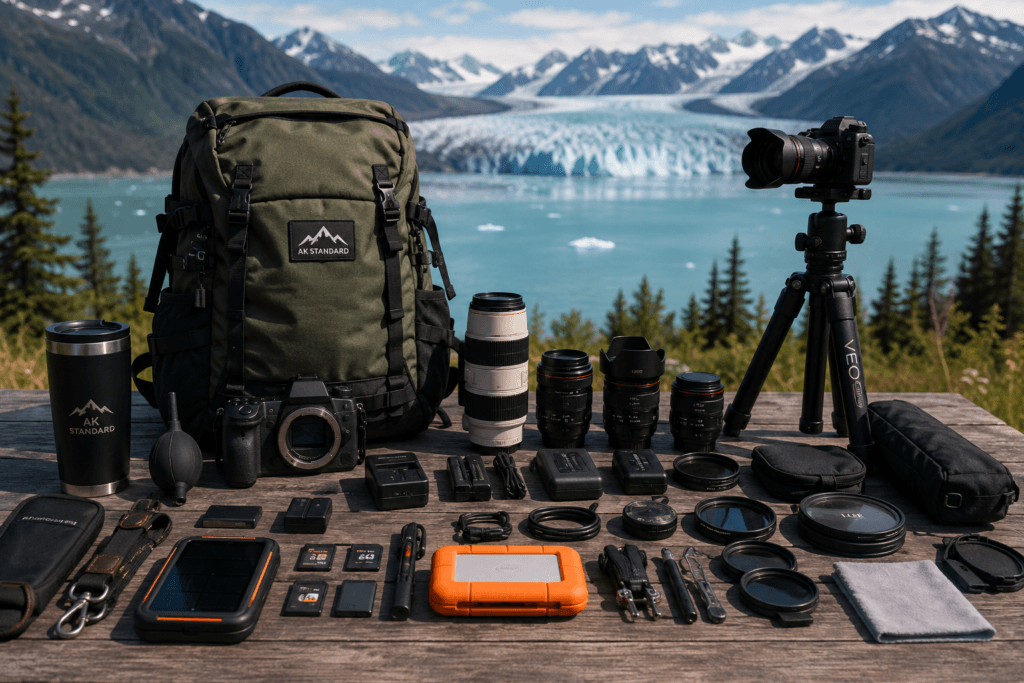
Alaska Photography Packing List: Camera Gear to Bring
Alaska is one of those places where you will regret not having your camera ready. A moose can step out of the brush, clouds can open over a mountain range, or the northern lights can show up when you least expect them. This Alaska photography packing list is built to help you bring the gear that actually matters without overpacking your entire house.
The goal is not to carry every camera accessory you own. The goal is to build a practical photography kit that works for the kind of Alaska trip you are taking. A cruise, road trip, wildlife tour, hiking trip, and northern lights trip all require slightly different gear, but the basics stay the same.
Quick Alaska Photography Packing Checklist
This quick checklist covers the basics most Alaska travelers should think through before leaving home. You may not need every item on this list, but it gives you a solid starting point. Adjust it based on your camera, your trip length, and how remote your travel plans are.
- Camera body
- Primary lens
- Telephoto lens for wildlife
- Wide-angle lens for landscapes or northern lights
- Extra batteries
- Battery charger
- Memory cards
- Tripod
- Camera bag or backpack
- Lens cloth
- Rain cover or dry bag
- Power bank
- Phone charging cable
- Portable hard drive or backup storage
- Headlamp for night photography
Camera Body
Your camera body should match the kind of trip you are taking. If you are mostly traveling by road, cruise, or tour bus, you can carry a little more equipment without much trouble. If you are hiking, flying, or moving around constantly, a smaller and lighter camera may be easier to actually use.
For Alaska, battery life, autofocus, image quality, and low-light performance all matter. Wildlife often moves quickly, and northern lights or sunrise shots can challenge smaller sensors. The best camera is the one you can carry comfortably and reach quickly when something amazing happens.
Lenses
Lenses matter a lot in Alaska because the subjects are so varied. One minute you may be photographing mountains, glaciers, or ocean views, and the next you may be trying to capture a moose, bear, eagle, or whale from a safe distance. A simple two-lens setup can cover most travelers better than a bag full of specialty glass.
For wildlife, a telephoto lens is one of the most useful pieces of photography gear you can bring. For landscapes, northern lights, and wide open scenery, a wider lens is helpful. If you only want to bring one lens, choose a versatile zoom that gives you enough range for everyday travel photos.
- Versatile travel zoom lens
- Telephoto lens for wildlife
- Wide-angle lens for landscapes
- Fast wide-angle lens for northern lights
- Lens caps and rear caps
Batteries and Charging Gear
Batteries drain faster in cold weather, and Alaska gives you plenty of cold mornings, windy overlooks, and long days away from outlets. Even in summer, your camera battery can run down faster than expected if you are shooting a lot of video, using live view, or photographing wildlife. Bring more battery power than you think you will need.
At minimum, carry at least one spare camera battery. For longer trips, remote cabins, camping, or northern lights photography, bring multiple batteries and a way to recharge them. Keep spare batteries close to your body in cold weather so they stay warmer and last longer.
- Extra camera batteries
- Camera battery charger
- USB charging cable if supported
- Power bank
- Wall adapter
- Car charger for road trips
Memory Cards and Storage
Alaska is not the place to rely on one memory card. You may take far more photos than expected, especially if wildlife, northern lights, or great weather shows up. Memory cards are small, easy to pack, and worth having extras of.
Bring more storage than you think you need, especially if you shoot RAW photos or video. It is also smart to rotate cards instead of keeping the whole trip on one card. For longer trips, a backup hard drive or cloud backup plan can help protect your photos.
- Multiple memory cards
- Memory card case
- Portable hard drive
- Laptop or tablet if needed
- Cloud backup when internet is available
Tripod
A tripod is not always fun to carry, but it can be extremely useful in Alaska. It matters most for northern lights, waterfalls, low-light landscapes, long exposures, and wildlife photography with larger lenses. If you are serious about photography, a tripod deserves space in your kit.
For travel, choose a tripod that is stable enough to use in wind but not so heavy that you leave it behind. Alaska weather can be breezy, especially near water, mountains, and open valleys. A flimsy tripod may be lightweight, but it will not help much if it shakes during the shot.
Camera Bag or Backpack
Your camera bag needs to protect your gear without becoming a burden. Alaska trips often involve boats, buses, gravel roads, rain, trailheads, and quick stops where you want your camera close. A good bag should make it easy to reach your camera while still protecting it from bumps and weather.
For road trips and cruises, a shoulder bag or small backpack may work fine. For hiking or wildlife tours, a more supportive camera backpack is usually better. Look for padded storage, weather resistance, and enough room for batteries, snacks, water, and extra layers.
Weather Protection
Alaska weather changes fast, and camera gear does not love rain, snow, dust, or damp boat rides. Even if the forecast looks decent, you should plan for wet conditions. Protecting your gear is much easier than trying to save it after it gets soaked.
A simple rain cover, dry bag, or waterproof pouch can make a big difference. Lens cloths are also essential because mist, drizzle, and fingerprints happen constantly. Keep your camera accessible, but do not leave it exposed longer than necessary in bad weather.
- Camera rain cover
- Dry bag
- Waterproof pouch
- Lens cloths
- Microfiber towel
- Plastic bags for emergency protection
Phone Photography Gear
Not every Alaska photo has to come from a dedicated camera. Modern phones can take excellent travel photos, especially for landscapes, food, towns, signs, and quick moments. Your phone may also be the camera you reach first when something happens fast.
If you plan to use your phone heavily, treat it like real camera gear. Keep it charged, protect it from weather, and make sure you have storage space before the trip. A small tripod or phone mount can also help with northern lights attempts, video, and self-timer shots.
- Phone charger
- Power bank
- Waterproof phone case
- Phone tripod or mount
- Lens cloth
- Extra storage space
Northern Lights Photography Add-Ons
If you are hoping to photograph the northern lights, you need to plan a little differently. Aurora photography usually requires long exposures, cold weather, and standing outside at night while your batteries drain faster than normal. It is not complicated once you understand the basics, but the right gear helps a lot.
A tripod is essential for northern lights photography. A wide-angle lens with a wide aperture is also helpful because it lets in more light. Bring a headlamp, warm gloves, and spare batteries so you can stay outside long enough to actually get the shot.
- Tripod
- Wide-angle lens
- Extra batteries
- Headlamp
- Warm gloves
- Remote shutter or timer setting
Wildlife Photography Add-Ons
Wildlife photography in Alaska is incredible, but animals are often farther away than people expect. A phone or small kit lens may work for scenery, but it usually will not be enough for bears, moose, eagles, whales, or caribou at a safe distance. A telephoto lens gives you better photos without crowding wildlife.
Always prioritize safety over the shot. Keep your distance, respect wildlife behavior, and never move closer just because your lens is too short. Good wildlife photography starts with patience, awareness, and the right expectations.
- Telephoto lens
- Binoculars
- Tripod or monopod
- Extra memory cards
- Rain cover
- Lens cloth
Alaska-Specific Packing Tips
Pack your photography gear based on the conditions, not just the itinerary. A sunny day in town can turn into rain near a glacier, wind on a boat, or cold air at a mountain overlook. Keeping your gear protected and powered is just part of photographing Alaska.
Do not assume you can easily replace forgotten camera gear once you are traveling. Some places have stores, but many routes, lodges, campgrounds, and tours do not. Double-check batteries, chargers, memory cards, and weather protection before you leave home.
Also think about how you will carry your gear during the day. If your camera is buried too deep in your bag, you may miss the moment. Alaska rewards people who are prepared but still flexible enough to react quickly.
Printable Alaska Photography Packing List
This printable list is meant to be simple and practical. Use it as a final check before you leave for your trip. You can add or remove items depending on whether you are shooting wildlife, landscapes, northern lights, video, or casual travel photos.
- Camera body
- Primary lens
- Telephoto lens
- Wide-angle lens
- Extra batteries
- Battery charger
- Power bank
- Memory cards
- Memory card case
- Tripod
- Camera bag
- Rain cover
- Dry bag
- Lens cloths
- Phone charger
- Car charger
- Portable hard drive
- Headlamp
- Warm gloves for night photography
Related Alaska Photography and Tech Guides
These related guides can help you build the rest of your Alaska photography and tech setup. Start with the guides that match your trip, then add gear only where it makes sense. A simple, reliable kit is usually better than carrying too much equipment you never use.
- Best Cameras for Alaska Travel
- Wildlife Photography Gear for Alaska
- Best Tripods for Wildlife Photography in Alaska
- How to Photograph the Northern Lights in Alaska
- Wildlife Photography Tips for Alaska
- Battery Management for Alaska Adventures
- Alaska Adventure Tech Packing List
- Drone Photography in Alaska Guide
Final Thoughts
A good Alaska photography packing list is not about bringing the most expensive gear. It is about bringing the equipment that helps you capture the trip without making travel harder than it needs to be. Your setup should match your plans, your comfort level, and the conditions you are likely to face.
Start with your camera, lenses, batteries, memory cards, tripod, weather protection, and charging gear. Then add specialty items for wildlife, northern lights, drones, or video if those are part of your trip. Alaska will give you plenty to photograph, so the best thing you can do is show up prepared and ready to use the gear you brought.